My rabbit is not drinking: what to do and when to worry
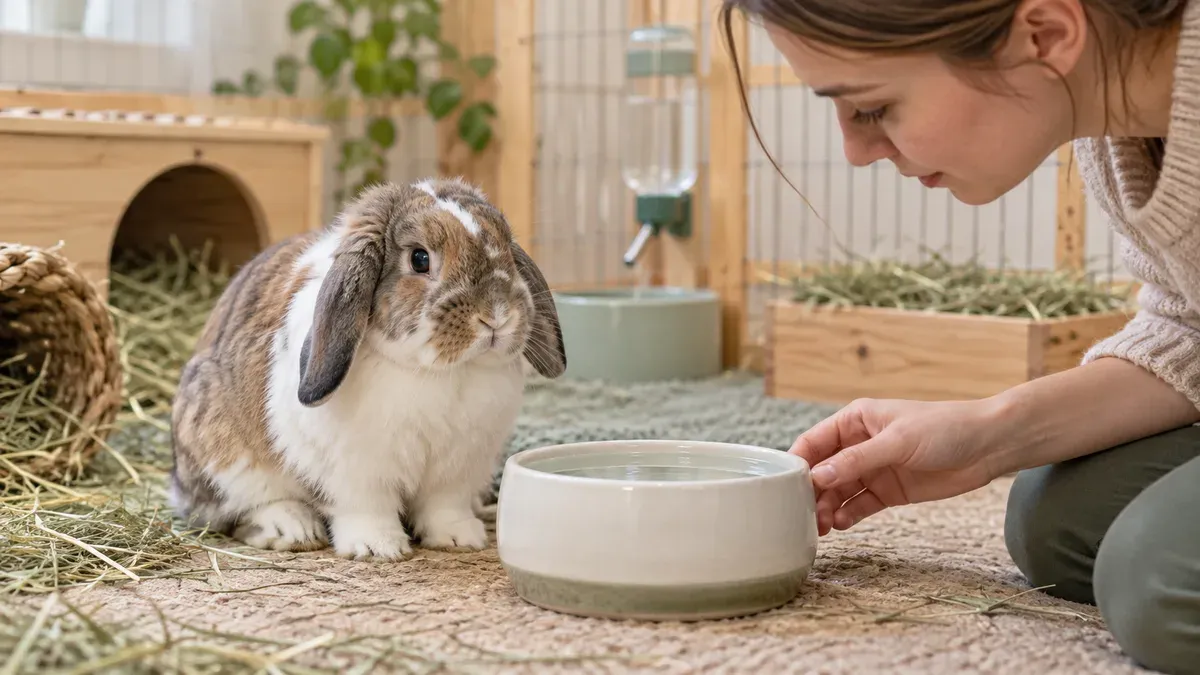
Veterinary note — This article helps you work out why a rabbit is drinking little and react in the right order. It does not replace a clinical examination. If your rabbit has stopped drinking and is eating less, producing fewer droppings or looks subdued, contact a rabbit-savvy vet immediately.
A rabbit that is not drinking needs two things checked first: its water container, then its diet. Start by ruling out a blocked bottle and accounting for the water supplied by fresh greens. The picture changes completely when the rabbit drinks less and eats less: in this species, stopping drinking is far more often the consequence of a gut or dental problem than its cause, and it then justifies a call to the vet the same day.
Two figures help you place the situation. A rabbit drinks around 50 to 100 ml/kg/24 h, a deliberately wide range explained in how much water does a rabbit drink, and that amount drops naturally when the diet includes plenty of fresh greens, which are 85 to 95% water. What matters is never the level in the bowl on its own, but the combination of drinking, water from food, and general condition.
Test the container before assuming illness
Five minutes are enough, and this check saves both an unnecessary appointment and a missed equipment failure.
- The bottle. Press the ball yourself: water should run freely, not seep out drop by drop. A stuck ball, a loose seal, a badly tightened cap or a simple airlock is enough to cut the supply with nothing visible from the outside. Check too that your rabbit does not have to stretch its neck upwards to reach it.
- The bowl. Look at what is floating in it: litter, hay, fur, a greasy film. A fussy rabbit refuses dirty water long before it gets thirsty.
- The position. A bowl pushed against the litter tray, wedged in a corner or standing on a slippery floor gets used less. If it ends up upside down every day, the possible reasons are sorted out in why does my rabbit tip over its bowl.
- Recent changes. A new container, a new spot, a switch from bottle to bowl or the reverse, a house move, or a second rabbit monopolising the water point: any of these can reduce intake for a few days.
- Water temperature. Water left all day next to a radiator or in direct sun is far less appealing than water refreshed in the morning.
The most informative test is to add a wide bowl alongside the bottle for 24 hours. A rabbit that empties the bowl after “not drinking at all” never had a thirst problem — it had an access problem. If the test comes out in the bowl’s favour, how to choose the model and retire the bottle without intake dropping is set out in water bottle or bowl for a rabbit.
Measure instead of guessing
The eye is not reliable: a 500 ml bowl looks the same whether 30 ml or 80 ml has gone. The method mirrors the one used for the opposite problem in my rabbit is drinking a lot.
- Fill the container from a measuring jug and note the volume you poured.
- Note what is left 24 hours later, at the same time of day.
- Repeat for two or three consecutive days, recording separately how much greens you gave and how warm the room was.
- Compare with the 50 to 100 ml/kg/24 h guide, allowing for the water supplied by food.
That measurement earns its keep twice: it reassures when the number is normal, and it gives your vet something usable when it is not.
Sorting the situation: five cases and what each one calls for
| What you observe | Most likely reading | What to do |
|---|---|---|
| Drinks little, eats plenty of greens, normal droppings, normal behaviour | Hydration coming from food | Nothing, beyond keeping clean water available at all times |
| Stopped drinking after a change of container or position | Adjustment, or access that became awkward | Offer the old container again, add a second water point |
| Not drinking on a mainly dry diet (hay, pellets) | Container failure, dirty water, or a genuine drop in intake | Offer a bowl immediately, then seek veterinary advice if the drop persists |
| Not drinking and eating less, or passing fewer droppings | Pain, gut slowdown | Immediate call |
| Not drinking, with a wet chin, chewing oddly, drooling | Dental problem | Appointment, mouth examination |
The fourth row matters most: in rabbits, drinking and eating stop together. A rabbit ignoring both its water and its hay should be treated exactly like a rabbit that has stopped eating, following rabbit not eating: what to do: contact a vet immediately, because reduced appetite or droppings can accompany GI stasis.
The fifth row is the one owners miss most often: a rabbit with painful teeth usually drinks less before it eats less. A damp chin, fur stuck under the jaw or cautious chewing all point that way, as explained in my rabbit is drooling and rabbit dental malocclusion.
Recognising dehydration
These signs are read on the animal, not in the bowl:
- the gums look dry or tacky;
- urine output is noticeably lower than usual;
- the extremities feel cold, the rabbit is apathetic with half-closed eyes.
These signs cannot establish dehydration on their own. Alongside dullness, refusal to eat or fewer droppings means contacting a vet promptly. And one absolute rule: do not force large amounts of water into the mouth. The risk of it going down the wrong way is real, and a genuinely dehydrated rabbit needs fluids given under veterinary supervision, not an improvised syringe at home. The correct technique for a prescribed liquid is set out in how to give a rabbit medication.
Getting a rabbit drinking again, without forcing it
When no clinical sign goes with the drop, these simple changes are usually enough:
- Switch to a bowl. Wide, heavy or clipped in place, it allows a natural drinking posture and unlimited flow, where a bottle demands dozens of presses for a few millilitres.
- Change the water daily and wash the container: the biofilm that builds up on the bottom alters the taste.
- Add a second water point, away from the litter tray and the hay, especially where two rabbits live together.
- Wet the greens before serving them: this is the most effective way to raise water intake without touching the water itself.
- In hot weather, refresh the water more often and keep it cool; if the rabbit shows signs of overheating, follow the steps in heat stroke, which calls for different measures.
What does not work, or makes things worse
- Sweetening the water or adding juice: digestive upset, and bacteria multiplying in the bowl.
- Adding flavoured supplements to drinking water: intake becomes impossible to measure, and many rabbits drink less rather than more.
- Offering milk: it has no place in the diet of a weaned rabbit.
- Waiting “to see” for two or three days when the rabbit has also stopped eating: this is the classic way to lose precious time.
- Removing the water on the grounds that the rabbit never touches it.
When to phone
- Immediate call: the rabbit has stopped drinking and is eating less, passing fewer droppings, or seems lethargic.
- Call without delay: no droppings together with reduced appetite, a hunched and unresponsive rabbit, a tense abdomen, laboured breathing — the full list is in rabbit emergency warning signs.
- Veterinary advice: a clear drop in intake on its own, with no other sign, that persists after changing the container. The full triage between emergency and routine is in when to see an exotic vet.
Where to go next
One concrete step for tonight: fill the container from a measuring jug and write down the volume. By tomorrow you will have the one thing almost every worried owner lacks — a number. If intake goes the other way instead, the mirror approach is in my rabbit is drinking a lot. To put water back into the wider picture of the diet, return to how much water does a rabbit drink, and browse our rabbit health guides and the rabbit species profile.
Veterinary sources
The sources below frame the topic responsibly: this article helps you understand a drop in drinking, it replaces neither a clinical examination nor treatment.
- RSPCA — Rabbit health and welfare
- Rabbit Basic Science — Water consumption (NCBI/PMC)
- MSD Veterinary Manual — Nutrition of rabbits
- VCA Hospitals — Gastrointestinal stasis in rabbits
Frequently asked questions
My rabbit only drinks at night. Is that normal?
Yes. Rabbits are most active at dawn and dusk, and a good share of their drinking happens then, usually when nobody is watching. That is why so many owners are convinced their rabbit never drinks: they simply never see it happen. Measuring the water with a jug over two or three days settles the question far better than watching for it.
Can I sweeten the water or add fruit juice to tempt my rabbit to drink?
No. Sugar upsets a rabbit's gut flora, and sweetened water turns into a bacterial soup in the bowl within hours. Flavoured supplements sold to be diluted in drinking water cause the same problem and make intake impossible to measure. If you want to increase water intake, wet the greens instead of changing the water.
Should I offer both a bowl and a bottle?
It is a sensible safety net, especially while switching containers or during hot weather. Two water points in two different places mean a failed bottle, a tipped bowl or a companion guarding the spot cannot leave your rabbit without water for hours. Clean both daily: a dirty container puts rabbits off drinking.
Does a rabbit eating lots of greens still need water available?
Yes, always. Even a rabbit on a green-heavy diet must have clean, accessible water at all times: its needs rise as soon as the weather warms up, if the diet becomes drier, or if it falls ill. Removing the water because "it never touches it anyway" is a mistake that can be expensive.