Rabbit dental malocclusion: causes, signs and treatment
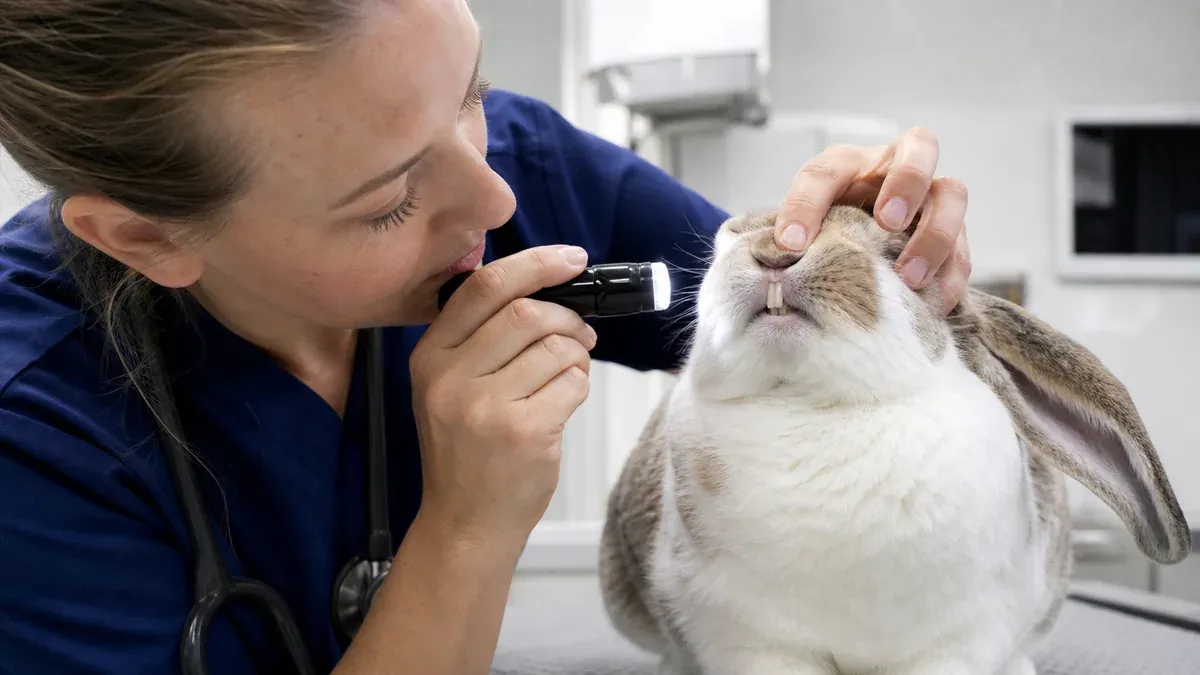
Veterinary warning — Malocclusion should not be diagnosed or treated at home. A rabbit-savvy vet with the right equipment can examine the molars and treat dental spurs properly. Do not attempt to inspect the deep oral cavity, and never give human pain relief.
A rabbit’s teeth grow throughout its entire life. As long as they wear against each other correctly while grinding hay, they stay at the right length. The moment an alignment problem develops — malocclusion — wear becomes uneven: teeth grow crooked, sharp spurs form on the molars, and those spurs cut the inside of the mouth. The resulting pain is often silent for weeks before it becomes obvious. Catching the signs early makes the difference between a straightforward procedure and a lengthy, complicated treatment.
Why rabbit teeth cause problems
Continuously growing teeth
Rabbits are hypsodont mammals: their teeth — both incisors and molars — grow continuously throughout life. The incisors (the four front teeth) grow quickly and continuously. Molars and premolars grow more slowly but no less permanently. This growth is offset by wear from chewing — primarily hay, which should be available at all times and remain the foundation of the diet.
Alignment is a fragile balance
For correct wear, teeth must meet with precision. The upper and lower incisors must cross slightly; the upper and lower molars must grind face-to-face. Any misalignment — even minor — creates an area that does not wear, causing progressive overgrowth. On the molars, this overgrowth develops into sharp spurs that lacerate the tongue and cheeks, causing painful ulcers and excessive salivation.
Causes of malocclusion
Hereditary and anatomical predisposition
Dwarf and brachycephalic breeds are the most affected. A shortened skull compresses the space available for tooth roots without reducing the size of the teeth themselves — teeth then grow in a jaw that is too small for them and misalign from the outset. At-risk breeds include the Netherland Dwarf, the Lionhead, and mini lops.
Hay-poor diet
A rabbit fed mainly on pellets and greens, without unlimited hay, does not chew enough to wear its molar teeth. Chewing hay involves a lateral jaw movement that wears the molars horizontally — pellets, being softer, do not produce this motion. The result: molars gradually overgrow even when the starting alignment was correct.
Dental trauma
A blow to the jaw — a fall, an injury or rough handling — can fracture a tooth root or deflect the direction of growth. A traumatised incisor can then grow at an angle and trigger secondary molar malocclusion.
Warning signs to watch for
Malocclusion is often silent in its early stages. Rabbits adapt their eating behaviour before pain becomes obvious.
| Sign | What it may indicate |
|---|---|
| Damp fur under the chin, drooling | Spurs cutting the tongue or cheeks — see our article on rabbit drooling |
| Prefers soft greens, avoids coarse hay | Pain when chewing fibrous food |
| Food dropping from the mouth | Oral discomfort: pain or molar malocclusion |
| Progressive weight loss | Reduced appetite due to pain |
| Crossed, twisted or overgrown incisors | Incisor malocclusion (visible to the naked eye) |
| Swelling under the jaw or around the eye | Dental abscess |
| Watery eye or ocular discharge | Upper molar roots close to the tear ducts — see my rabbit has watery eyes |
These signs overlap with the broader picture in our guide on how to tell if a rabbit is in pain. A rabbit in pain may also reduce movement, refuse handling and become lethargic.
What the vet will do
Examination and diagnosis
Incisors are visible to the naked eye and easy to check at a standard consultation. Molars, however, are not accessible without light sedation and a suitable otoscope — they cannot be properly examined in an awake rabbit. A full assessment typically includes dental X-rays, the only tool that shows root condition and the full depth of malocclusion progression.
Treating the incisors
If the incisors are too long or crossed, the vet trims them with an appropriate dental burr — not nail clippers, which can shatter teeth. In severe or recurrent cases, incisor extraction may be recommended: many rabbits adapt well without incisors if the molars function correctly, but the decision depends on a full dental assessment.
Treating the molars (spur filing)
Molar spurs are filed under brief general anaesthesia with a surgical burr. Procedure length, anaesthesia and discharge timing depend on the rabbit’s condition and the clinic protocol. Depending on the severity of the malocclusion, the procedure may need to be repeated regularly, sometimes for life — this is ongoing management, not a cure.
Dental abscess
A dental abscess is a serious complication: rabbits form thick, caseous pus that rarely resolves on its own. Treatment often combines surgery (curettage), antibiotic therapy for a duration set by the vet and sometimes extraction of the involved tooth. Prognosis depends on the location and how quickly treatment begins. For a full guide on abscess types, common locations and recurrence risk, see our dedicated article on rabbit abscesses.
How to prevent malocclusion
The most effective preventive lever is diet:
- Unlimited hay at all times — the only food that wears molar teeth correctly. Hay must represent the bulk of intake, well ahead of pellets.
- Weigh your rabbit regularly — gradual weight loss is often the first sign of silent malocclusion, before behaviour visibly changes (see my rabbit is losing weight for the other causes of weight loss).
- Monitor eating behaviour — a rabbit switching from hay to soft greens deserves a vet check, even without other obvious signs.
For predisposed breeds, an annual dental examination — even without symptoms — can catch and correct early malocclusion before it progresses to an abscess. A rabbit that stops eating due to dental pain can develop GI stasis within hours — prompt action matters.
Sources
- MSD Veterinary Manual — Noninfectious Diseases of Rabbits — calls dental malocclusion “probably the most common inherited disease in rabbits”, describes excess salivation, teeth grinding and anorexia as presentations, and notes that “occasionally, the cheek teeth overgrow and cause severe tongue or buccal lesions”.
- VCA Animal Hospitals — Dental Disease in Rabbits — puts tooth growth at roughly 1 cm a month and notes that wear depends on chewing fibrous plant material, which is what makes hay the basis of prevention.
Diagnosis requires examination of the oral cavity, often under anaesthesia, plus radiographs. Burring, extractions and any prescription are matters for a rabbit-savvy vet. This article has not been reviewed by a veterinarian.
Frequently asked questions
Is dental malocclusion in rabbits hereditary?
Partly. Dwarf and brachycephalic breeds (Netherland Dwarf, Lionhead) are predisposed because a shortened skull compresses the space available for tooth roots. This predisposition can be hereditary, but a hay-deficient diet or dental trauma can cause malocclusion in any breed.
Can malocclusion be cured permanently?
Rarely. Spur filing relieves pain but does not always correct the underlying alignment. In strongly predisposed rabbits, the procedure may need to be repeated regularly, sometimes for life. In some severe incisor cases, extraction may be the most appropriate long-term option: many rabbits adapt well without incisors if the molars function correctly.
My rabbit is still eating — can it still have malocclusion?
Yes. Early on, rabbits adapt: they avoid coarse hay and prefer soft greens. They keep eating but lose weight gradually. Weighing your rabbit regularly is the most reliable way to catch silent malocclusion before it becomes severe.
When is a dental problem a veterinary emergency?
Seek same-day care if your rabbit is drooling heavily, has stopped eating entirely or is producing very few droppings, or has visible swelling under the jaw. A rabbit that stops eating develops GI stasis within hours — every hour matters.