Rabbit GI stasis: symptoms, emergency response, and prevention
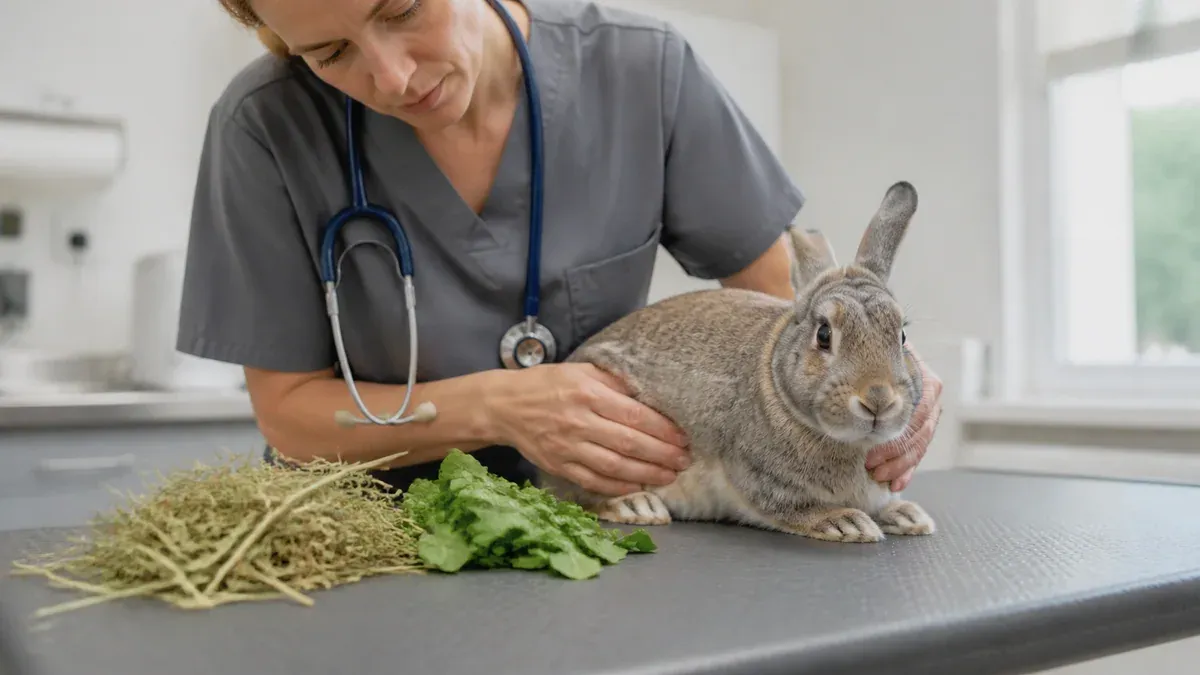
Veterinary warning: an unusual decrease in appetite or droppings is a reason to call a veterinarian promptly. Complete refusal, a painful or distended abdomen, collapse or cold extremities require emergency care. Do not wait for an hourly threshold. This guide does not replace a consultation.
What is GI stasis?
Gastrointestinal stasis — also called gut stasis or hypomotility — is a slowdown of a rabbit’s digestive transit. It is a common and potentially serious syndrome, often secondary to another problem that must be identified.
Unlike most animals, a rabbit’s digestive system must function continuously. The caecum hosts billions of beneficial bacteria that ferment fiber and produce caecotropes, which are essential to rabbit nutrition. Once the gut slows:
- Beneficial bacteria diminish; pathogenic fermentation takes over
- Gas accumulates throughout the digestive tract
- Pain increases, which deepens the anorexia
- A vicious cycle accelerates — stasis worsens the feeding stop, which worsens the stasis
Without intervention, this process can lead to death within days, sometimes sooner.
Common causes
Insufficient fibre or too much concentrated food
A diet short on hay or grass and heavy in pellets or treats increases digestive risk. But stasis can also be secondary to dental, urinary or joint pain, infection, stress, dehydration or another disease. Hay should remain freely available.
Excess fur ingestion during shedding
Rabbits normally swallow fur while grooming, especially during moulting. Finding fur in the stomach does not by itself establish the cause of stasis: it becomes a concern mainly when transit is already slow or, less commonly, when a mass causes a true obstruction. See rabbit moulting: normal or a problem and rabbit swallowing fur.
Stress
Moving home, a new animal in the household, loud sudden noises, a change in routine, or overheating can all trigger stasis. Stress inhibits intestinal contractions.
Pain from another source
A dental problem (malocclusion, sharp spurs), urinary infection, abscess, or any other source of pain can secondarily cause feeding to stop and stasis to develop.
After anaesthesia or surgery
Any procedure, including elective surgery, slows the gut for a while: pain, anaesthesia and stress stack up. That is exactly why eating has to be watched closely on the way home from the clinic, as set out in caring for a rabbit after spaying.
Insufficient exercise
A rabbit confined to a too-small space without daily free time shows slower transit. Physical movement is essential for intestinal motility.
Dehydration
Water is essential for normal gut function. A rabbit that doesn’t drink enough will naturally slow its transit.
Symptoms: recognizing stasis
Early signs: call without waiting for an hourly threshold
- Refusal to eat, especially hay
- Marked reduction in droppings: fewer, smaller, or misshapen
- Less active than usual, moving around less
Signs requiring urgent veterinary assessment
- Complete absence of droppings for several hours
- Tense or slightly bloated abdomen to the touch
- Hunched posture: rabbit curled inward, belly tucked
- Tooth grinding (bruxism) — a sign of pain
- Hiding or withdrawal from normal areas
Signs of immediate life-threatening emergency (call emergency vet now)
- Very distended, rigid abdomen — painful to touch
- Prostrate rabbit, unable to stand or move
- Rapid or labored breathing
- Cold extremities, hypothermia
- Seizures or loss of balance
In the event of life-threatening signs, do not wait for a scheduled appointment — call an emergency rabbit-savvy vet or emergency clinic immediately.
What you can do while waiting for the vet
These measures do not replace veterinary care but can slow deterioration:
- Keep the rabbit quiet at a comfortable room temperature, without improvised heating or cooling; ask the veterinarian what to do if the ears or limbs feel cold
- Limit handling and stress; do not force a painful rabbit to walk
- Offer a variety of hays to try to stimulate interest (Timothy, meadow, orchard grass) — see our guide on hay types
- Offer fresh aromatic herbs (parsley, basil, cilantro) to try to stimulate appetite
- Ensure water is always available and fresh
- Do not massage the abdomen vigorously without veterinary instruction — this can worsen pain if a blockage is present
- Never give human medications without explicit veterinary advice
If your rabbit has also completely stopped eating for several hours, see our guide on a rabbit not eating for a full assessment of the situation.
What the vet does
Treatment for GI stasis typically includes:
- Gut-motility medication, only when the veterinarian considers it appropriate after assessing the rabbit and notably ruling out an obstruction
- Pain relief (rabbit-appropriate NSAIDs or opioids): reducing pain breaks the anorexia/stasis cycle
- Rehydration: oral or subcutaneous fluids to facilitate movement of gut contents
- Nutritional support, only after veterinary assessment and according to the vet’s instructions; syringe-feeding may be inappropriate when an obstruction is suspected
- Warmth: gentle external heat supports peristalsis
- Full workup to identify the underlying cause (X-ray, palpation, urinalysis as indicated)
Prognosis depends on the cause, severity and speed of care. Any unusual reduction in appetite or droppings therefore deserves an early call rather than waiting for an arbitrary duration.
Prevention: three pillars
1. Unlimited hay, always
This is the single most important factor. The long fiber in hay drives intestinal contractions and maintains dental wear. A rabbit eating hay freely has a functioning gut. If your rabbit is refusing hay, read our dedicated article on this problem to find the cause.
2. Daily exercise
Daily prolonged access to space for running, hopping and exploring supports general and digestive health. For proper space planning, see our guide on rabbit housing.
3. Regular brushing during shedding
During moulting, brush regularly to reduce swallowed fur and monitor appetite. Long-haired breeds such as Angoras and Lionheads need more frequent grooming, without presenting fur as the usual cause of stasis.
Risk factors to monitor:
| Factor to investigate | Why it matters |
|---|---|
| Too little hay or grass; excess concentrated food | Lower-fibre, higher-energy diet |
| Dental, urinary, joint or postoperative pain | Common cause of secondary appetite loss |
| General or digestive disease | Can slow transit and cause dehydration |
| Stress or heat | Can abruptly reduce food intake |
| Dehydration | Dries the digestive contents |
| Low activity | Possible contributing factor |
Differentiating stasis from gas bloat
Bloat (acute gas accumulation) can present with similar signs to stasis (distended abdomen, pain, anorexia) but often progresses more quickly and can cause shock very rapidly. Distinguishing between them requires veterinary examination. In either case, the response is the same: urgent veterinary consultation, no self-medication.
If it is the belly itself that alarmed you first, and you are not yet sure it is genuinely bloated, the hands-on check and the six possibilities to tell apart are set out in my rabbit has a bloated belly.
After stasis: follow-up and relapse prevention
A rabbit that has had a stasis episode should be monitored carefully for 48–72 hours:
- Check droppings daily for quantity and appearance
- Confirm hay is being consumed normally
- Follow the prescribed treatment regimen strictly (prokinetics, pain relief, nutritional support)
- Avoid unnecessary stress during recovery
A rabbit that has had a stasis episode is at higher risk of recurrence if the underlying cause is not addressed. Revisit diet, living space, and stress management per your vet’s recommendations.
If you also observe abnormal stools alongside other symptoms, see our guide on rabbit diarrhea to rule out an associated enterocolitis. If cecotropes appear on the floor during recovery, our article on soft droppings in rabbits explains the common causes.
To learn to recognise pain signals in your rabbit — posture, grimace, tooth grinding — see our guide on how to tell if a rabbit is in pain. And to know when a symptom tips into an emergency, see when to see an exotic vet for your rabbit.
Veterinary sources and caution notes
The sources below are provided as veterinary or institutional reference points to frame the topic cautiously: this article can help you recognise possible signs, but it does not replace an examination by a rabbit-savvy veterinarian. If you are unsure, or if your rabbit shows pain, lethargy, refusal to eat, abnormal breathing, or rapidly worsening signs, contact a veterinary clinic without delay.
Sources used to frame the recommendations:
- RSPCA — Rabbit health and welfare
- VCA Hospitals — Gastrointestinal stasis in rabbits
- Merck Veterinary Manual — Digestive disorders of rabbits
Frequently asked questions
How do I know if my rabbit has GI stasis?
The characteristic signs are: refusal to eat (especially hay), absent or significantly reduced droppings, a tense or bloated abdomen, hunched posture, tooth grinding, and lethargy. Any rabbit showing several of these signs simultaneously should be taken to a vet the same day — do not wait.
Is GI stasis fatal in rabbits?
Yes. Untreated hypomotility can lead to dehydration, disruption of the gut flora, liver complications and shock. A mechanical obstruction is a different diagnosis that can produce similar signs and must be considered before certain medications or any assisted feeding.
Can GI stasis be treated at home?
No. Reduced appetite and droppings need prompt veterinary advice to identify the cause and rule out obstruction. While waiting for instructions, keep the rabbit calm at a comfortable temperature, leave hay and water accessible, and do not give medication, syringe-feed or massage the abdomen on your own initiative.
How quickly can GI stasis progress in rabbits?
Progression varies and can be rapid. An unusual decrease in appetite or droppings is already a reason to call a vet; complete refusal, pain, abdominal distension or marked lethargy require urgent care. Do not wait for an hourly threshold.
How do I prevent GI stasis in my rabbit?
Prevention includes unlimited appropriate hay or grass, few concentrated foods, daily exercise, good hydration, veterinary checks and treatment of underlying pain or disease. Brushing is useful during moulting, especially for long-haired rabbits.