Soft droppings in rabbits: cecotropes on the floor and abnormal stools
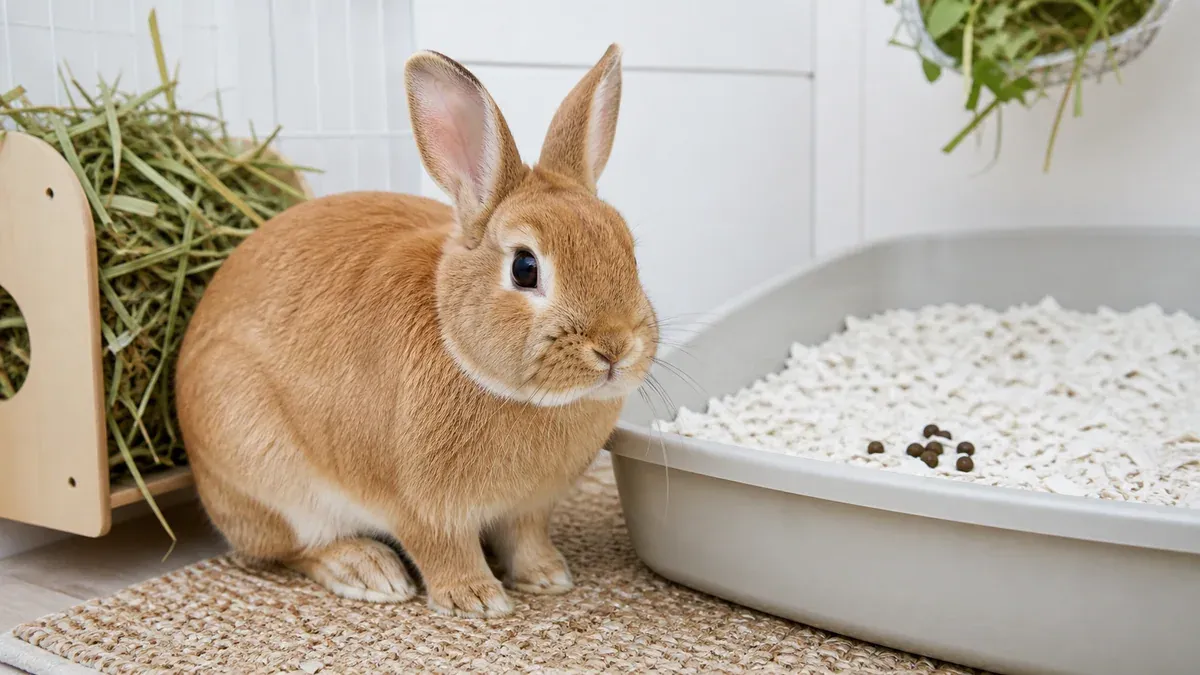
Veterinary warning: If your rabbit is producing truly liquid stools, has stopped producing droppings, has a visibly bloated or hard belly, or is lying flat and unable to rouse, do not wait — contact a rabbit-savvy vet immediately. These are signs of a digestive emergency.
Understanding cecotropes
A healthy rabbit produces two distinct types of droppings, and confusing them is one of the most common mistakes rabbit owners make.
Hard, dry, round pellets are the normal waste product of digestion. They are firm, uniform in size, and should be present in reasonable numbers throughout the day. These are what you expect to find in the litter tray.
Cecotropes are something else entirely. They are soft, dark brown, grape-cluster-shaped droppings covered in a thin, slightly shiny mucosal film. They have a strong, fermented smell. Under normal circumstances, you usually do not find them lying on the floor of the enclosure, because your rabbit eats them directly from its anus, often at night or in the early morning hours.
What are cecotropes made of and why do they matter?
Cecotropes are produced in the cecum, a large fermentation chamber at the junction of the small and large intestine. The cecum contains billions of beneficial microorganisms that ferment indigestible fiber and synthesize a range of essential nutrients. The resulting cecotropes are rich in protein, vitamin B12, fatty acids, and beneficial bacteria.
The act of ingesting cecotropes directly from the anus is called cecotrophy. It is not a sign of abnormal or dirty behavior — it is a biological necessity. Without it, a rabbit cannot absorb the full nutritional value of its food. Cecotrophy is as fundamental to a rabbit’s nutrition as the initial act of eating.
When cecotropes are produced normally but the rabbit fails to ingest them, they accumulate under the tail or on the floor of the enclosure. This is the signal that something in the rabbit’s diet or physical condition needs to be corrected.
Why your rabbit leaves cecotropes on the floor
Diet too rich in carbohydrates
This is by far the most common reason. When a rabbit’s diet contains too many easily digestible carbohydrates — from an excess of pellets, fruit, or sugary vegetables — two things happen. First, the rabbit may simply not be hungry enough at cecotrope production time to bother ingesting them. Second, an overly carbohydrate-heavy diet shifts the balance of the cecal flora, triggering overproduction of cecotropes beyond what the rabbit would normally consume.
The solution is straightforward: hay should make up 80 to 90 percent of the daily diet, providing the long fiber that regulates both transit and cecal function. Pellets should be rationed to a maximum of one tablespoon per kilogram of bodyweight per day. To calibrate this correctly, see our guide on how many pellets to feed a rabbit. Fruit and sugary vegetables should be treats, not daily staples.
In most cases, simply reducing pellets and increasing hay intake resolves the problem within three to seven days.
Excess weight
An overweight rabbit physically cannot reach its anus to perform cecotrophy. The behavior requires a certain degree of flexibility — the rabbit curves its body to take the cecotropes directly from the source. When abdominal fat prevents this, the cecotropes simply fall to the floor.
If your rabbit is visibly rounded, loses its waist definition when viewed from above, or has fat deposits over the hindquarters and ribs that are difficult to feel, address the calorie intake. Reduce pellets progressively, eliminate treats, and ensure the rabbit has enough space to move. Increasing daily exercise is also essential. If you are unsure whether your rabbit is overweight, a rabbit-savvy vet can assess body condition during a routine check-up.
Joint pain in older rabbits
Rabbits aged five years and older are susceptible to spondylosis and arthritis, particularly in the lumbar spine. These conditions reduce flexibility and make it painful or impossible to assume the posture required for cecotrophy — even when the rabbit’s weight is entirely normal.
If your rabbit is elderly and has no dietary explanation for leaving cecotropes on the floor, a veterinary evaluation is warranted. Chronic pain in rabbits is easily missed because rabbits instinctively conceal signs of discomfort. A vet can assess mobility, identify joint changes, and discuss appropriate pain management.
Cluttered or unsuitable litter tray
A practical but often overlooked cause: if the litter tray is too small, too dirty, or too cluttered with objects around it, a rabbit may be physically unable to adopt the right position to ingest cecotropes in a comfortable or clean way. Rabbits are fastidious animals and may avoid ingesting cecotropes if doing so requires contorting in a dirty or confined space.
Keep the litter area clean, spacious, and free of obstacles. The rabbit needs enough room to turn around and sit comfortably. If the enclosure floor around the litter area is heavily covered in substrate or blocked by toys and hides, make adjustments to give the rabbit clear floor access.
Soft non-cecotrope stools
Not every soft dropping on the floor is a cecotrope. A second type of abnormal dropping warrants attention: soft, pasty, formless stools that stick to surfaces, sometimes clump under the tail, and do not have the grape-cluster structure or shiny mucosal coating of cecotropes.
These indicate an active intestinal imbalance — the gut flora is disrupted and transit is too fast or too fermentive. Common causes include:
- A rapid dietary transition (introducing new foods too quickly)
- An excess of fresh greens, particularly watery vegetables
- Insufficient hay, removing the fiber base that stabilizes the microbiome
The immediate response is to strip the diet back to basics: offer only unlimited hay and fresh water for 24 to 48 hours, removing all pellets, vegetables, and fruit. In most cases, this gives the gut flora time to restabilize and droppings return to normal within one to two days.
If you are not sure whether what you are seeing is cecotropes, soft pasty stools, or true diarrhea — which is an emergency — read our guide on rabbit diarrhea for a detailed breakdown of the differences. Soft stools that persist, especially in a young rabbit, can also point to intestinal parasites such as coccidiosis: only a faecal exam at the vet confirms it.
Comparison: three types of abnormal droppings
| Type | Appearance | Texture | Smell | Location | Action |
|---|---|---|---|---|---|
| Cecotropes (uneaten) | Grape-cluster, dark brown | Soft, mucosal film | Strong, fermented | Floor, under tail | Dietary correction |
| Soft pasty stools | Formless, sometimes clumped | Sticky, no structure | Unpleasant | Stuck under tail or on floor | Hay-only diet for 24–48 h |
| True diarrhea | Liquid or semi-liquid | No structure | Very strong, foul | Anywhere, soiling hindquarters | Veterinary emergency |
True diarrhea — fully liquid, often yellowish or bloody, extremely foul-smelling — is not a dietary imbalance. It is a veterinary emergency in adult rabbits and an immediate life-threatening emergency in kits under three months, where dehydration can be fatal within hours.
The link with GI stasis
Cecotropes on the floor and soft stools are, in isolation, digestive imbalances that can generally be corrected through dietary adjustment. GI stasis is a different, more serious problem.
If your rabbit has not produced any droppings for six hours or more and is refusing to eat — particularly refusing hay — this is not a cecotrope problem. It is a potential GI stasis, a dangerous slowdown or complete halt of intestinal transit that requires same-day veterinary care. The absence of droppings combined with anorexia, a tense abdomen, and hunched posture is a distinct emergency profile that should never be managed at home or left to resolve on its own.
When to see a vet
Most cases of uneaten cecotropes resolve with dietary correction. However, consult a rabbit-savvy vet if:
- The problem persists for more than 7 days despite correcting hay intake and reducing pellets
- The stools are truly liquid, semi-liquid, yellowish, or bloody
- Your rabbit has stopped eating, including hay
- The abdomen feels hard, distended, or your rabbit reacts with pain when touched around the belly
- Your rabbit is prostrate, unresponsive, or unable to move normally
- Your rabbit is a kit under 3 months old — any digestive abnormality in a young rabbit should be assessed promptly
How to stop it coming back
The best protection against cecotrope buildup, soft stools, and digestive imbalances is a consistently well-structured diet and adequate daily movement.
- Unlimited hay at all times: this is the non-negotiable foundation of rabbit nutrition. Hay provides the long fiber that drives intestinal motility, maintains healthy cecal flora, and wears down teeth at the right rate. For practical guidance on quantities and hay types, see our complete hay guide.
- Calibrated pellets: no more than one tablespoon per kilogram of bodyweight per day for adult rabbits. Plain, high-fiber pellets only — no seed mixes or coloured pieces.
- Moderate greens: two to three types of leafy vegetables per day in small amounts, introduced gradually. Avoid excess watery vegetables and sugary additions.
- Daily free exercise: a minimum of three hours per day outside the enclosure. Movement is essential for intestinal motility; a sedentary rabbit has slower, less regulated transit.
- Regular brushing during moulting seasons: spring and autumn shedding significantly increases fur ingestion during grooming. Regular brushing reduces the volume of fur that enters the digestive tract, lowering the risk of flora disruption and blockages.
For a full overview of everything related to rabbit care, health, and behavior, visit the rabbit species page.
Sources
- MSD Veterinary Manual — Nutrition of Rabbits — sets out what cecotrophs are: “at intervals, the cecal contents are expelled as ‘soft feces’ or cecotrophs and consumed by the rabbit directly from the anus”, supplying microbial protein, B vitamins and volatile fatty acids. The source ties their ingestion directly to fibre: it “is highest when rabbits are fed a diet high in nondigestible fiber”, and puts the requirement at around 15% crude fibre, with hay available without limit.
That is the basis of the advice given here: rebalance the ration towards hay before looking for a more complex cause. A rabbit that stops eating its cecotrophs without rapid improvement needs to be examined. This article has not been reviewed by a veterinarian.
Frequently asked questions
Are cecotropes dangerous if they stay on the floor?
The cecotropes themselves are not dangerous. But if your rabbit stops ingesting them regularly, it loses essential nutrients (protein, B12, fatty acids) and likely has an underlying dietary imbalance that needs correcting.
Why is my rabbit not eating its cecotropes?
The most common causes: a diet too high in carbohydrates (too many pellets, fruit, or sugary vegetables), excess weight making it hard to reach the anus, joint pain in older rabbits, or an overcrowded litter tray. Reducing pellets and increasing hay usually fixes the problem within a few days.
Are soft droppings always an emergency?
No. Cecotropes on the floor generally indicate a correctable dietary imbalance. However, fully liquid stools, a bloated belly, prostration, or a complete absence of droppings are veterinary emergencies.
How long before normal droppings return after a diet correction?
With the right adjustment — unlimited hay, reduced pellets, temporarily no fruit or sugary vegetables — most rabbits return to normal within 3 to 7 days. If the problem persists beyond 7 days, see a rabbit-savvy vet.