Conjunctivitis in rabbits: causes, signs and treatment
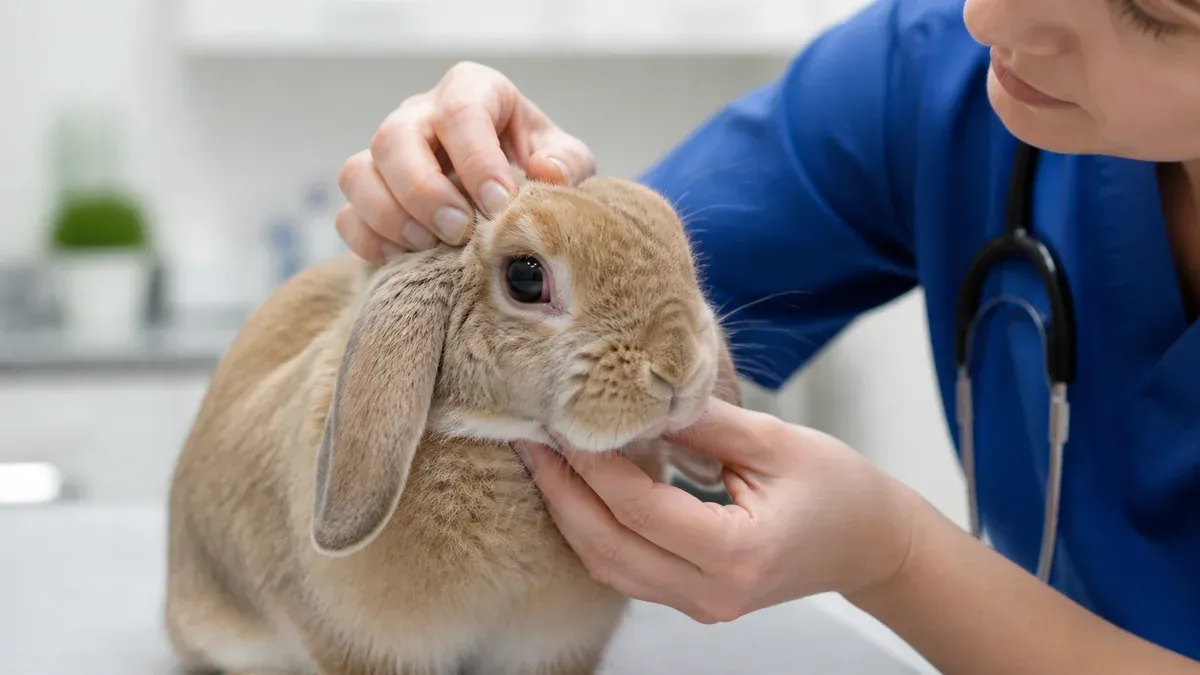
Veterinary warning — A red, swollen, closed or weepy eye in a rabbit should be examined by a rabbit-savvy vet. Conjunctivitis is almost always a sign of another problem (dental, respiratory, foreign body) that needs treating at the source. This guide is informational and does not replace a consultation.
Conjunctivitis in a rabbit is inflammation of the membrane lining the inner eyelids and the white of the eye: the eye turns red, weeps, and the lids may stick together or swell. In rabbits it is almost never a standalone illness — it is the visible symptom of an underlying cause, most often dental, respiratory, or an irritant. Finding and treating that cause is essential, because eye drops alone will not fix it.
Recognising conjunctivitis
The signs are usually easy to spot, though their intensity varies:
- Redness of the white of the eye and the inner eyelids,
- Discharge that starts clear (watering) then thickens, turning white or yellow if it becomes infected,
- Stuck-together eyelids, especially after sleep, or damp, matted fur below the eye,
- A half-closed or shut eye, swollen lids,
- the rabbit may rub the eye with a paw or against the floor.
These signal discomfort and inflammation. Because rabbits instinctively mask discomfort, watch its general state (appetite, activity, droppings) to judge whether the eye problem comes with a broader slump.
The common causes (and why they matter)
Conjunctivitis is not a complete diagnosis: the real question is why the eye is inflamed. The most common origins in rabbits:
| Cause | What happens | Frequent clue |
|---|---|---|
| Dental (malocclusion, root abscess) | An upper tooth root compresses or blocks the tear duct | Constantly weeping eye, often one-sided, sometimes a lump below the eye |
| Respiratory (snuffles / Pasteurella) | Nasal infection reaches the eye via the tear duct | Sneezing, nasal discharge, wet forepaws |
| Airborne irritant | Hay or litter dust, ammonia from a dirty tray, aerosols | Both eyes affected, improves after cleaning up |
| Foreign body | Hay strand or dust trapped under the eyelid | Sudden onset, one eye, intense rubbing |
| Anatomical | Misdirected lashes, in-rolled eyelid (entropion) | Chronic watering from a young age |
The teeth–eyes link is the most underestimated: the roots of the upper incisors and molars run just beneath the duct that drains tears. A malocclusion or overgrown tooth spurs can therefore first show up as a weepy eye, long before you think of the mouth.
Likewise, a weepy eye often accompanies a respiratory problem: if your rabbit is sneezing or has a runny nose at the same time, the snuffles angle should be considered, since infection travels easily from nose to eye.
If the eye is not red and the only sign is constant clear weeping, the sorting works differently: the starting point is then what the discharge looks like and how many eyes are affected, set out in my rabbit has watery eyes.
What you can do while waiting for the appointment
A few simple steps soothe the eye without masking the problem:
- Gently clean around the eye with a pad soaked in sterile saline (never a medicated eye drop without advice), wiping from the inner corner outwards.
- Clean up the environment: low-dust hay, low-dust litter, no aerosols or fragrances nearby, a clean tray to limit ammonia.
- Watch appetite and droppings: a rabbit in pain or brewing an infection may start eating less.
- Do not use any human eye drops and do not try to remove a foreign body yourself: you risk scratching the cornea.
These measures support treatment but do not replace the diagnosis: until the cause is treated, the eye will keep weeping.
How the vet manages it
The vet’s aim is twofold: calm the eye and treat the cause. Depending on the exam, they may:
- examine the eye (a fluorescein test to detect a corneal ulcer, check for a foreign body),
- check the mouth and possibly X-ray the skull if a dental origin is suspected,
- flush or probe the tear duct if it is blocked,
- prescribe appropriate eye drops (antibiotic and/or anti-inflammatory depending on the cause), with the choice and duration set by the prescription,
- treat the underlying cause: dental work, antibiotics for snuffles, removal of a foreign body.
No dosage should be improvised: treatment depends entirely on the identified cause.
When to seek urgent care
Book promptly for any red or weepy eye, and seek care without delay if your rabbit shows:
- a very swollen, closed or bulging eye,
- a cloudy, bluish cornea or a spot on it, a possible sign of an ulcer,
- heavy, pus-like discharge,
- lethargy, refusal to eat, or a lump below the eye,
- a problem that appeared suddenly after digging in the hay (likely foreign body).
An untreated eye can progress to a painful corneal ulcer, or even loss of the eye. For other common problems, browse all our rabbit health guides, and find the core needs of the species on the rabbit species page.
Veterinary sources and caution notes
This article aims to help you recognise possible signs; it does not replace an examination by a rabbit-savvy vet. With a red, swollen or weepy eye, contact a veterinary clinic.
Sources used to frame the recommendations:
- RSPCA — Rabbit health and welfare
- VCA Hospitals — Dental disease in rabbits
- VCA Hospitals — Infectious diseases in rabbits
Frequently asked questions
Can a rabbit's conjunctivitis clear up on its own?
Rarely. A brief irritation from dust may settle once you clean up the environment, but true conjunctivitis (red eye, discharge, sticky lids) almost always has an underlying cause — dental, respiratory or infectious — that will not resolve without treatment. An eye that weeps for more than 24–48 hours warrants a vet visit.
Can I put human eye drops in my rabbit's eye?
No. Many human eye drops (especially those containing steroids or decongestants) are unsuitable or even harmful in rabbits, and masking the signs without treating the cause makes things worse. Only a rabbit-savvy vet should choose the right drops after identifying the underlying problem.
Why is rabbit conjunctivitis so often linked to the teeth?
The roots of the upper teeth sit just beneath the tear duct that drains tears from the corner of the eye to the nose. A malocclusion or root abscess can compress or block that duct: tears pool, the eye weeps constantly and becomes infected. It is one of the most common and most underestimated causes.
Only one eye is affected — is that less serious?
Not necessarily. One-sided involvement often points to a local cause (foreign body, blocked tear duct, a tooth-root abscess on that side). Both eyes affected suggests a general cause (airborne dust, respiratory infection). Either way, a veterinary exam is still needed to find the source.