My rabbit sneezes: common causes and when to see a vet
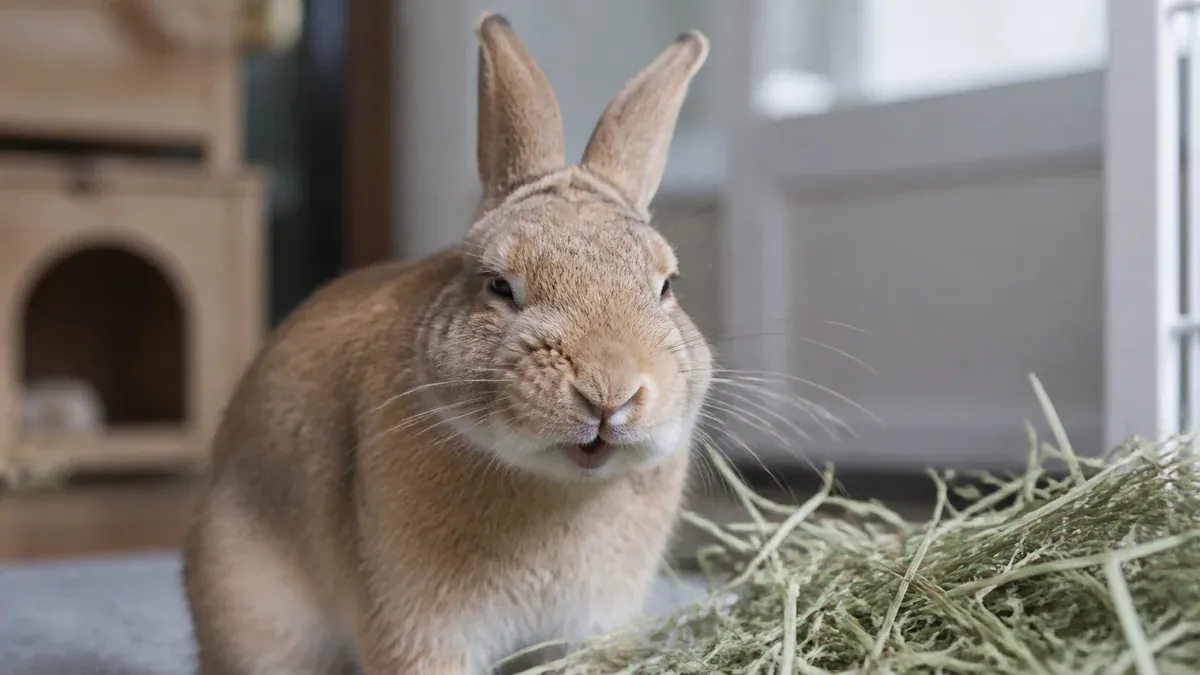
Veterinary warning: If your rabbit is sneezing frequently, producing coloured (white, yellow, or green) nasal discharge, or showing any difficulty breathing, lethargy, or refusal to eat alongside the sneezing, consult a rabbit-savvy vet promptly. These signs may indicate an active respiratory infection that should not be managed at home without veterinary guidance.
A rabbit sneezing once or twice as it shuffles through its hay rack is no cause for alarm. Rabbits are nose-breathers with sensitive nasal passages, and the occasional sneeze is simply how they clear dust, particles, or mild irritants. What warrants attention is sneezing that is frequent, repetitive, productive (accompanied by discharge), or paired with other symptoms. The difference between a harmless irritation and the start of a bacterial infection can be subtle — this guide helps you assess the situation clearly.
Normal and transient sneezing
Isolated sneezes with no other signs are a normal part of a rabbit’s day. When a rabbit digs through a pile of Timothy hay, shakes loose bedding, or encounters a strong scent, it may sneeze several times in quick succession to clear its nasal passages. Between those sneezes, the rabbit behaves entirely normally: it eats, moves, and maintains its usual demeanour.
This type of sneezing typically resolves on its own once the irritant is removed or settles. There is no discharge, no crusting at the nostrils, and no sound of congestion in the breathing. The rabbit’s eyes remain clean and bright.
If the occasional sneezing coincides with a new bag of hay or fresh bedding, a simple change in product — choosing a lower-dust or better-quality lot — usually resolves it within a day or two.
Environmental irritants to remove
The domestic environment contains a surprising number of airborne irritants that are poorly tolerated by rabbit respiratory tracts. Identifying and removing them is the first practical step when your rabbit begins sneezing more than usual.
Common triggers include:
- Dusty or aromatic bedding: pine shavings and cedar shavings are double offenders — they are both mechanically dusty and release volatile aromatic compounds (terpenes) that irritate respiratory mucous membranes. Replace them with hemp bedding or compressed paper pellets.
- Scented cleaning products: floor cleaners, disinfectant sprays, and surface wipes used near or inside the enclosure can leave residues and fumes that directly irritate the nasal passages.
- Air fresheners, scented candles, and reed diffusers: these release sustained concentrations of fragrance compounds into the air. Rabbits are exquisitely sensitive to these. Do not use them in the room where your rabbit lives — the product-by-product breakdown is in are air fresheners dangerous for rabbits.
- Aerosol sprays: deodorant, hairspray, cooking sprays, or aerosol insecticides used nearby can trigger acute sneezing episodes. If you must use them, remove your rabbit from the room and ventilate thoroughly before returning it.
- Cigarette and e-cigarette smoke: tobacco and vapour aerosols are significant respiratory irritants for rabbits. Never smoke in the same room as a rabbit.
- Dusty hay: low-quality hay with a high proportion of seed heads, dust, or mould spores is a common and overlooked cause of recurrent sneezing. Switching to a fragrant, green, fine-stem hay stored in a dry place often brings immediate improvement.
As a general principle, the room where your rabbit lives should be well ventilated but draft-free, cleaned with unscented or rabbit-safe products, and kept free of strong airborne fragrances.
Snuffles: when sneezing signals an infection
When sneezing is persistent and not explained by an obvious environmental trigger, the most important diagnosis to rule out is snuffles — a bacterial infection of the upper respiratory tract.
Pasteurella multocida
The primary causative agent of snuffles in rabbits is Pasteurella multocida, a bacterium that colonises the nasal passages and sinuses. Many rabbits carry Pasteurella asymptomatically; clinical disease can be triggered or worsened by stress, immune suppression, a concurrent illness, or exposure to a new carrier animal.
The typical progression follows a recognisable pattern:
- Frequent sneezing, initially dry, then productive
- Nasal discharge that starts clear and watery, then thickens and becomes white or yellow as secondary infection establishes
- Crusting at the nostrils: dried discharge forms a crust around the nose opening, sometimes causing the rabbit to paw at its face
- Wet inner forepaws: a rabbit with a runny nose wipes its face repeatedly, leaving moisture and dried discharge on the fur between the toes — this is a classic physical exam finding
- Ocular discharge: the nasolacrimal duct connects nose and eye; inflammation here can cause weepy eyes as a secondary sign — see conjunctivitis in rabbits, or my rabbit has watery eyes when the eye runs before the nose does
If left untreated, infection can spread beyond the upper respiratory tract. Extension to the middle ear causes vestibular disease and head tilt. Spread to the lungs causes pneumonia. Pasteurella can also seed dental root sockets and cause deep facial abscesses. Early treatment significantly reduces the risk of these complications.
Snuffles should not be managed at home without diagnosis. A veterinary examination is needed to confirm respiratory disease and decide whether bacterial culture and sensitivity testing is useful, especially with purulent discharge, relapse, or poor response to treatment. Commonly used agents include enrofloxacin and trimethoprim-sulfa combinations, depending on the examination and, when available, test results.
Note that while keeping your rabbit’s vaccination status current for VHD and myxomatosis does not protect against Pasteurella directly, it ensures the immune system is not already burdened by a concurrent serious infection. See our article on rabbit vaccination for a full review of recommended vaccines — there is currently no licensed vaccine against snuffles itself.
Other causes worth ruling out
Persistent or unusual sneezing patterns — particularly when one-sided, or associated with facial changes — should prompt consideration of diagnoses beyond simple snuffles.
Dental root abscess with nasal extension
Rabbit tooth roots are long and anatomically close to the nasal passages. A periapical abscess on an upper premolar or molar can erode through the bone and create a fistula that opens into the nasal cavity. The resulting discharge is typically one-sided and may be mixed with food material. Affected rabbits often show swelling below the eye, reluctance to eat hard foods, or dropping food while attempting to chew. If your rabbit combines sneezing with eating difficulties, see our article on a rabbit not eating for a fuller assessment. Dental disease of this kind requires surgical and medical management; it is not detectable on physical inspection of the mouth without veterinary equipment.
Foreign body (hay awn)
A hay awn or similar plant fragment lodged in a nostril produces sudden-onset, intense, one-sided sneezing that does not resolve. The rabbit may paw at the affected nostril. Unlike infection, onset is abrupt — the rabbit was fine, then immediately began sneezing vigorously. This requires veterinary examination and removal of the foreign body; attempting to remove it at home risks pushing it deeper or causing trauma.
Encephalitozoon cuniculi and other agents
E. cuniculi, a parasitic microsporidian commonly associated with neurological signs in rabbits, is not a primary respiratory pathogen, but chronic immune compromise secondary to active infection can lower resistance to opportunistic respiratory pathogens. Other bacterial species (Bordetella bronchiseptica, Staphylococcus spp.) can cause respiratory disease and are worth considering when culture from a Pasteurella-negative rabbit returns unexpected results. Your vet will guide the diagnostic workup.
When to see a vet
Consult a rabbit-savvy vet if any of the following apply:
- Sneezing persists beyond 2–3 days with no clear environmental explanation
- Any nasal discharge, regardless of colour or quantity
- Discharge that is white, yellow, or green, or has an unusual smell
- Blood or pus visible at the nostrils
- Audible breathing sounds: wheezing, rattling, or crackling
- Head tilt, loss of balance, or circling alongside respiratory signs
- Refusal to eat, marked reduction in droppings, or weight loss
- The rabbit is under 6 months old — young rabbits have less immune reserve and can deteriorate quickly
- Two or more rabbits in the household begin sneezing at the same time
Do not delay consultation in the hope that the situation will resolve. Upper respiratory infections in rabbits are far easier to treat in early stages than once they become entrenched or spread to adjacent structures.
How to cut down sneezing day to day
No environmental management strategy can guarantee that a rabbit will never encounter Pasteurella, but good husbandry significantly reduces both the risk of clinical disease and its severity when it does occur.
Key preventive measures:
- Ventilation: maintain good air exchange in the living space without creating drafts or cold spots. Stagnant, humid air encourages bacterial growth and increases respiratory irritant accumulation.
- Low-dust bedding: choose hemp fibre, compressed paper pellets, or similar low-aromatic, low-dust substrates. Avoid pine or cedar shavings entirely.
- Unscented household products: use fragrance-free cleaners near and inside the enclosure. Clean the enclosure at least once a week to prevent ammonia build-up from urine, which is itself a respiratory irritant.
- No aerosols or scented products in the rabbit’s room: this includes air fresheners, scented candles, fabric sprays, and similar products.
- Quarantine newly adopted rabbits: any new rabbit should be kept in a separate room, with no nose-to-nose contact with existing rabbits, for a minimum of three to four weeks. This protects your resident animals from potential asymptomatic carriers.
- Manage stress: chronic stress suppresses immune function and can activate latent Pasteurella carriage. Predictable routines, adequate space, and enrichment all contribute to immune resilience.
Once snuffles is confirmed, see our dedicated guide to rabbit snuffles (coryza) for the full antibiotic protocol, how to manage contagion between rabbits, and how to reduce the risk of relapse.
For a full overview of daily care practices that support your rabbit’s health, see our rabbit species page.
Sources
- MSD Veterinary Manual — Bacterial and Mycotic Diseases of Rabbits — describes how discharge progresses in pasteurellosis: “a thin, serous exudate from the nose and eyes that later becomes purulent”, with sneezing and coughing. One useful and often missed sign: “the fur on the inside of the front legs just above the paws may be matted and caked with dried exudate” — the rabbit wipes its nose with its paws.
The same source notes that prolonged treatment for 6–8 weeks is often needed, and that a culture and sensitivity test should guide the choice of antibiotic. That choice and its duration are for the vet alone. This article has not been reviewed by a veterinarian.
Frequently asked questions
My rabbit sneezes once or twice a day — is that normal?
Yes, a few isolated, occasional sneezes are normal in rabbits. They may sneeze to clear hay particles or dust from their nostrils. It becomes a concern only when sneezing is frequent, repetitive, or accompanied by nasal discharge or other symptoms.
What is rabbit snuffles?
Snuffles is a bacterial infection of the rabbit's upper respiratory tract, most often caused by Pasteurella multocida. Signs include frequent sneezing, clear then white-yellow nasal discharge, crusting around the nostrils, and wet forepaws from wiping the nose. It is a chronic condition that can be managed medically but often cannot be fully eradicated.
Is rabbit snuffles contagious?
Yes, especially between rabbits. Pasteurella spreads via direct contact, droplets, or shared objects. A newly adopted rabbit should be quarantined before meeting resident rabbits. Human risk is low, but immunocompromised people should seek medical advice after contact with respiratory secretions.
Can rabbit snuffles be cured completely?
Not always. Pasteurella can become latent and flare up during stress or immune suppression. Appropriate antibiotic treatment (enrofloxacin, trimethoprim-sulfa based on culture and sensitivity) controls episodes, but a definitive cure is not guaranteed.