How much hay per day does a dwarf rabbit need?
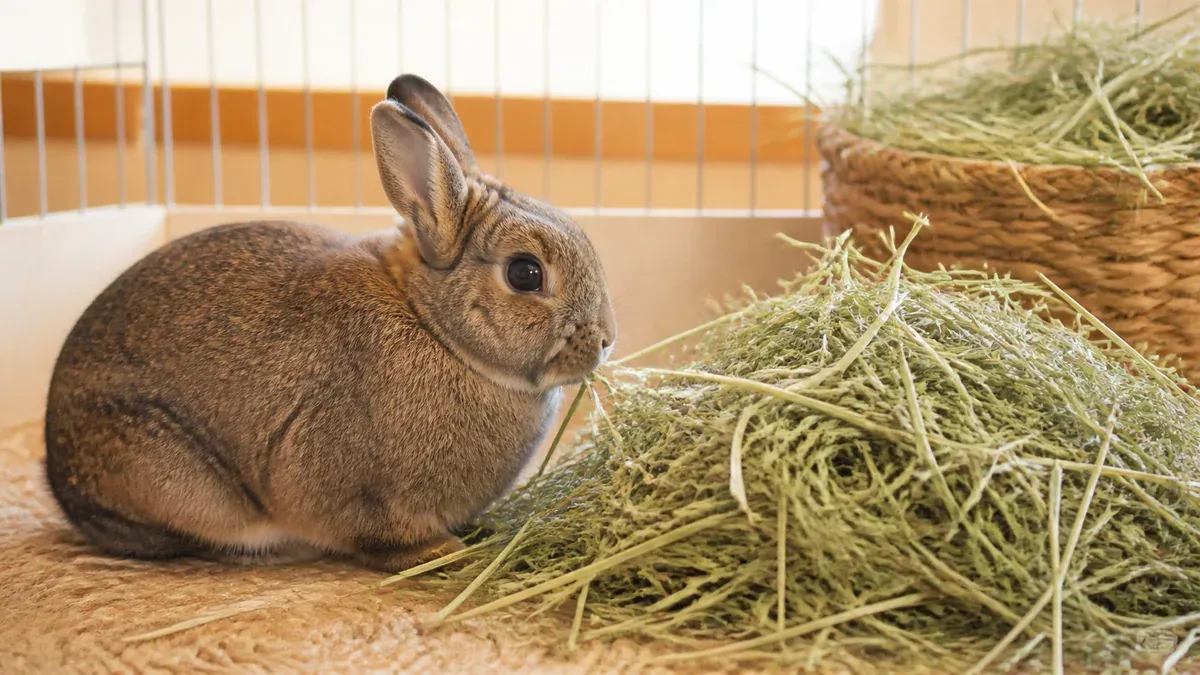
Why hay is the foundation of a rabbit’s diet
Hay should make up about 80% of the daily ration of an adult dwarf rabbit. It plays three essential roles:
- Dental wear: rabbit teeth grow continuously (10–12 cm per year). Long chewing on hay wears them naturally.
- Gut motility: long fibers stimulate cecum motility and prevent gastrointestinal stasis, the leading cause of mortality in pet rabbits.
- Mental enrichment: sorting and nibbling hay occupies several hours a day and reduces stress.
Without unlimited hay, a rabbit develops serious digestive and dental issues within days.
To build a complete ration around that base, pair hay with our full rabbit feeding guide, safe vegetables for rabbits and a measured pellet amount. If your rabbit refuses hay or slows down, also read what to do if a rabbit stops eating.
Recommended quantity by age
Kit (0–6 months)
Hay ad libitum, ideally alfalfa or an alfalfa + Timothy mix. Calcium and protein support growth.
Young adult (6–12 months)
Gradual transition to Timothy, meadow, or orchard grass hay. Alfalfa becomes too rich for a non-growing animal. Quantity: still ad libitum — aim for a volume roughly equal to the rabbit’s body size each day.
Adult (1–6 years)
Timothy or meadow hay, ad libitum. In practice: 50–80 g per kg of body weight per day. A 1.5 kg dwarf rabbit will eat 75–120 g of hay daily.
Senior (6+ years)
Keep hay ad libitum. Prefer softer cuts (2nd or 3rd Timothy cut) if chewing becomes harder. Monitor weight and adjust with your vet’s help.
Which types of hay to choose
| Hay type | Use | Notes |
|---|---|---|
| Timothy 1st cut | Adult | Long fibers, hard, low calorie |
| Timothy 2nd cut | Adult / senior | Softer, slightly richer |
| Meadow | Adult | Herb variety, high palatability |
| Orchard grass | Adult | Soft, good appetite stimulant |
| Alfalfa | Kits, pregnant does | Rich in calcium and protein |
| Oat, oat hay | Variety | Good as a supplement |
Avoid any moldy, dusty, yellowed, or damp hay: real mycotoxin risk.
For a full comparison of hay types — Timothy 1st vs 2nd cut, meadow, orchard grass and alfalfa — see our rabbit hay type comparison guide. If you have specific questions about alfalfa, our article is alfalfa good for rabbits? clarifies exactly when it helps and when to avoid it.
How to serve hay
- Hay rack or hay feeder: keeps hay clean and dry, without being compulsory (does a rabbit need a hay rack).
- Combine with a floor “buffet” corner: some rabbits prefer to forage.
- Refresh once or twice a day even if hay remains: packed or soiled hay will be ignored.
- Store hay in a dry, ventilated place away from sunlight.
Signs of insufficient consumption
Watch for:
- Smaller, drier, or irregular fecal pellets.
- Reduced number of droppings per day.
- Progressive weight loss.
- Dental issues (malocclusion, drooling).
- Apathy or food refusal.
Reduced appetite or droppings can accompany gastrointestinal stasis and warrants prompt veterinary advice; complete refusal or stopped droppings is an emergency.
If your rabbit is progressively refusing hay, read why rabbits stop eating hay to identify the cause and find the right solution.
Frequently asked questions
Can hay replace pellets?
No. Hay is the base of the diet, but pellets supply complementary nutrients in small amounts (about 5% of the daily ration).
Which hay should I pick for an adult rabbit?
Timothy or meadow hay. Avoid alfalfa past 6 months — it's too rich in calcium and protein for adult rabbits.
My rabbit refuses hay, what should I do?
Check freshness first (smell, green colour, dryness). Try a different cut or brand. If intake drops unusually, especially with fewer droppings or a change in general condition, call a rabbit-savvy vet promptly.