What vegetables can rabbits eat? The complete list and quantities
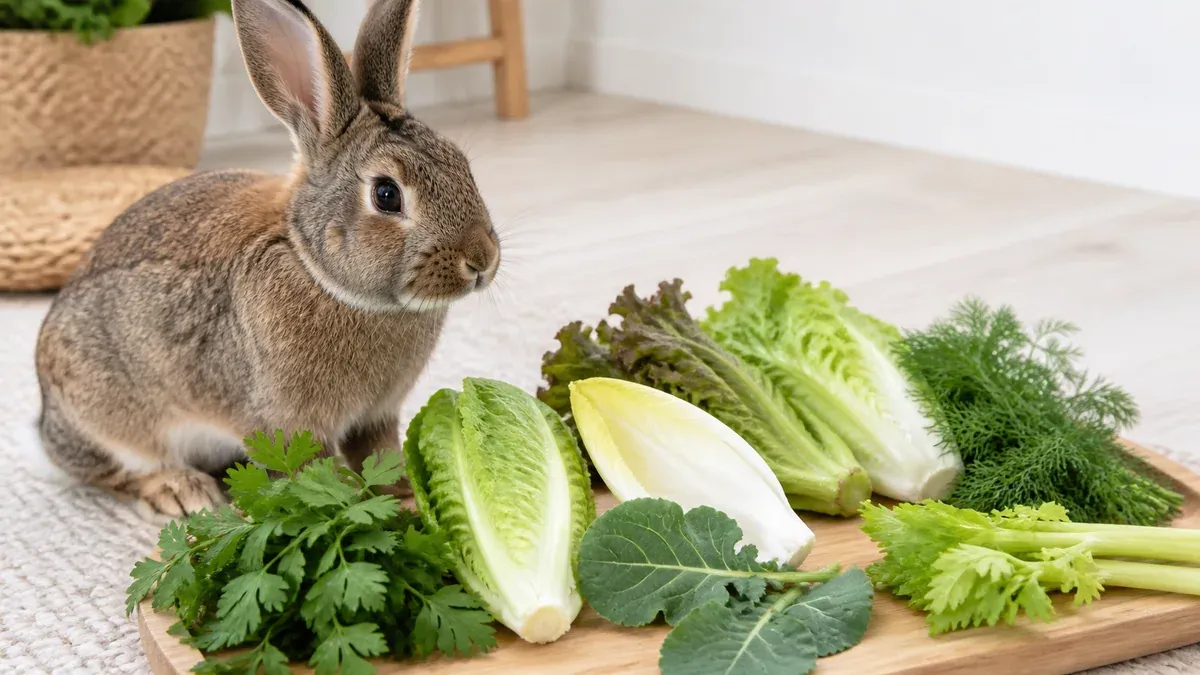
The place of vegetables in a rabbit’s diet
Fresh vegetables represent roughly 10–15% of an adult rabbit’s daily ration. They are not meant to replace hay — which remains the absolute base of the diet — but they supply water, vitamins, minerals and sensory variety.
Well-chosen, varied greens also reduce the temptation to overfeed pellets or sugary treats. As a reminder, pellets should only cover around 5% of the ration.
Recommended daily quantity
The commonly used guideline is: 1–2 cups of fresh greens per kilogram of body weight per day.
| Rabbit weight | Vegetables per day |
|---|---|
| 1 kg | 1–2 cups (50–100 g) |
| 1.5 kg | 1.5–3 cups (75–150 g) |
| 2 kg | 2–4 cups (100–200 g) |
| 3 kg+ | 3–5 cups (150–250 g) |
Split into two servings if possible (morning and evening) to spread the water intake and reduce fermentation.
Vegetables and greens to give regularly
These vegetables are well tolerated and can form the base of the daily rotation:
Leaves and fresh herbs
- Flat-leaf parsley (vitamin-rich; vary it as it is high in calcium)
- Basil, coriander, dill
- Fresh mint (in small amounts; natural antiseptic)
- Tarragon, lemon balm
Leafy greens and lettuces
- Rocket (arugula)
- Lamb’s lettuce (mâche)
- Romaine, green or red oak leaf lettuce
- Chicory / endive (slightly bitter, well liked)
- Dandelion (leaves and flowers, excellent if untreated)
- Carrot tops
Stem and flowering vegetables
- Fennel (bulb and fronds)
- Celery stalk
- Broccoli (florets and stalks, in small amounts as it is fermentable)
- Savoy cabbage (outer leaves, in small amounts)
- Courgette / zucchini (flesh, no seeds)
Roots and bulbs (limited quantities — higher sugar content)
- Beetroot (leaves rather than the root itself)
- Turnip (in small amounts)
- Parsnip (occasional treat, very sweet)
Vegetables to avoid or strictly limit
| Vegetable | Reason |
|---|---|
| Iceberg lettuce | No nutritional value, very watery |
| Onion, garlic, shallot | Toxic — see list of forbidden foods |
| Raw potato | Toxic solanine |
| Corn kernels | Very sugary, fermentable |
| Spinach | High in oxalates; give only very rarely |
| Cabbage in large amounts | Fermentable, causes bloating |
| Carrot (root) | Too sugary for daily use |
How to introduce a new vegetable
Each new food must be introduced separately, in small amounts, over two to three days:
- Offer a small leaf or stem on the first day.
- Observe stools for 24 hours (consistency, frequency, smell).
- If stools are normal, gradually increase the amount.
- If droppings become soft or the rabbit appears bloated, remove the vegetable and wait a few days.
Never introduce two new vegetables at the same time: you won’t be able to tell which one is causing the problem.
Vegetables, fruit and a common source of confusion
Cherry tomatoes (ripe, no stems or leaves) are sometimes listed as vegetables in general guides. For rabbits, they remain a fruit: the acidity and sugar content make them an occasional item, not a ration staple.
Carrot, though a vegetable, is too high in sugar for daily use. Carrot tops, on the other hand, are among the best greens to offer regularly. For the full breakdown, see can rabbits eat carrots?
A few specific guides to sharpen your greens rotation:
- Can rabbits eat endive? — a bitter, prebiotic green that’s often underrated
- Can rabbits eat parsley? — vitamin-rich, with calcium to keep in mind
- Can rabbits eat broccoli? — good as leaves, watch for gas with florets
- Can rabbits eat cucumber? — hydrating but nutritionally light
For practical guidance on which greens to include in your rabbit’s daily rotation and which to limit, see what greens to give a rabbit every day.
For a full picture of what a rabbit should eat every day, see our complete rabbit feeding guide.
Frequently asked questions
How many vegetables per day for a 2 kg rabbit?
Around 2 generous cups of varied greens per day (100–150 g), split into one or two servings. Aim for at least 3 different vegetables to cover a broader nutritional spectrum.
Can rabbits eat iceberg lettuce?
No, iceberg lettuce should be avoided: it has almost no nutritional value, is very watery and can cause diarrhea. Use romaine, lamb's lettuce or rocket instead.
Should vegetables be washed before giving them to a rabbit?
Yes, always. A rinse under cold water is enough. Avoid soaking them for long as this dilutes vitamins. Pat them slightly dry before serving to avoid excessive water intake.
How often should I change the vegetables offered?
Vary the greens every day or every other day. Repeating the same vegetables reduces nutritional diversity and may cause deficiencies over the long term.