Foods rabbits should not eat: hazards and what to do
Why a rabbit’s diet is so sensitive
The rabbit’s digestive system is both powerful and fragile. An imbalanced cecal flora can trigger gastrointestinal stasis, bloat or enterotoxemia within hours. Some foods act directly as poisons; others simply disrupt fermentation. Knowing both categories is essential.
To understand what a rabbit should eat, read our complete guide to rabbit feeding first.
Outright toxic foods: never give these
Alliums and avocado: be cautious without extrapolating
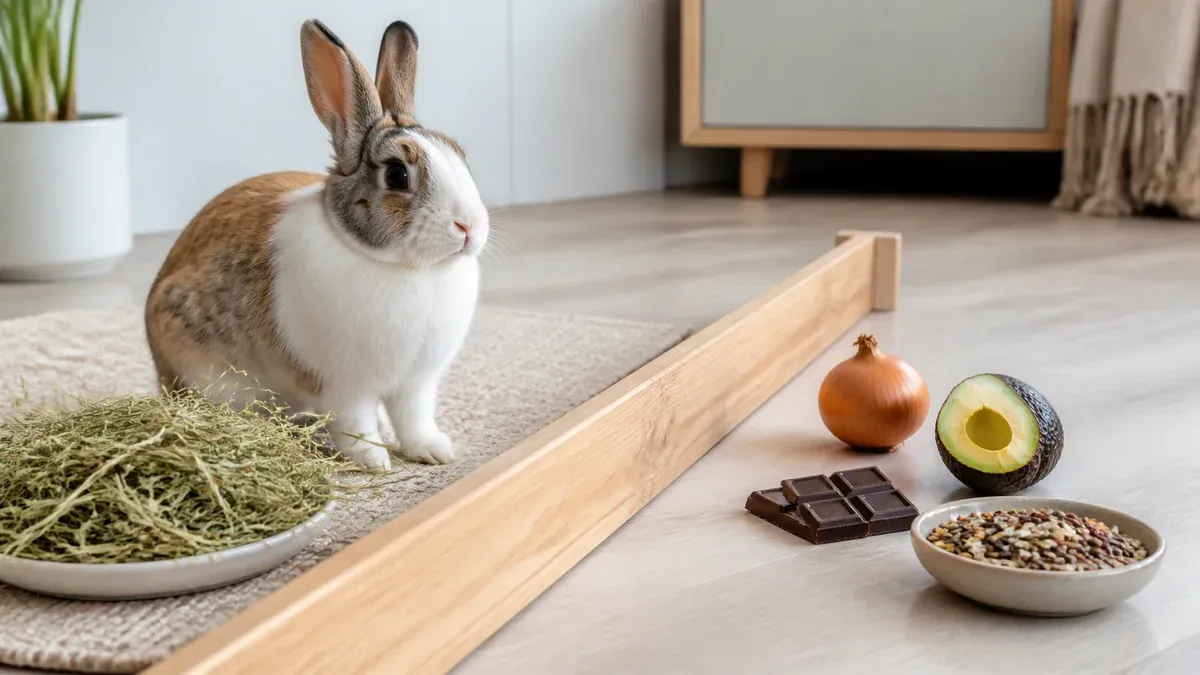
- Do not deliberately feed onion, garlic, shallot, chives, leek or avocado.
- Rabbit-specific toxicology data are less robust than for some other pets. After an ingestion, call a vet or poison service with the product, amount and time rather than applying a threshold written for a dog or cat.
Rhubarb
- The Merck Veterinary Manual lists rhubarb leaves as toxic and not to be fed. No safe household dose can be offered here.
Potatoes and green tomatoes
- Potato eyes, new shoots and green parts appear on the Merck Veterinary Manual’s toxic list. Keep tomato leaves and stems away too; this article does not recommend tomato as a staple food.
Common ornamental plants
| Plant | Toxicity level |
|---|---|
| Ivy (Hedera helix) | High |
| Philodendron | High |
| Dieffenbachia | High |
| Azalea, rhododendron | Very high |
| Lily of the valley | Very high |
| Foxglove | Very high |
| Ficus | Moderate |
| Pothos | Moderate |
If your rabbit roams freely in an apartment, remove these plants from its area or place them out of reach.
Strongly inadvisable foods
These are not always immediately lethal but can cause serious digestive problems, nutritional deficiencies or obesity:
- Grains and grain products: bread, biscuits, pasta, rice, oat flakes, muesli, seed mixes. They ferment in the cecum and disrupt the gut flora. “Rabbit mixes” sold in pet shops fall into the same category — read why seed mixes are bad for rabbits for the full explanation.
- Legumes: beans, chickpeas, lentils, soy (too high in protein, prone to fermentation).
- Fruit in large amounts: sugars promote diarrhea and obesity. An occasional small bite is acceptable, nothing more.
- Dairy products: rabbits are strict herbivores; their digestive tract cannot tolerate dairy.
- Nuts and oily seeds: too fatty, poorly tolerated.
- Chocolate: theobromine is toxic to rabbits, just as it is to dogs and cats.
- Corn kernels: very sugary, poorly digestible, cause fermentation.
- Any new food introduced abruptly: cabbage is not toxic and can be one of a rabbit’s greens, but introduce any new food gradually and in a small amount.
Commonly misunderstood foods
Carrots
Carrots are not toxic but are very high in sugar. An occasional small slice is fine; making them a daily food increases the risk of obesity. Carrot tops, however, are excellent: fresh, fiber-rich, and very much enjoyed. For the full breakdown on portions and frequency, see our guide: can rabbits eat carrots?
Alfalfa for adults
Alfalfa is not a poison. Its higher calcium and energy make it generally unsuitable as a long-term staple for a non-breeding adult; sustained high intake can contribute to urinary problems in some rabbits. Young, pregnant and nursing rabbits have different needs that should be tailored with a vet. For the detail, read our guide to alfalfa.
Celery and rocket
Well tolerated and recommended in regular rotation. Not to be confused with risky foods.
If you need a practical safe-food list, use our guide to vegetables rabbits can eat.
What to do if your rabbit eats something toxic
- Do not wait for symptoms: some toxins act with a delay.
- Precisely identify what was ingested and estimate the amount.
- Contact an exotic-pet veterinarian or animal poison control center immediately.
- Do not try to induce vomiting: rabbits are physiologically unable to vomit; any attempt is counterproductive.
If you notice lethargy, seizures, heavy diarrhea, labored breathing or a distended abdomen, this is an emergency: seek veterinary care without delay.
For other alert situations, read our guide on what to do if your rabbit stops eating. Danger isn’t only on the plate: if your rabbit roams free, see also which houseplants are toxic to rabbits.
Veterinary sources
- Merck Veterinary Manual — plants and foods harmful to rabbits
- Merck Veterinary Manual — diet for rabbits
- RSPCA — a healthy diet for rabbits
Frequently asked questions
My rabbit accidentally ate onion. What should I do?
Do not offer any more. Promptly call a rabbit-savvy vet or animal poison service with the product, amount and time. Rabbit-specific evidence is less precise than it is for dogs and cats, so do not infer the risk from another species or wait for symptoms before seeking advice.
Are carrots forbidden for rabbits?
No, but they are very high in sugar and should only be given in limited amounts: an occasional small slice. Carrots are not a staple vegetable for rabbits. Carrot tops, on the other hand, are highly recommended.
Can rabbits eat bread or biscuits?
No. Bread, biscuits and any product made from refined cereals or added sugars can cause intestinal fermentation and disrupt the cecal flora.
Are houseplants dangerous for a free-roaming rabbit?
Many of them are: ivy, philodendron, pothos, ficus, dieffenbachia, azalea, marigold. If your rabbit roams freely, move or remove these plants from its reach.