My rabbit is drooling: causes and when to see a vet
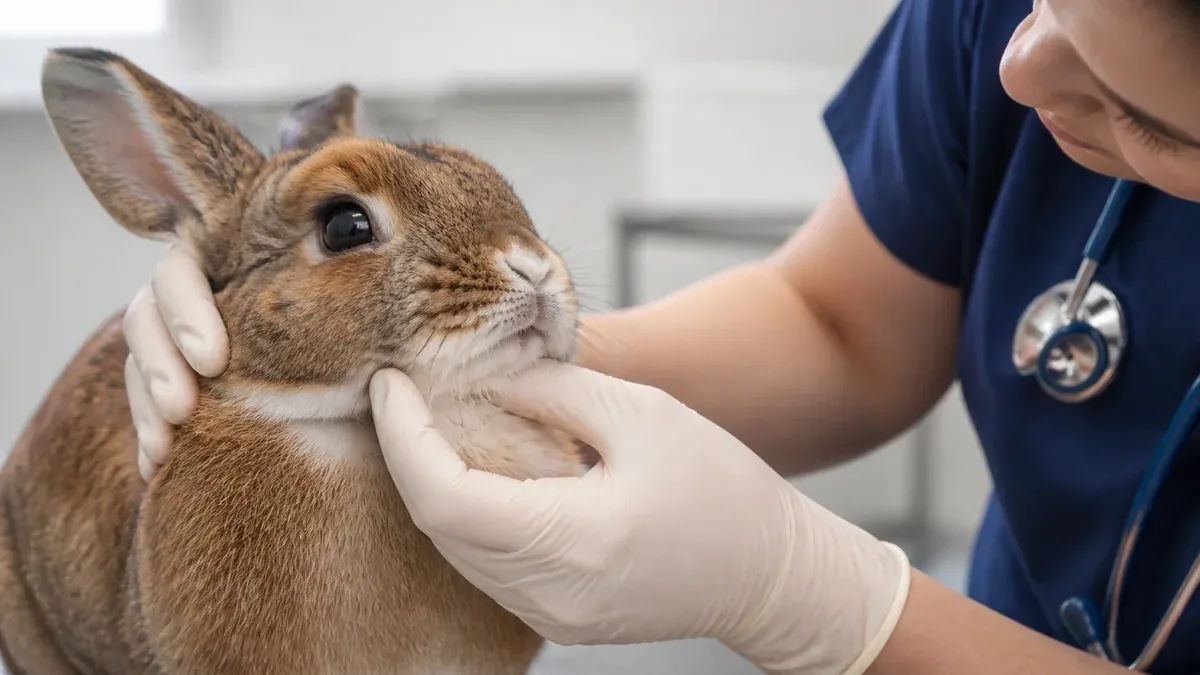
Veterinary warning — A rabbit that drools persistently needs to be examined by a rabbit-savvy vet promptly. Do not attempt to inspect the molars without specialist equipment, and never give pain relief without a prescription.
Rabbits do not drool under normal conditions. Visible salivation — damp fur under the chin, food dropping from the mouth, a clenched jaw — should therefore be taken seriously. The most common cause is dental, but other origins exist. A veterinary examination helps identify the cause before the situation worsens.
The most common causes
Malocclusion and dental problems (the main cause)
A rabbit’s teeth grow continuously throughout its life — incisors at roughly 2–3 mm per week. When they do not wear down correctly — due to insufficient hay, or to anatomical predisposition (particularly in dwarf breeds) — they overlap or develop sharp spurs on the molars. These spurs cut the tongue and cheeks, cause painful ulcers, and trigger excessive salivation.
Signs associated with dental problems:
- Permanently damp, yellowish or sticky fur under the chin and chest
- Food falling from the mouth during meals
- The rabbit starts eating then stops, head slightly tilted
- Progressive weight loss
- Sometimes: a palpable swelling under the jaw (dental abscess)
- Loud tooth grinding, a pain signal, often accompanies drooling of dental origin
Foreign object in the mouth
Less common but possible: a thick hay stalk, a toy fragment or a piece of wood wedged between the molars can cause sudden, acute drooling. Unlike malocclusion, which develops gradually, this type of drooling appears abruptly.
Heat stress and heatstroke
In excessive heat (from 28–30 °C / 82–86 °F), a rabbit may drool as part of a heatstroke reaction. It is never an isolated sign: it is accompanied by collapse, very rapid breathing, and burning-hot ears. See our guide on rabbit heatstroke for first steps — this is an emergency.
Poisoning
Certain toxic plants — pothos, dieffenbachia, ivy — cause sudden, copious drooling accompanied by trembling, collapse or diarrhoea. Again, seek emergency veterinary care immediately.
How to spot drooling in your rabbit
Dental drooling can go unnoticed for several weeks as it develops gradually. Check regularly for these signs:
| Sign | What it may indicate |
|---|---|
| Permanently damp fur under the chin | Likely chronic drooling |
| Food dropping during meals | Oral pain or difficulty |
| Rabbit eats soft greens but avoids hard hay | Possible malocclusion |
| Swelling under the jaw or skull | Dental abscess |
| Weight loss without obvious cause | Pain reducing appetite |
These signs are part of the broader picture described in our guide on how to tell if a rabbit is in pain.
What to do
Seek veterinary care promptly
Unlike some symptoms that can be temporary, drooling in rabbits does not resolve on its own. Malocclusion progresses without treatment — spurs grow, wounds worsen, and pain stops the rabbit from eating. A rabbit that stops eating develops GI stasis within hours.
Consult a rabbit-savvy vet within the day or the next morning at the latest — do not wait.
What the vet will do
- Oral examination (often under light anaesthesia to access the molars)
- Dental X-rays if molar malocclusion is suspected
- Spur filing under anaesthesia (a quick procedure, repeated every 4–6 months depending on severity)
- Pain relief and antibiotics if an abscess is present
What not to do
- Attempt to inspect the molars yourself: they are not visible without specialist equipment
- Ignore damp fur under the chin that has been present for several days
- Give human painkillers (ibuprofen, paracetamol, aspirin): all are toxic to rabbits
Prevention: reducing the risk of dental problems
Natural tooth wear depends almost entirely on hay. Pellets are too soft to grind the molars adequately. The three most effective preventive measures:
- Unlimited hay at all times — the only reliable way to ensure regular dental wear
- Weigh your rabbit every 2–3 weeks — weight loss is often the first sign of a silent dental problem
- Watch eating behaviour — a rabbit that selects food (eating greens but avoiding coarse hay) may be signalling dental pain
For a deeper look at hereditary causes, veterinary diagnosis and long-term treatment options, see our full guide on rabbit dental malocclusion.
Frequently asked questions
How do I know whether my rabbit is truly drooling or just got wet accidentally?
Check the area under the chin and chest: chronic drooling leaves fur permanently damp, sometimes yellowish or sticky, with a faint sour smell. If the area dries within minutes, it is probably accidental wetting. If it stays wet between meals, suspect a dental or oral problem.
My rabbit drools while eating — is that normal?
No. A healthy rabbit does not drool while eating. If you see saliva around the mouth during or after meals, or if food keeps dropping from the mouth, consult a rabbit-savvy vet — these signs are typical of malocclusion or dental pain.
Can heat make a rabbit drool?
Yes, but rarely as an isolated sign. During severe heat stress or heatstroke, excessive salivation can occur alongside other signs: collapse, rapid breathing, very hot ears. This is an immediate veterinary emergency.
Can I wait a few days before taking my drooling rabbit to a vet?
Not if the drooling is clear and persistent. Untreated dental problems progress quickly: spurs grow, sores worsen, and pain stops the rabbit from eating — which rapidly triggers GI stasis. Consult a vet within the day or the next morning at the latest.