Rabbit heatstroke: how to recognise the emergency and act
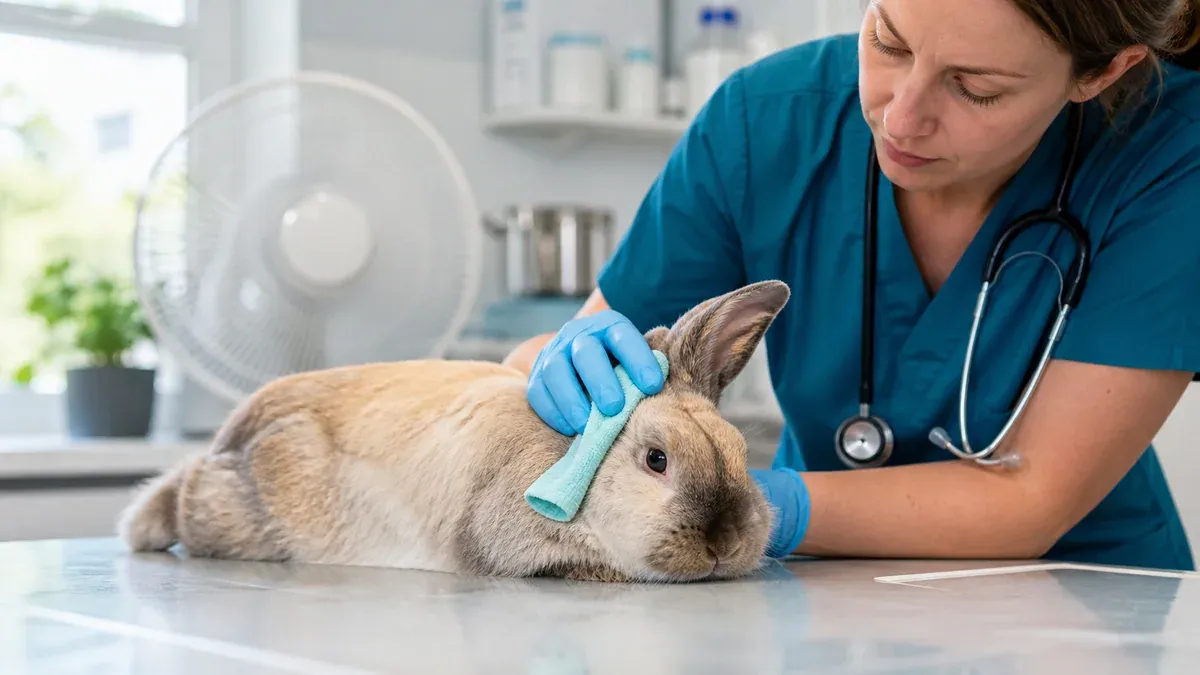
Veterinary warning — Heat stroke is a life-threatening emergency. If your rabbit shows several of the signs described below, call a vet immediately while applying the first-aid steps described here. Do not wait.
Rabbits cannot sweat and are very poor at regulating their own body temperature. Their only resources in the heat — dilating blood vessels in their ears and breathing faster — are quickly overwhelmed once ambient temperature exceeds 28–30°C (82–86°F). Heat stroke can develop within minutes even in a healthy rabbit, and it can be fatal without rapid intervention.
Recognising the signs of heatstroke
Signs often appear progressively, then deteriorate quickly:
| Stage | Observable signs |
|---|---|
| Heat stress (early) | Faster breathing, rabbit lying flat on the floor, red and hot ears, unusual stillness |
| Active heatstroke | Very rapid breathing, slightly open mouth, drooling, burning ears, prostrate and barely responsive |
| Critical state | Convulsions, loss of balance, whimpering, collapse, unresponsive |
High-risk situations to know:
- Unventilated room in a heat wave (top-floor flat, parked vehicle)
- Enclosure in direct sunlight even for a few hours
- Transport carrier in a car, even in partial shade in summer
- Heat wave with high humidity (perceived heat is significantly worse)
For temperature thresholds and the rabbit’s comfort zone, see our guide on what temperature rabbits can tolerate.
If your rabbit is breathing fast without other signs of full heatstroke, see our article on causes of rapid breathing in rabbits to assess the severity.
What to do immediately: first-aid steps
If your rabbit shows signs of heatstroke, act in this order:
- Call a rabbit-savvy vet immediately — even while performing first-aid steps. Let them know you are on your way.
- Move the rabbit to the coolest available place (air-conditioned room, tiled bathroom, cellar).
- Dampen the ears and paws with cool water — not cold, not iced. A sudden thermal shock makes things worse. The ears act as a natural radiator and respond well to gentle cooling.
- Set up indirect airflow with a fan aimed at the wall rather than directly at the rabbit.
- Offer fresh water to drink if the rabbit is conscious and can swallow. Do not force it.
- Never submerge the rabbit in water and do not place ice directly on the body.
- Transport to the vet wrapped loosely in a slightly damp cloth.
What the vet will do: IV fluid therapy, rectal temperature monitoring, treatment of complications (convulsions, kidney failure, coagulopathy). These interventions cannot be replaced by home treatment.
Rabbits most at risk
All rabbits are vulnerable to heat, but some are significantly more so:
- Elderly rabbits (over 6–7 years): reduced thermoregulation
- Dwarf and round-headed breeds: body shape limits airflow
- Overweight rabbits: fat tissue insulates and retains heat
- Sick or medicated rabbits: impaired immunity and thermoregulation
- Pregnant or nursing does: higher metabolic load
For signs that indicate a rabbit is suffering or in distress, see our guide on how to tell if a rabbit is in pain.
Preventing heat stroke: good habits
Indoors
- Close blinds and curtains during the day to block solar radiation
- Always have a ceramic or marble tile in the enclosure — the rabbit will instinctively lie on it
- Place a frozen water bottle wrapped in a cloth in the enclosure — avoid direct skin contact
- Do not aim a fan directly at the rabbit; point it at the wall for indirect circulation
- Never position the enclosure facing a sun-exposed glass door or window
Outdoors and during travel
- In warm weather (above 25°C / 77°F), bring the rabbit indoors — outdoor shade is not enough
- Never leave a rabbit in a vehicle even for a few minutes
- When travelling, insulate the carrier with a damp cloth and keep a cooling pack on the outside
- Before a long trip or holiday, plan these precautions with our guide on traveling with a rabbit
During a heat wave
- Check twice daily that the room where the rabbit lives stays below 26°C (79°F)
- If no air conditioning is available, a cool tiled floor or basement corner can make a real difference
- Check on your rabbit visually every 2–3 hours in hot weather: deterioration can happen fast
- Get the emergency supplies and the route to the clinic ready in advance: that is the heatwave module of the rabbit first aid kit
To prevent recurrence, focus on the real room temperature, ventilation, shade, and constant access to water. Our dedicated guide on how to keep a rabbit cool in summer safely details the methods that work and the mistakes to avoid.
Frequently asked questions
How do I cool down a rabbit suffering from heat stroke?
Dampen the ears and paws gently with cool (not cold, not iced) water and move the rabbit to a ventilated, cool area. Never submerge a rabbit in water. Call a vet immediately — home cooling is a first-aid measure, not a treatment.
At what temperature does a rabbit risk heat stroke?
The danger zone starts at 28°C (82°F), especially when humidity is high. At 30°C (86°F) and above, the risk of hyperthermia is significant even for a healthy rabbit. Elderly rabbits, compact dwarf breeds, and overweight rabbits are particularly vulnerable.
My rabbit is breathing fast but seems conscious — is it serious?
Fast breathing in hot weather is an early warning sign of heat stress. It is not yet full heat stroke, but it is a serious signal. Move the rabbit to a cool place immediately, offer fresh water, and monitor closely. If breathing does not slow within 15–20 minutes, contact a vet without delay.
Can heat stroke kill a rabbit quickly?
Yes. Without intervention, severe hyperthermia can be fatal within a few hours. Rabbits cannot sweat and have no effective thermoregulation above 28–30°C. The speed of intervention is the single most important factor for the outcome.