Traveling with a rabbit: what to plan ahead
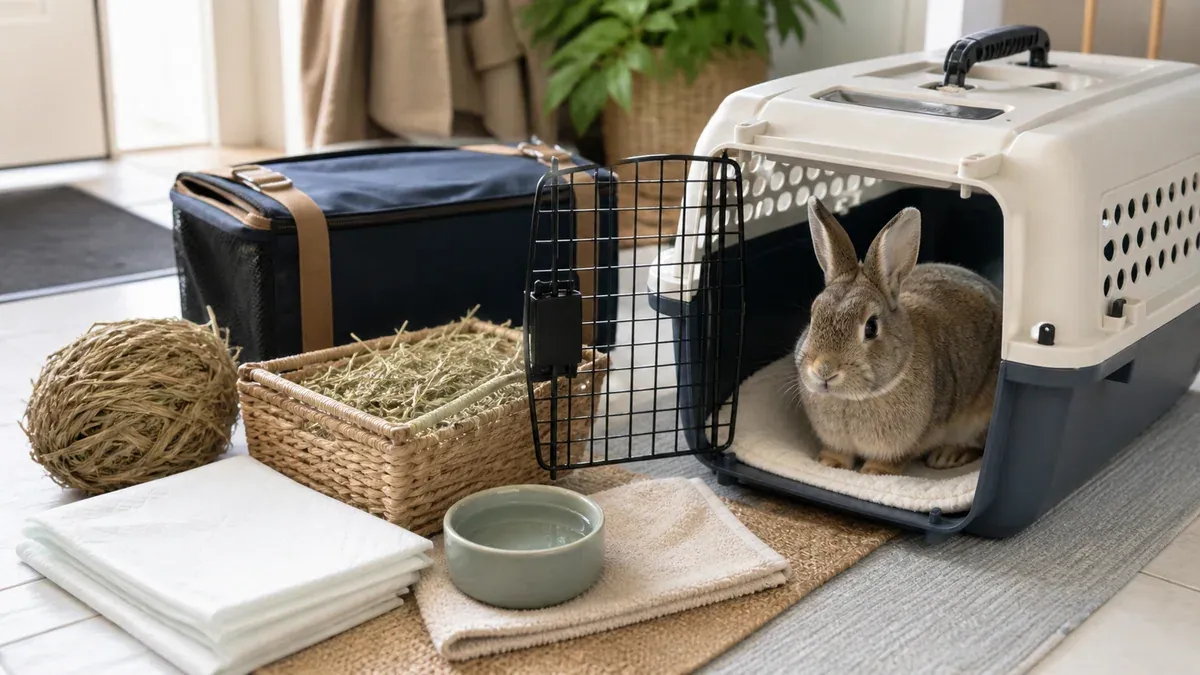
Before asking how to travel with a rabbit, ask the real question: do you actually need to bring it? Rabbits are territorial animals that cope badly with change; in most cases, arranging care at home is the better option. You only take a rabbit along for a house move, a long stay, or when no reliable care option exists. This guide helps you decide, then plan everything if leaving with it is necessary.
Bring it or arrange care: the first decision
Unlike a dog, a rabbit does not “enjoy” a trip: it mostly endures the stress of transport and an unfamiliar place. This trait is part of its nature, as the rabbit species profile explains. The simple rule:
- Short stay (a few days to two weeks): favour care at home. The rabbit keeps its environment, its landmarks and its litter box.
- Long stay, house move, or no care option available: consider bringing it, while carefully preparing the journey and the arrival.
A rabbit is never left alone for “a few days” with a big pile of food, the way you might for a cat. Its gut is fragile: a fall in appetite or droppings can signal GI stasis and requires prompt action. Daily presence is essential.
Care options (if you go without it)
In order of preference for limiting stress:
- Someone who comes to your home each day: the best option — the rabbit’s environment never changes.
- A rabbit-savvy pet sitter who visits: brief them precisely on feeding and warning signs.
- A specialist rabbit/exotics boarding: acceptable, but it means a change of place; check that it keeps species well separated (no predators nearby).
In every case, leave written instructions: hay and pellet amounts, the usual greens, and above all what to watch for — a rabbit that stops eating or passing droppings is an emergency, not a mood. Leave the contact of a rabbit-savvy vet and your rabbit’s routine.
If you must bring it: preparing the journey
Most of the logistics of moving by car (setting up the carrier, safety, stops) are covered in our dedicated guide on how to transport a rabbit by car. A few points specific to longer trips:
- Heat is the main danger. A rabbit must never be left in a parked vehicle in the sun, even for a few minutes: heatstroke can be fatal very quickly. Travel during cooler hours and keep the cabin temperate.
- Hay and water stay available. Line the carrier with hay: it feeds, occupies and reassures. Offer water at every stop.
- A rabbit that won’t eat during the journey is common and harmless over a few hours; what matters is that it starts again once things are calm.
Train and plane
- Train: often possible in a carrier, subject to the operator’s rules. Check before booking.
- Plane: far more stressful, governed by strict conditions specific to each airline and destination. Keep it for genuinely unavoidable cases (moving abroad), planning long in advance: documents, a possible veterinary certificate, and cabin-versus-hold conditions.
What to pack
A short checklist so nothing is forgotten:
- a sturdy, well-ventilated carrier,
- plenty of hay (the staple food for the whole journey),
- its usual greens or pellets, in the same proportions,
- a water bowl and a way to refill it,
- some of its usual litter (the smell reassures),
- its litter box or a substitute,
- the contact of a rabbit-savvy vet near your destination, found before you leave.
Don’t use the trip as an occasion to change its diet: keep exactly the same foods so you don’t add a digestive upset to the stress of the move.
On arrival: secure and reassure
A rabbit in an unfamiliar place first tries to hide and get its bearings. To help it:
- set up a defined, quiet space with its litter, hay and a hideout,
- let it explore at its own pace, without forcing it out or leaving it free-roaming in an unsecured place,
- check that it eats again and passes droppings within the following hours: that is the best sign it is coping with the change.
A rabbit that, several hours after settling somewhere quiet, still won’t eat and stops producing droppings should be seen by a vet without delay.
Going further
If the question is leaving without them, the maximum time alone and the visiting schedule it requires are covered in how long can you leave a rabbit alone.
To organise the living space and everyday travel, browse all our rabbit housing guides.
Frequently asked questions
Is it better to bring my rabbit or arrange care at home?
In most cases, care at home is less stressful: rabbits are territorial and cope badly with a change of environment. You should only bring a rabbit for a house move, a long stay, or when no reliable care option exists.
Can a rabbit travel by train or plane?
By train it is often possible in a carrier, subject to the operator's rules. Air travel is far more stressful and comes with strict conditions: keep it for situations where it is truly unavoidable, and check with the airline well in advance.
How long can a rabbit be left alone if I go without it?
Beyond a day, you need someone to call in daily to check the water, hay, litter and — above all — that the rabbit is eating and passing normal droppings. A rabbit is never left alone for 'a few days' like a cat: a gut shutdown can become an emergency within 12 to 24 hours.
What if my rabbit won't eat during the journey?
A brief refusal over a few hours of travel is common. Offer hay and a familiar vegetable at the next stop or on arrival. If the rabbit still won't eat and stops passing droppings several hours after settling somewhere quiet, contact a vet: the risk is the gut shutting down.