How to transport a rabbit by car
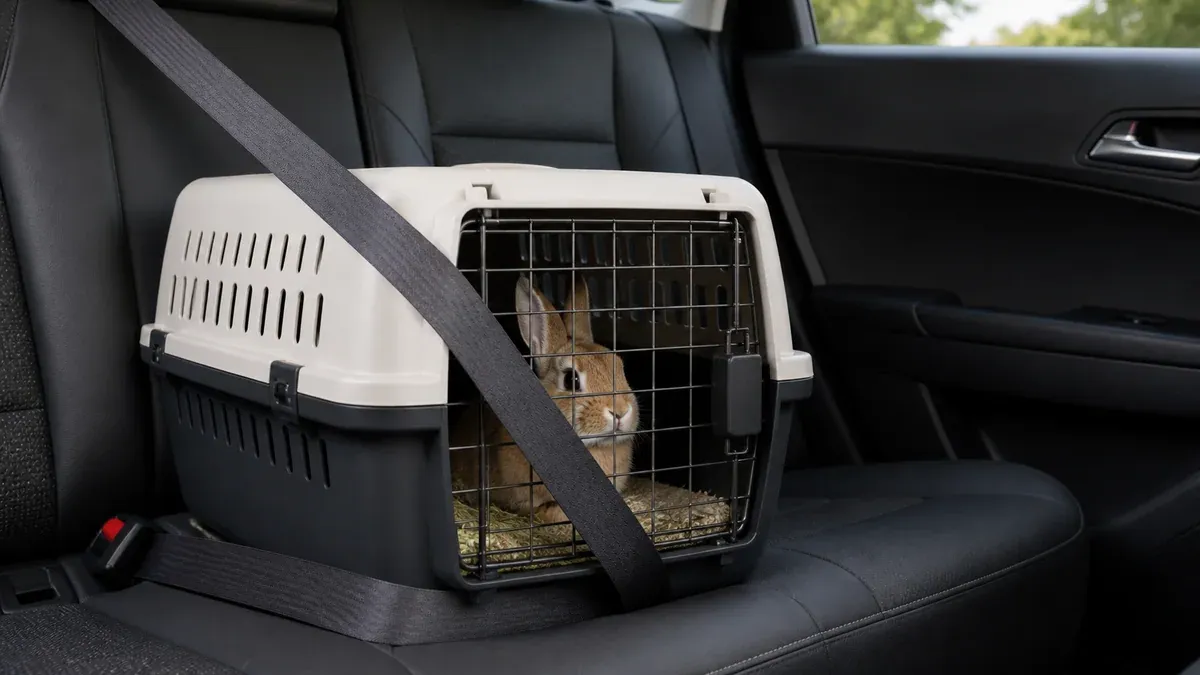
A rabbit should travel by car in a hard-sided, closed carrier that is secured in place to prevent sudden movement, with close attention to the temperature inside the car and to travel stress. This guide covers the right equipment, how to secure the carrier, and the habits that make the trip easier on the rabbit.
Choosing the right carrier for car travel
A hard-sided carrier with a front-opening door, large enough for the rabbit to turn around, is the best option for car travel: it offers better protection than a soft bag during sudden braking and limits sideways movement. The full model choice — dimensions, top opening, floor, fastening — is covered in how to choose a rabbit carrier.
Line the bottom with a thin layer of absorbent litter or a towel, and add a small amount of hay: the rabbit can nibble during the trip, which keeps it occupied and reduces stress.
Securing the carrier inside the car
- Secure the carrier with a seatbelt or wedge it firmly between the seat and the seatback so it cannot slide during turns or braking.
- Keep it flat, never on a sloped or unstable surface.
- Avoid a closed boot/trunk: the rabbit should stay inside the cabin, within sight, with enough airflow.
- Never attach the rabbit directly with a harness in the car: only the carrier itself should be secured.
Managing temperature during the trip
Rabbits cannot sweat and cope very poorly with heat in an enclosed space. A car cabin can heat up fast, even with the windows slightly open. A few essential points:
- Never leave a rabbit alone in a car, even in the shade and even for a few minutes.
- Use air conditioning or suitable ventilation in hot weather, without blowing cold air directly onto the carrier.
- In summer, tuck a frozen water bottle wrapped in cloth next to the carrier to cool the surrounding air.
- For precise temperature thresholds and warning signs, see our guide on rabbit heatstroke.
Reducing travel stress
- Partially cover the carrier with a light cloth to limit visual stimulation, without blocking ventilation.
- Drive smoothly, avoiding sudden acceleration and braking.
- Keep noise down (low radio, calm conversation): a rabbit’s hearing is very sensitive.
- Get the rabbit used to the carrier beforehand: the four-step method is set out in how to get a rabbit used to its carrier.
Does a rabbit get carsick?
Unlike dogs, rabbits do not vomit — they do not experience true “car sickness” in the usual sense. The real risk is different: intense, prolonged stress can slow down digestion, sometimes with a temporary drop in appetite after the trip. That is one more reason to keep the trip as short as possible, keep hay available throughout, and make sure the rabbit is eating normally again within a few hours of arrival.
Short trips and long trips
For a trip under two hours, the rabbit can generally stay in the carrier without a break as long as the temperature is fine. For longer trips:
- Plan a stop roughly every 2 hours, with the vehicle parked somewhere safe, to check on the rabbit and offer water.
- Never take the rabbit out of the carrier in an unsecured spot (a motorway rest stop, a car park): the risk of escape is high and the rabbit remains very vulnerable to stress there.
- Keep hay available continuously; a rabbit’s gut should never stop moving for long.
Pre-departure checklist
| Check | Why |
|---|---|
| Hard-sided carrier secured, door firmly closed | Prevents sudden movement or escape |
| Hay and a little absorbent litter in the bottom | Keeps the rabbit occupied and absorbs toileting |
| Water offered just before leaving | A full water bowl would spill during the trip |
| Car temperature checked | The top risk factor, in both summer and winter |
| Rabbit pre-accustomed to the carrier | Noticeably reduces stress felt during the trip |
When to postpone or adjust the trip
Postpone travel if possible during a heatwave without reliable air conditioning in the vehicle, or if the rabbit shows marked distress within the first few minutes (very fast breathing, prostration). An elderly, sick or recently operated rabbit needs extra precautions — check with your rabbit-savvy vet before a long trip.
Before even preparing the car, the real question is often whether to bring the rabbit at all or arrange care: our guide on traveling with a rabbit helps you decide and organize a stay or a move.
Frequently asked questions
Can a rabbit ride loose in the car without a carrier?
No. A rabbit loose in the cabin can hide under the pedals, chew wires, or panic at sudden braking. A hard-sided, closed and secured carrier is essential, even for a trip of just a few minutes.
Should I cover the carrier during the trip?
Partially covering the carrier with a light cloth reduces visual stimulation and often calms the rabbit. Never fully cover the ventilated sides, and make sure the inside stays cool, especially in summer.
How long can a rabbit stay in a carrier?
For a trip under 2 hours, the rabbit can usually stay in the carrier without a break as long as the temperature is fine. Beyond that, plan a stop with the vehicle parked to offer water and check on the rabbit, without taking it out in an unsecured spot.
My rabbit toileted during the trip — is that normal?
Yes, this is common, usually linked to travel stress. Line the bottom of the carrier with a thin layer of absorbent litter or a towel to limit discomfort and make cleanup easier on arrival.