Best floor surface for a house rabbit
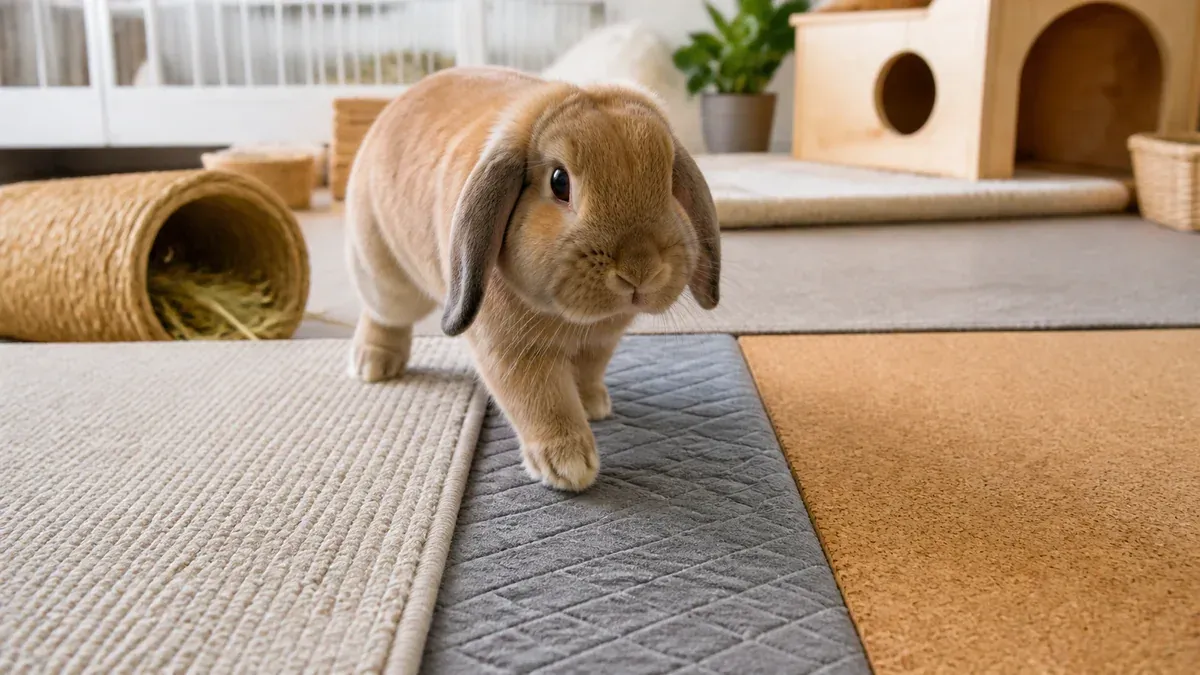
Rabbits have no paw pads like dogs or cats. Their feet are covered with dense fur, which makes them highly sensitive to slippery surfaces and hard flooring. Choosing the right floor covering is not an aesthetic choice: it is a condition for safe and comfortable free-roaming sessions. This guide covers the floor of the living space — not the litter substrate, which is covered in our article on the best bedding for rabbits.
Why flooring matters for rabbit health
The slipping hazard
On polished hardwood, tiles or smooth vinyl, a rabbit that accelerates, brakes or pivots cannot grip the surface. Its paws slide out sideways. Over time, this causes:
- Musculoskeletal micro-injuries to the limbs and hips
- Chronic stress from postural insecurity: the rabbit avoids running and restricts its movements
- In the long term, a predisposing factor for early arthritis in susceptible individuals
Sore hocks (pododermatitis)
Sore hocks — inflammation and ulceration of the foot pads — are common in rabbits kept permanently on hard, cold or slippery surfaces. The condition is painful, difficult to treat and often becomes chronic once established. Heavier or overweight rabbits are most vulnerable.
Cold floors
Tiled, concrete or stone floors in winter increase heat loss, especially during extended rest. Young, elderly or convalescing rabbits are most affected.
Floors to avoid or adapt
Polished or lacquered hardwood
Very slippery, intolerant of scratching and moisture (urine). Must be protected with rugs or textile runners throughout any area used by the rabbit.
Ceramic tiles
Slippery unless specifically anti-slip (look for a minimum R9 slip-resistance rating). Cold in winter. Solution: cork tiles or thermal rugs on resting and movement areas.
Smooth vinyl or linoleum
Same slipping risk as tiles. Slightly textured vinyl is better but still benefits from rug strips along movement corridors.
Wire grids and slatted floors
Avoid entirely for free-roaming areas. Grids apply constant pressure to foot pads and are one of the most direct causes of sore hocks. They are only marginally acceptable in a very limited litter-box zone and should never form the main floor.
Carpet
Natural grip, thermal comfort — carpet is broadly suitable for rabbits. Two reservations: some rabbits chew it (risk of ingesting fibres), and it retains moisture after repeated soiling (hygiene must be monitored). If your rabbit targets the carpet, cover it with a natural-fibre rug or replace the section.
The best floor options
Jute or sisal rugs
The best all-round option: good grip, natural fibres that are unattractive to chew, easy to clean or replace. Resistant to claws. Ideal for movement and resting zones.
Cork tiles
Soft, non-slip, thermally and acoustically insulating. Natural cork is rarely chewed. Available in 30–60 cm squares, easy to lay and replace individually. Slight drawback: less resistant to repeated urine soaking without a water-repellent treatment.
Natural rubber or EVA foam mats
Excellent for high-traffic zones (corridors, play areas). Outstanding grip, washable, soft underfoot. Choose a model free from PVC and phthalates.
Non-slip textile runners
Practical for creating movement corridors on hardwood or tiled floors without covering everything. They guide the rabbit’s routes and protect the most-used paths.
How to organise the floor space
The basic rule: any surface the rabbit crosses regularly must be non-slip.
| Area | Priority | Recommended solution |
|---|---|---|
| Litter, hay and water zone | Essential | Jute rug or cork tiles |
| Resting area | Essential | Soft rug or washable mat |
| Movement corridors | Important | Textile runners or rubber mats |
| Occasional exploration zones | Moderate | Partial coverage or adapt to behaviour |
For the full picture on making a room safe for a free-roaming rabbit, see our guide on rabbit-proofing a room, which also covers cable protection, toxic plants and entrapment zones.
Frequently asked questions
My rabbit slips on the hardwood floor — is that a problem?
In the short term it is uncomfortable but not immediately harmful. Over time, repeated slipping causes musculoskeletal micro-injuries and promotes sore hocks (pododermatitis) — a painful foot pad inflammation. Lay non-slip rugs or mats in the main movement areas to eliminate this risk.
Can a rabbit live on carpet?
Yes, carpet provides natural grip and is reasonably comfortable. The downsides are that some rabbits chew it — ingesting synthetic fibres is problematic — and it retains fur and moisture. If your rabbit chews the carpet, replace it with a jute or natural-fibre rug in that area.
Is cold tiling dangerous for a rabbit?
Cold tiles in winter increase heat loss and can make young, elderly or recovering rabbits uncomfortable. The combination of cold and slipperiness is the main drawback of tiled floors. Rugs placed on resting and movement areas solve both issues at once.
Do I need to cover the entire floor or just the main paths?
At minimum, cover the main movement paths, the litter-hay-water area, and the resting zone. If the rabbit has access to the whole room, covering the full floor simplifies management. Areas the rabbit rarely visits can remain uncovered.