Best bedding for rabbits: a material-by-material comparison
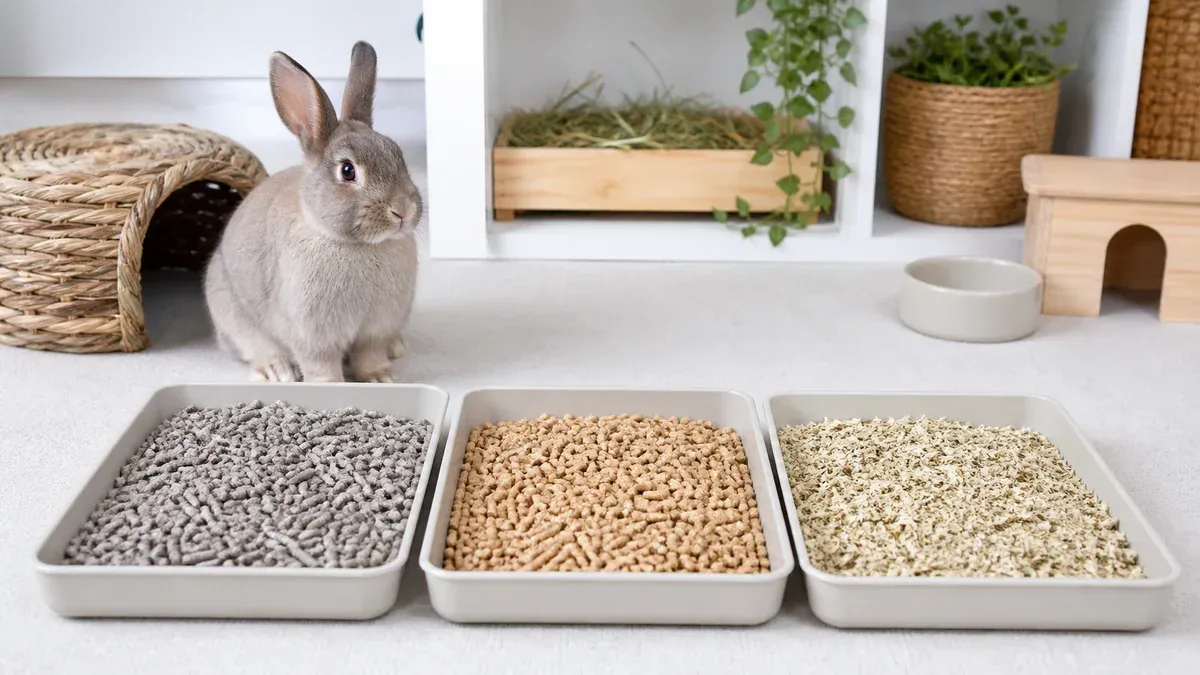
What makes a good rabbit bedding
A suitable rabbit bedding must meet several requirements at once:
- High absorption: rabbit urine is concentrated and pungent
- Low dust: rabbits spend time digging through their bedding; fine particles irritate the respiratory tract
- Non-toxic if ingested: rabbits sometimes eat their bedding, especially during moulting season — if the tray empties faster than the hay, see my rabbit is eating its litter
- Thermal comfort: rabbits lie down in their tray between hay meals
- Affordable cost: bedding is changed regularly, so budget matters
Comparison of available materials
Hemp (recommended)
Hemp is now the reference choice among rabbit and small-animal owners. Its strengths:
- Excellent absorption (up to four times its weight in liquid)
- Very low dust
- Naturally breaks down ammonia (reduced odors)
- Non-toxic if ingested in small amounts
- Often available in certified organic versions
Drawback: higher price than straw or shavings. Offset by using a deeper layer (5–8 cm) to reduce change frequency.
Flax / linen (recommended)
Similar properties to hemp, slightly less absorbent, often cheaper. A good alternative or a mix with hemp to balance cost.
Paper pellets / compressed cellulose (recommended)
These pellets break down on contact with urine into a compact paste that is easy to spot and remove. Advantages:
- Very low dust
- Good absorption
- No added scents or chemicals
- Suitable for rabbits with respiratory sensitivities
Drawback: slightly less comfortable underfoot than hemp; some rabbits dislike the texture.
White wood shavings (acceptable with precautions)
Shavings from aspen, poplar or untreated white woods are acceptable. They absorb reasonably well and are available in most pet stores.
Avoid at all costs: pine, cedar, fir. These resinous species release volatile phenols that irritate the liver and lungs, even without direct ingestion.
Straw (limited use)
Straw does not absorb urine well and ferments quickly. It works as a cozy sleeping area but always needs an absorbent base underneath.
Bedding to avoid
| Material | Reason |
|---|---|
| Clumping cat litter | Digestive obstruction if ingested |
| Silica / crystal litter | Respiratory irritation, toxic if ingested |
| Scented litter | Fragrances irritate the respiratory tract |
| Pine or cedar shavings | Hepatotoxic phenols |
| Printed newspaper | Potentially toxic inks |
Depth and replacement schedule
A layer that is too thin (under 3 cm) cannot hold urine and produces odors quickly. Aim for 5–8 cm of bedding in the tray.
Recommended schedule:
- Daily removal of soiled spots and droppings (cecotropes on the ground should not be removed)
- Full change 2–3 times per week
- Tray cleaning with hot water and white vinegar (no ammonia-based or concentrated bleach cleaners)
For a complete step-by-step cleaning guide — safe products, frequency and odour management — see our article on how to clean a rabbit litter box.
Beware of abrupt changes: a clean rabbit may desert its tray after a switch of material, or after a wash that stripped every familiar scent. If that sounds familiar, read why is my rabbit peeing outside the litter box before assuming a training problem.
Which tray to use
The litter tray must be large enough for the rabbit to turn around in: at least 40 × 30 cm for a dwarf rabbit, larger for bigger breeds. A higher rim (12–15 cm) limits scatter. For a full guide on choosing the right tray (wall height, open vs covered, material), see our guide on the best litter tray for rabbits. For litter training tips, see our guide on how to litter train a rabbit.
For appropriate living space, make sure the tray stays accessible, stable, and placed in a calm area.
Going further
Bedding choice should stay consistent with tray size, cleaning frequency, and the rabbit’s habits.
Frequently asked questions
Can cat litter be used for rabbits?
No. Clumping cat litter is dangerous if ingested (digestive obstruction) and is often based on bentonite or silica, both unsuitable for rabbits. Scented litters can also irritate the respiratory tract.
Can straw be used as bedding?
Straw works as extra padding or sleeping material but absorbs urine poorly and can ferment quickly. It is better used as a layer on top of an absorbent base. Note: straw is not the same as hay and should not be eaten as food.
How often should rabbit bedding be changed?
As a general rule, a full change two to three times per week, with daily removal of soiled spots. If the smell becomes strong before that, increase frequency or add more depth.
Are pine or cedar shavings safe for rabbits?
No. Resinous wood shavings (pine, cedar) release volatile phenols that can irritate the respiratory tract and damage the liver over time, even without direct ingestion. Use aspen or untreated white wood shavings instead, or better yet, hemp or paper bedding.