How much does a rabbit cost per month? A detailed budget
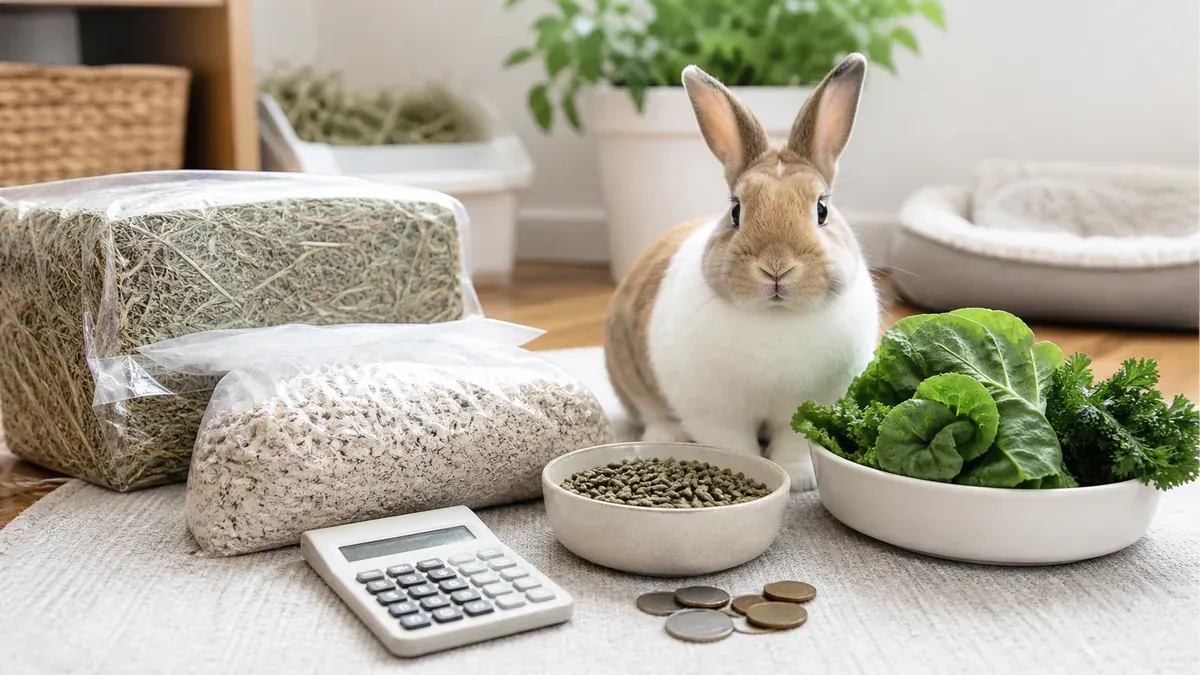
What most owners underestimate
Rabbits have a reputation for being inexpensive pets. That reputation is partly inaccurate: food, bedding and especially vet care can represent a significant monthly outlay. Before adopting, it is worth estimating costs honestly so that you are not caught off guard.
The figures below are indicative for the UK and Western Europe. Real costs vary by country, city, product quality and the level of specialization of the veterinary practice you use.
The rabbit species page covers the broad biological traits and fundamental needs of this animal.
Cost 1: food
This is usually the largest regular expense.
Hay makes up 80% of the diet and must be available at all times. A dwarf rabbit weighing around 1.5 kg goes through roughly 1.5–2.5 kg of hay per month depending on quality and brand. Good-quality Timothy or meadow hay costs between £4 and £12 per kilogram depending on the source.
Monthly hay estimate: £6–£24 / month
Pellets make up only 5% of the ration. At 25–35 g per day, a dwarf rabbit consumes around 750 g to 1 kg of pellets per month. A decent-quality bag costs between £6 and £15 per kilogram.
Monthly pellet estimate: £5–£15 / month
Fresh vegetables: if you buy from a supermarket, budget £5–£12 per month by focusing on accessible greens (rocket, chicory, parsley, fennel). Growing fresh herbs or using carrot tops from your own shopping can bring this cost close to zero.
Monthly vegetable estimate: £0–£12 / month
Total food: £11–£51 / month
For details on recommended foods, see our guides on what rabbits eat, safe vegetables and pellets.
Cost 2: bedding
A dwarf rabbit needs a complete bedding change 2–3 times per week. With a 5–8 cm layer in a 50 × 40 cm tray, you use roughly 3–5 litres per change: around 25–45 litres per month.
Hemp (the most recommended bedding) costs between £1.50 and £3 per litre depending on pack size. Buying in bulk online is considerably cheaper than small pet-shop bags.
Monthly bedding estimate: £13–£40 / month
For selection criteria, see our bedding guide.
Cost 3: veterinary care
This is the hardest line to predict and the most underestimated. Once the annual items are spread across twelve months — vaccination, routine consultation, dental check — budget £10–£20 per month, excluding neutering, which happens once.
On top of that sits the unpredictable, which does not spread: an emergency consultation with treatment commonly reaches £100–£300. Keep a reserve of £300–£500 available immediately.
The procedure-by-procedure breakdown, what exotic status does to fees, and how to choose between a reserve and insurance are covered in rabbit vet costs: what to budget.
Cost 4: accessories and ongoing supplies
Once the initial setup is done (pen, tray, hay rack, bowl), recurring costs are modest:
- Replacement toys and enrichment: £2–£5 / month
- Cleaning products (white vinegar, etc.): £1–£2 / month
Ongoing accessories total: £3–£7 / month
Monthly total: summary
| Category | Low estimate | High estimate |
|---|---|---|
| Food | £11 | £51 |
| Bedding | £13 | £40 |
| Veterinary (spread) | £10 | £20 |
| Ongoing accessories | £3 | £7 |
| Monthly total | £37 | £118 |
A realistic average for a well-cared-for dwarf rabbit in an apartment sits around £55–£85 per month, excluding unexpected vet bills.
What to budget before adoption
The initial setup (pen, litter tray, hay rack, water bowl, carrier, first bedding bag, neutering if possible) may cost £180–£500 depending on the choices made. Add the acquisition cost of the rabbit itself (free from a rescue, £25–£120 from a breeder or pet shop). That figure is misleading: an unneutered, unvaccinated rabbit costs more within months, and the route-by-route comparison is in should you adopt or buy a rabbit. In practice a rescue’s adoption fee usually covers work already done: what that fee actually pays for is broken down in adopting a rabbit from a rescue.
That setup cost and the twelve months that follow are broken down line by line in the first-year cost of owning a rabbit.
For everything to prepare before your rabbit arrives, the rabbit species page lists the essential needs to plan for in advance. If you are still deciding on which sex to adopt, read male or female rabbit — which should you choose? to plan neutering costs from the start.
Frequently asked questions
Is a rabbit cheaper than a dog or cat?
Generally yes, but not as cheap as many people assume. Veterinary costs can quickly add up to several hundred euros or pounds in the event of illness (GI stasis, dental surgery, neutering). Expect to spend £40–£100 or €50–€120 per month, excluding exceptional expenses.
Is a dwarf rabbit cheaper to keep than a large breed?
Slightly, mainly on hay and bedding (consumption is proportional to weight). But vet costs are similar, sometimes identical, and some large breeds live longer.
Can you save money without compromising the rabbit's welfare?
Yes: buy hay in large bags (10 kg or more), choose hemp bedding in bulk, and prioritize prevention (vaccination, neutering) rather than the always more expensive curative treatments.