What accessories are truly essential for a rabbit?
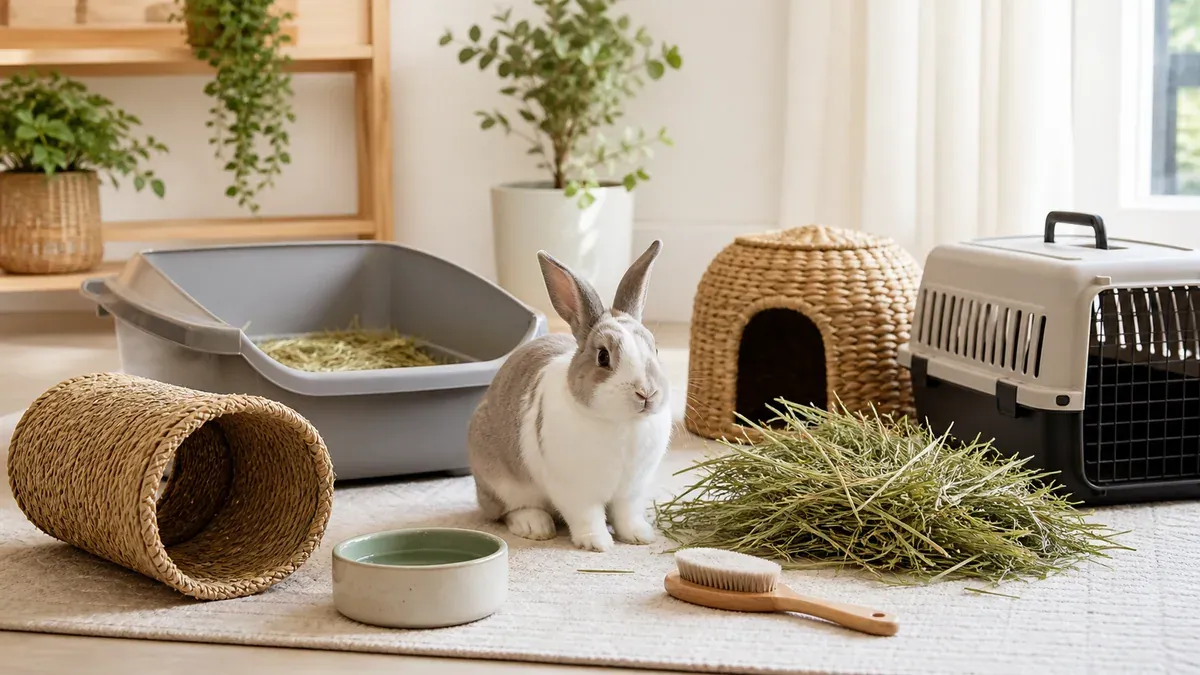
The essentials vs the marketing: how to tell them apart
The range of rabbit accessories available in pet shops and online is overwhelming. Some items are genuinely essential for welfare; others are useless or even dangerous. Here is how to distinguish what truly matters from what is pure marketing.
The genuinely essential accessories
1. A spacious enclosure or pen
This is the absolute priority. The minimum recommended floor space for an adult rabbit is at least 4 to 6 times the rabbit’s body length, with enough room to run, binky (jump and twist), and stand upright without touching the ceiling.
Standard pet-store cages are usually far too small. A floor-level playpen, a dedicated room, or a large modular cage system are much better options. See our guide on cage versus pen for rabbits and what size enclosure a rabbit needs to choose correctly; the buying criteria for the pen itself — height, bar spacing, stability, door — are set out in how to choose an indoor pen for a rabbit.
2. A litter tray
Rabbits can be litter-trained and learn quickly. The tray must be sized appropriately (the rabbit needs to turn around inside it) with high enough sides to prevent scattering. Avoid cedar or pine shavings, silica-based litters, and scented products.
3. A hay rack
Hay must be available at all times — it makes up 80% of a rabbit’s diet. A rack keeps hay clean, dry, and accessible. Place it near the litter tray: rabbits often eat while toileting (natural and hygienic). A rack fixed at the right height also reduces waste. It is not compulsory equipment, though: a large pile of hay refreshed in the tray does the same job, and the situations where a rack genuinely helps are set out in does a rabbit need a hay rack.
4. A water bowl
Fresh water must be available around the clock. A heavy, flat-bottomed ceramic bowl is preferable to a sipper bottle: the flow is more natural, rabbits drink more, and there is no risk of a stuck ball or blocked spout. Clean the bowl and change the water daily. The detail — material, size, placement, and the daily check on a bottle kept as a backup — is in water bottle or bowl for a rabbit.
5. A food bowl
A ceramic or stainless-steel bowl resists chewing and is easy to clean. Choose a bowl heavy enough that the rabbit cannot flip it over.
6. A shelter or hide
Rabbits are prey animals and need a place to retreat to feel safe. An untreated wooden hutch, an overturned cardboard box, or any hide with two openings (two exits = less stress if cornered) is essential. The rabbit must be able to lie stretched out inside.
7. Enrichment toys
Rabbits are intelligent animals that get bored. Boredom leads to stress, destructive behavior, and cable chewing. A few low-cost essentials:
- Fabric or cardboard tunnel: rabbits love running through and hiding in them
- Safe chew sticks (untreated apple, willow, or hazel branches): wear down teeth naturally
- Cardboard boxes to explore and shred
- Foraging tray: hide dried herbs inside to stimulate natural foraging instincts
8. A carrier
Essential for vet visits, and to have before the animal arrives: on the day of an emergency it is too late to order one. Keep the verdict — hard-sided, with a top opening, large enough for the rabbit to lie flat. The detailed criteria and the models to avoid are in how to choose a rabbit carrier.
9. An appropriate brush
Rabbits shed and need regular brushing, especially during molting season. A soft brush works for short-haired breeds; long-haired breeds (Angora, Lionhead) need a detangling brush and daily grooming. Regular brushing prevents excessive hair ingestion and the digestive blockages that can follow.
Useful accessories, not urgent at first
- Non-slip mat or rug: protects paws on smooth floors and provides comfort. Not required if the enclosure is already on a softer surface.
- Extra hay rack or large hay dispenser: useful if you travel regularly.
- Foraging mat: fun but non-urgent; add once the essentials are in place. The material and safety criteria that apply to any enrichment object are gathered in which toys should you choose for a rabbit.
- Foldable extension pen: practical for temporarily expanding the play area.
What to avoid
| Accessory | Why to avoid it |
|---|---|
| Exercise wheel | Dangerous for the rabbit’s spine |
| Rolling ball | Stress, poor ventilation, fall risk |
| Seed mixes | Poor nutrition, promotes selective eating |
| Sugary treat packs | Too rich, can cause digestive imbalances |
| Hamster-sized cages | Far too small, guarantees chronic stress |
Estimated startup budget
| Item | Approximate cost |
|---|---|
| Spacious enclosure or modular pen | £50–130 / $60–160 |
| Litter tray + first month of bedding | £10–25 / $12–30 |
| Hay rack | £10–20 / $12–25 |
| Water bowl + food bowl | £10–20 / $12–25 |
| Shelter or hide | £15–30 / $18–40 |
| Basic toys (tunnel, branches, boxes) | £5–20 / $6–25 |
| Carrier | £25–50 / $30–60 |
| Brush | £5–15 / $6–20 |
| Total estimate | £130–310 / $155–385 |
This budget is on top of the rabbit’s purchase or adoption cost and first-year vet expenses. When to fit each purchase into the week before arrival, and what is better left until you have seen the rabbit, are in what to prepare before bringing a rabbit home. For a full picture of ongoing costs, see our guide on the monthly cost of keeping a rabbit.
Going further
A spacious enclosure, a litter tray with appropriate bedding, a hay rack, a water bowl, a shelter, basic toys, a carrier, and a brush — these nine items define your rabbit’s daily welfare. Everything else can wait or be skipped entirely. Start simply, then add what genuinely suits your individual rabbit’s needs over time.
Frequently asked questions
Can you put an exercise wheel in a rabbit's cage?
No. Exercise wheels are dangerous for rabbits. Their spine is rigid and curved, and running on a wheel creates repeated stress that can cause serious spinal injuries. Avoid this accessory even though it is sold in many pet stores.
Should I get a cage or a pen for my rabbit?
An open floor pen or playpen is generally better than a traditional cage. It offers more space, better ventilation, and allows the rabbit to move freely. Most cages sold in pet stores are too small. See our cage vs pen guide for a detailed comparison.
What is the minimum startup budget for a rabbit?
Budget £120–280 or $150–350 for the essential equipment: a spacious enclosure, bedding, hay rack, bowls, shelter, carrier and an initial supply of hay. Monthly costs for hay, bedding, and fresh vegetables are additional.
Are toys really necessary for rabbits?
Yes. Rabbits are curious animals that become bored and stressed without stimulation. Enrichment toys — tunnels, foraging trays, chew sticks — prevent stress, destructive behaviors, and cable chewing. They are a welfare need, not a luxury.