Should you neuter a male rabbit? Benefits, age guidance and what to expect
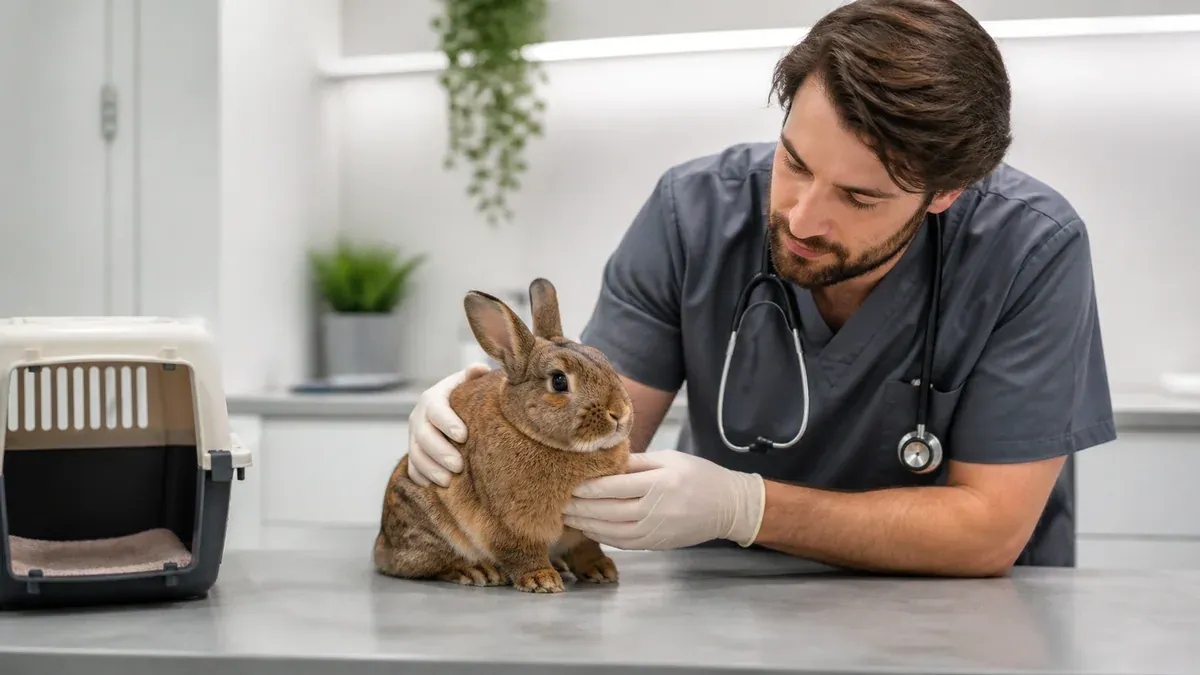
Why neuter a male rabbit
Neutering is not medically compulsory for males the way spaying is for females (where the uterine cancer risk is the primary driver). However, neutering a male rabbit brings significant behavioral and cohabitation benefits, and also eliminates the risk of testicular cancer.
To understand the differences between male and female rabbits from the start, see our guide on choosing between a male or female rabbit.
Benefits of neutering
Reduction of urine spraying
An intact male rabbit begins marking its territory between 3 and 5 months of age: it sprays urine on walls, furniture, its enclosure, and sometimes people it knows well. This hormonal behavior is often the main reason owners choose to neuter. Done early, before the behavior is deeply ingrained, neutering greatly reduces it in many rabbits over the following weeks.
Reduction of mounting and aggressive behaviors
Compulsive mounting (onto objects, arms, or other animals), growling, and territorial biting all decrease significantly after neutering. A neutered male is generally calmer, easier to handle, and more pleasant to interact with. If your rabbit is currently biting, also read why does my rabbit bite to determine whether it is hormonal or something else.
Enabling safe and peaceful cohabitation
An intact male kept with an unspayed female can cause repeated pregnancies. Even with a spayed female, an intact male can be persistent and stressful for his companion. Neutering is usually essential for peaceful cohabitation with another rabbit, regardless of sex.
The neutered male + spayed female pairing is generally the most recommended for behavioral balance. For more on solo versus pair housing, see our article on whether rabbits can live alone.
Reduced risk of testicular disease
Testicular cancer does occur in male rabbits, though less frequently than uterine disease in females. Neutering removes the risk associated with the removed testicles.
Age guidance for neutering
Neutering is possible once the testicles have descended into the scrotum, typically at 3 to 4 months. Some vets prefer to wait until 4 to 5 months for complete development.
The earlier neutering is done, before spraying behavior is established, the better the chances of reducing hormonal behaviors. Neutering remains possible in adulthood after veterinary assessment.
Neutering cost (country-dependent ranges)
Cost varies by location and clinic, especially depending on pre-operative checks and pain-management protocol. Typical ranges are around £80–200 in the UK and $150–350 in the US.
It is usually cheaper than spaying a female, but it should still be included in first-year planning. For the full recurring budget, see our monthly rabbit cost guide.
The procedure
Choose a rabbit-savvy vet
As with spaying, neutering must be performed by a vet with demonstrated rabbit or exotic-pet experience. Rabbit anesthesia differs significantly from that of cats and dogs and requires adapted protocols.
The orchiectomy
The procedure involves removing both testicles (bilateral orchiectomy). It is less invasive than spaying a female, and recovery is typically faster.
Before and after the procedure
- Rabbits should not be fasted before surgery — their digestive transit must remain continuous
- After the procedure: keep warm, offer hay and water immediately upon returning home
- Follow the discharge instructions and call the clinic if eating does not resume promptly; do not wait for an hourly threshold after complete refusal
- Follow the vet’s prescribed pain management protocol
What coming home actually looks like — checking the scrotal wound, which bedding to use while it heals and the signs that mean phoning the clinic — is covered step by step in caring for a rabbit after neutering.
Important timing: after neutering, sperm can remain active in the vas deferens for 4 to 6 weeks. Do not introduce an unspayed female during this period.
What if you choose not to neuter
If you decide not to neuter your male rabbit, expect:
- Persistent urine marking and spraying
- Mounting behavior and periods of territorial aggression
- Strict separation from any female to prevent unwanted pregnancies
- Regular veterinary checks to detect potential testicular cancer
For spaying a female rabbit — where the medical case is even stronger — see our guide on spaying a female rabbit.
If you have not adopted yet, a rabbit that has already been neutered skips this step entirely: what to check is in adopting an already neutered rabbit.
Sources
- RSPCA — Rabbit health and welfare — on the behavioural side, which is the main argument for males: “unneutered rabbits are also more likely to fight and show other territorial aggression such as urine spraying”. The RSPCA concludes: “you should therefore neuter your rabbits unless you intend to breed them”.
- MSD Veterinary Manual — Noninfectious Diseases of Rabbits — for comparison with the female, where the benefit is of a different order: the incidence of uterine adenocarcinoma “can be as high as 60% in intact does >3 years old”.
Timing, anaesthetic risk and post-operative follow-up are matters for a rabbit-savvy vet. This article has not been reviewed by a veterinarian.
Frequently asked questions
At what age should a male rabbit be neutered?
From 3 to 4 months, once the testicles have descended into the scrotum. Some vets prefer to wait until 4 to 5 months to ensure full development. Neutering remains possible at any adult age.
Does neutering permanently stop urine spraying?
In many cases, it greatly reduces spraying. If done before the behaviour is firmly established, improvement often appears within the following weeks. Neutered later, some rabbits retain a residual tendency.
Can a neutered male rabbit live with a spayed female?
Yes — this is often the most stable pairing. A neutered male and a spayed female are generally a good basis for bonding, provided introductions are gradual. After neutering, wait 4 to 6 weeks before introducing an unspayed female: residual sperm can still cause an unwanted pregnancy.
How much does neutering a male rabbit cost?
Costs vary by country and clinic. Expect roughly £80–200 in the UK or $150–350 in the US. It is generally less expensive than spaying a female, as the procedure is less invasive. Always choose a rabbit-savvy exotic-pet vet.