Should you spay a female rabbit? Benefits, age guidance and what to expect
Why spaying a female rabbit is often recommended
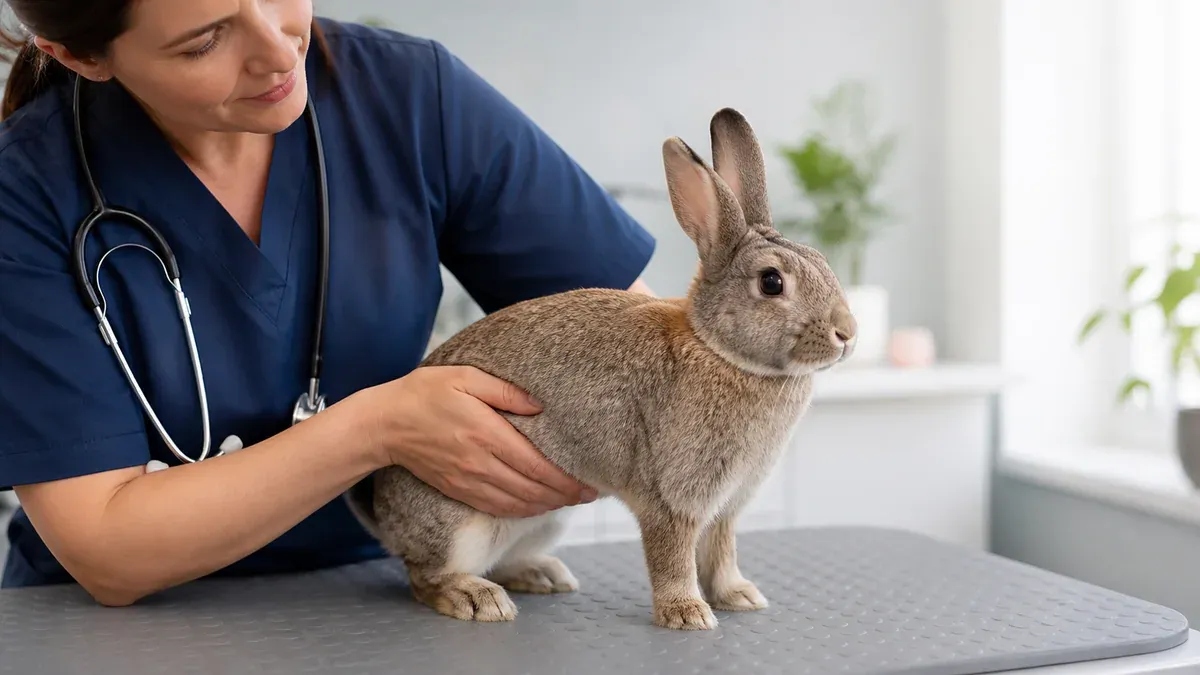
Spaying a doe is an important medical decision to discuss with a rabbit-savvy or exotic-pet veterinarian. It is often recommended, especially to reduce the risk of reproductive tract disease.
Unspayed female rabbits face a significant age-related risk of uterine disease. Uterine adenocarcinoma is regularly described in adult domestic does and may be subtle in the early stages. When detected late, the prognosis can be guarded, especially if the disease has spread.
This makes spaying one of the major preventive health measures for a doe’s long-term welfare, provided it is performed by a team experienced with rabbits.
If you are still deciding between a male and a female rabbit, our guide on male or female: which rabbit to choose covers the behavioral and health differences in detail.
Benefits of spaying
Reduced risk of uterine disease
Spaying greatly reduces the risk of uterine and ovarian disease. If the uterus is removed, uterine disease is prevented; if only the ovaries are removed, your vet should first confirm that the uterus appears healthy and explain the limits of that approach.
Elimination of false pregnancies
An unspayed doe can experience pseudo-pregnancy cycles several times a year: nest-building, fur-pulling, increased aggression, and milk production. These phases are physically taxing and behaviorally disruptive. They disappear after spaying. To recognise an episode as it happens, know what to do during it and spot what warrants a call, see false pregnancy in rabbits.
Reduction of hormonal behaviors
Territorial aggression, hormonal biting, urine marking, and compulsive defense of the litter area all decrease significantly after spaying. A spayed rabbit of either sex displays calmer, more predictable behavior.
Better cohabitation with another rabbit
A spayed doe can live safely with a neutered male without the risk of unwanted litters. Mixed-sex pairs are often the most harmonious when both animals are altered. To understand how two rabbits can be introduced, see our guide on whether a rabbit can live alone.
Age guidance for spaying
Spaying is recommended between 4 and 6 months, after sexual maturity is reached. Some vets prefer to wait until 6 months for smaller breeds to allow more complete skeletal development; others operate from 4 months.
Spaying remains possible in adulthood, but anesthetic risk can increase with age or underlying illness. If the doe is already adult or showing symptoms, a veterinary assessment is essential before deciding.
Spay cost (country-dependent ranges)
The total cost depends on your country, clinic, and whether pre-operative tests are included. Typical ranges are around £150–350 in the UK and $200–500 in the US.
Include this one-off surgery in your first-year planning alongside recurring care. For a broader view of ongoing expenses, see our guide to monthly rabbit costs.
The procedure
Choose a rabbit-savvy vet
Rabbits are considered exotic animals from a medical standpoint. Rabbit anesthesia is technically more demanding than in cats or dogs: pre-operative fasting protocols differ, anesthetic drugs must be chosen carefully, and post-operative monitoring is critical. Always choose a vet with demonstrated rabbit or exotic-pet experience.
Ovariectomy versus ovariohysterectomy
- Ovariectomy: removal of the ovaries only. Less invasive, increasingly preferred when the uterus is healthy and shows no abnormalities.
- Ovariohysterectomy: removal of ovaries and uterus. Recommended if the uterus already shows cysts, lesions, or other changes.
Before and after the procedure
Unlike cats and dogs, rabbits should not be fasted before surgery — their digestive transit must remain active at all times. Confirm pre-operative instructions with your vet.
After surgery:
- Keep the rabbit warm in a quiet, calm environment
- Offer hay and water as soon as she returns home
- Check that she continues eating from the time she gets home
- Do not leave the rabbit unattended for the first 24 hours
- Follow the prescribed pain management protocol
If the doe refuses all food on returning home, contact the clinic immediately rather than waiting for an hourly threshold — post-operative GI stasis is a real risk in rabbits.
The full day-by-day recovery — checking the wound, managing pain, adapting the space and the signs that mean calling urgently — is set out in caring for a rabbit after spaying.
What if you choose not to spay?
If you decide not to spay, it is essential to:
- Have your doe examined regularly by a rabbit-savvy vet (uterine palpation, early detection)
- Keep her separated from any intact male to avoid unwanted pregnancies
- Watch for warning signs: enlarged abdomen, loss of appetite, blood in urine, unusual behavior
For neutering male rabbits — equally useful for reducing hormonal behaviors and enabling safe cohabitation — see our guide on neutering a male rabbit.
Sources
-
MSD Veterinary Manual — Noninfectious Diseases of Rabbits — puts a figure on the risk described above: the incidence of uterine adenocarcinoma “can be as high as 60% in intact does >3 years old”. The same source calls this “the primary reason to recommend spaying of nonbreeding female rabbits at the age of 4–6 months” — which matches the window given here.
-
RSPCA — Rabbit health and welfare — gives a higher figure: in females older than three, “incidence may approach 80 percent”, and these tumours are “usually fatal”.
The two sources do not agree on the figure — up to 60% for MSD, close to 80% for the RSPCA. These pages do not establish why the estimates differ; take away that the risk is high and rises with age, not a single percentage.
Timing, anaesthetic risk assessment and follow-up are matters for a rabbit-savvy vet. This article has not been reviewed by a veterinarian.
Frequently asked questions
At what age should a female rabbit be spayed?
Between 4 and 6 months for most breeds. Some vets prefer to wait until 6 months for dwarf breeds to allow full skeletal development. Spaying remains possible at any adult age, but anesthetic risk increases in older or less healthy does.
What happens if a female rabbit is not spayed?
The risk of uterine disease, including adenocarcinoma, increases markedly with age in unspayed does. Published figures vary by study and population, but the risk is high enough to justify a preventive discussion with a rabbit-savvy vet.
Does spaying change a female rabbit's personality?
Yes, generally for the better. A spayed doe is usually calmer, less territorially aggressive, and no longer experiences false pregnancies. The individual character remains, but hormonally driven behaviors disappear.
How much does rabbit spaying cost?
Costs vary widely by country and clinic. Expect to pay roughly £150–350 in the UK or $200–500 in the US. Always request a quote upfront and ensure the vet has rabbit-specific experience — rabbit anesthesia is more complex than in cats or dogs.