Why does my rabbit bite? Causes and solutions
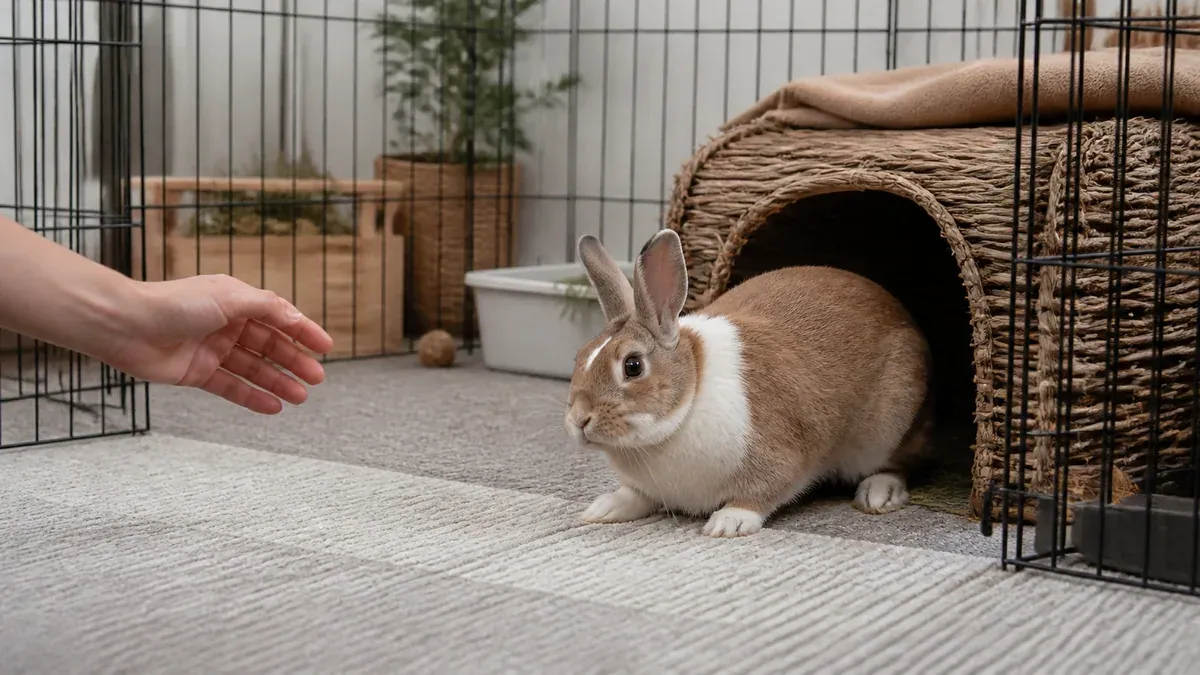
Why you need to understand biting before trying to fix it
A rabbit’s bite is never random. It is a signal — often the last in a series the animal has already sent and that we failed to read. Understanding why your rabbit bites is the prerequisite for solving the problem durably. Punishing without understanding almost always makes things worse.
The rabbit species page covers the fundamental needs of the animal and its nature as a prey species, which largely conditions its behavioural reactions.
The main causes of biting
1. Fear and lack of trust
This is the most common cause, especially in newly adopted or poorly socialised rabbits. A frightened rabbit can bite as a reflex defence if it feels cornered or startled.
Associated signs: the rabbit freezes, its ears are flat against its head, it growls or thumps before biting. The bite happens when these warnings are not heeded.
Solution: build trust through gradual desensitisation, never by forcing contact. Our guide on how to tame a fearful rabbit details this method step by step.
2. Territorial marking (hormonal)
An unneutered or unspayed rabbit can become very territorial between 3 and 6 months, at sexual maturity. It defends its space (pen, room, owner) against any perceived intrusion.
Associated signs: urine spraying, growling, charging and biting when cleaning the pen or when a stranger approaches.
Solution: neutering (male) or spaying (female) reduces this behaviour very significantly. For females, spaying is also a medical necessity (high risk of uterine cancer).
3. Pain
A rabbit in pain can bite as a defensive reflex when touched in a painful area, or even as a general reaction to any handling.
Associated signs: the biting behaviour is sudden in an animal that was previously docile, or is accompanied by reduced appetite, a hunched posture or less movement.
What to do: consult an exotic-animal vet. Do not attempt to correct this behaviour without first ruling out a medical cause. If your rabbit has also stopped eating, read rabbit not eating — what to do.
4. Communication and attention-seeking
Some rabbits learn that nibbling or biting lightly attracts their owner’s attention. This is not aggression — it is learned communication.
Associated signs: soft nibbling, gaze directed at you, generally calm behaviour.
Solution: do not reward nibbling by reacting immediately (even with a stroke). Redirect attention to a toy or some hay instead.
5. Inappropriate handling
Rabbits generally dislike being picked up. Instinctively, it replicates the position of a captured prey animal. Lifting a rabbit without properly supporting its body (full weight in both hands) triggers panic that can end in a bite.
Solution: if you must handle the rabbit, always support the chest and hindquarters. Minimise unnecessary handling, especially with an animal that is not yet used to it.
The difference between nibbling and a real bite
| Behaviour | Description | Likely meaning |
|---|---|---|
| Gentle nibble | Light pinch, little pressure | Communication, affection |
| Growl + charge | Growling then lunging towards you | Territorial, warning |
| Full bite | Firm grip, notable pressure | Fear, pain or strong territoriality |
| Bite drawing blood | Deep grip | Panic, acute pain |
Never respond to a real bite with physical punishment: it does not work with rabbits and destroys trust.
How to react in the moment
- Remove your hand calmly without shouting or reacting suddenly.
- Ignore the rabbit for a few minutes (no punishment, but no attention either).
- Note the context: where were you? What happened just before? This helps identify the trigger.
- Resume contact gradually in the next session, without putting the rabbit in a position to bite again.
Long-term prevention
- Respect the rabbit’s body language before it bites: flat ears, growling, thumping = do not push further.
- Consider spaying or neutering if the behaviour is hormone-related.
- Build trust through regular positive interactions, never by force.
- Check the animal’s health regularly, particularly teeth and joints.
- In a household with children, set the rules before an incident happens — contact at floor level, no chasing, an off-limits refuge: see are rabbits good pets for children.
Frequently asked questions
Is a rabbit that bites dangerous?
A bite from an adult rabbit can be painful and cause a surface wound, sometimes deeper in severe cases. It should not be taken lightly. But the vast majority of biting rabbits do so out of fear or hormones, not from inherent aggression — the behaviour is therefore changeable.
My rabbit nibbles me gently. Is that aggression?
No. Gentle nibbling (a light pinch) is often affectionate communication or a request for attention. It is different from a real bite with grip and pressure. If the nibbling is soft and followed by calm behaviour, do not interpret it as a threat.
My rabbit only bites inside its pen. Why?
This is a classic territorial response. The pen is its space. It may defend the entrance, the litter tray or its sleeping corner. Try opening the pen and letting the rabbit come out freely before putting your hand inside, rather than introducing your hand directly.
Will neutering or spaying reduce biting?
Yes, in most cases linked to hormonal behaviour. A rabbit that bites mainly due to territorial marking, agitation or seasonal aggression will improve noticeably after neutering or spaying. It does not affect bites caused by fear or pain.