How much water does a rabbit drink? Amounts and warning signs
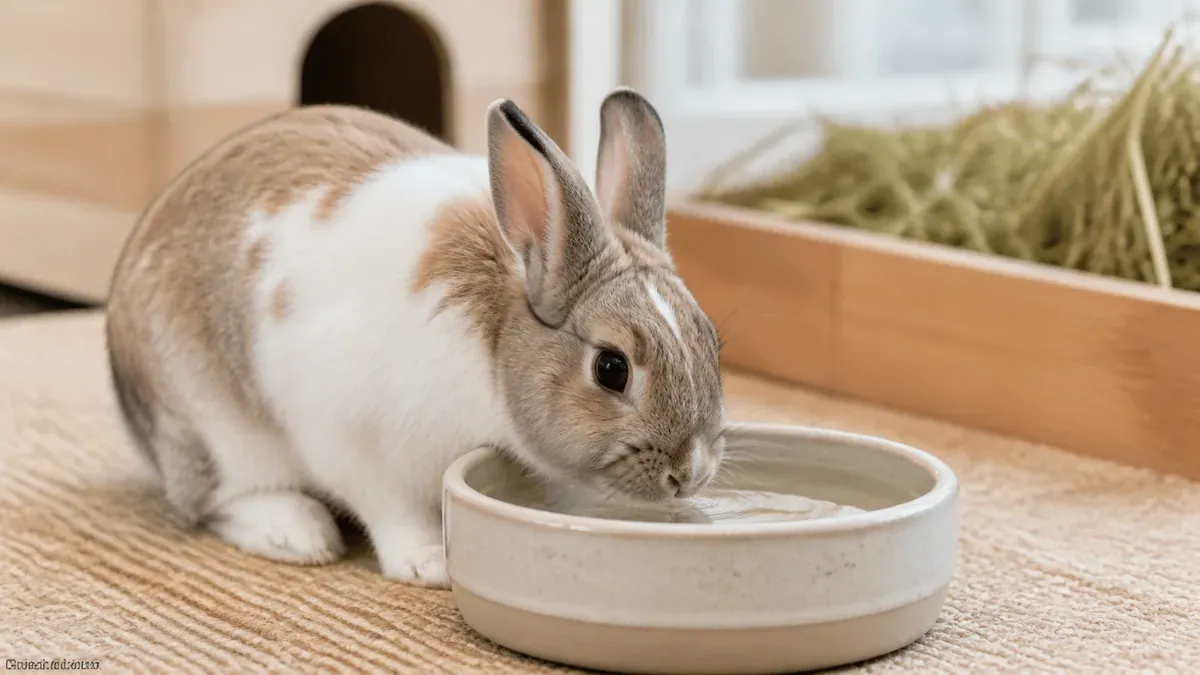
How much water a rabbit needs
Hydration is an underestimated part of rabbit care. Water plays a critical role in gut motility, temperature regulation, and kidney function.
Veterinary publications give different reference ranges: around 50–100 ml/kg/24 h in some clinical references and approximately 120 ml/kg/day in metabolic studies. These figures are guides, not individual diagnostic thresholds (MSD Veterinary Manual, Rabbit Basic Science). In practical terms:
| Rabbit weight | Estimated daily intake |
|---|---|
| 1 kg (very small dwarf) | approximately 50–120 ml |
| 1.5 kg (standard dwarf) | approximately 75–180 ml |
| 2 kg (medium rabbit) | approximately 100–240 ml |
| 3 kg (large rabbit) | approximately 150–360 ml |
These are reference points. Actual intake varies considerably depending on:
- Fresh vegetables in the diet: vegetables contain 85–95% water. A rabbit eating a lot of fresh greens may drink very little from its bowl.
- Ambient temperature: intake increases noticeably in warm weather.
- Activity level: a very active rabbit drinks more.
- Physiological stage: a nursing doe may drink two to three times the normal amount.
To understand how water fits into the complete daily ration, see our full rabbit feeding guide.
What to offer the water in
The container directly affects how much is drunk. A bowl remains the default choice: the rabbit drinks head down, in a natural posture, with unrestricted flow. A sipper bottle avoids contamination, but its flow is often slow and a failure — a jammed ball, an airlock — goes unnoticed for hours.
Which model to buy, where to place it, how to keep it clean and how to move from one container to the other without a drop in intake are covered in water bottle or bowl for a rabbit. If bowl tipping becomes routine, the causes are in why does my rabbit tip over its bowl.
How to encourage adequate water intake
- Change the water daily: stagnant water is less palatable and can harbor bacteria.
- Clean the container regularly: algae and biofilms build up quickly.
- Position the bowl away from hay and bedding: to avoid contamination.
- In summer, offer slightly cooled water: it encourages greater intake.
- Try different formats: some rabbits drink more from a bowl, others prefer a bottle — observe your individual animal.
Hay, which forms the foundation of the diet, is dry and requires good hydration alongside it. See our article on daily hay quantities to make sure the overall ration is well-balanced.
Signs of dehydration
A rabbit can dehydrate quickly, especially in hot weather or when ill. Watch for:
- Poor skin elasticity: gently pinch the skin between the shoulder blades; it should return to normal immediately. If it stays lifted for several seconds, this is a dehydration sign.
- Dry mucous membranes: gums or mouth interior appearing dry or sticky.
- Very concentrated urine: dark orange-brown color, strong smell, white chalky deposits in the litter tray.
- Lethargy, loss of appetite, half-closed eyes.
- Cold extremities.
If dehydration signs occur with lethargy, refusal to eat, or fewer droppings, contact a veterinarian promptly. Do not force large amounts of water into the mouth without professional guidance.
When water intake is abnormal
Rabbit drinking too little
If your rabbit does not touch its water and is not eating fresh vegetables, it risks urinary stones over time and urine that is too concentrated for healthy kidney function. Check that the water container is accessible and clean, then try switching from a bottle to a bowl (or vice versa). The full process — testing the container, measuring intake over two or three days, and the signs that call for a same-day phone call — is set out in my rabbit is not drinking.
Rabbit drinking excessively (polydipsia)
Genuinely excessive water consumption — several times above the reference ranges above — can point to an underlying condition:
- Kidney failure
- Urinary tract infection
- Diabetes insipidus
- Hypercalciuria or bladder sludge
- Systemic infection
If your rabbit repeatedly empties a large bowl within hours, consult a rabbit-savvy vet. The veterinarian will decide whether a clinical examination, urinalysis, or blood tests are needed.
Before calling it polydipsia, measure intake over two or three days and rule out the everyday explanations (heat, a drier ration, a switch from bottle to bowl): the full method and the sorting of causes are in my rabbit is drinking a lot.
The vessel matters as much as the amount: a bowl, a bottle and a water fountain differ in flow and in how easily you can check intake.
For the other daily feeding reference points, see our article on how many pellets to feed a rabbit to complete the picture of a balanced daily ration.
Veterinary sources
- MSD Veterinary Manual — Nutrition of rabbits
- Rabbit Basic Science — Clinical reference chapter
- RSPCA — A healthy diet for your pet rabbit
Frequently asked questions
My rabbit barely drinks any water — is that normal?
If your rabbit eats a lot of fresh vegetables or herbs, it may barely touch its water bowl: it is hydrating through food. But if the diet is mostly dry hay and pellets, low water intake can be a problem. Also check that the bowl is clean and easily accessible.
My rabbit is drinking a lot of water — should I be worried?
Excessive water intake (polydipsia) can indicate a health problem: kidney disease, urinary infection, diabetes insipidus, or another condition. If your rabbit repeatedly empties a large bowl within a few hours, consult a rabbit-savvy vet.
Can I give a rabbit mineral water?
Tap water is perfectly fine in most areas. Mineral water is unnecessary unless local tap water is very hard or heavily treated. Avoid water with high sodium content.