My rabbit is breathing fast: emergency or stress?
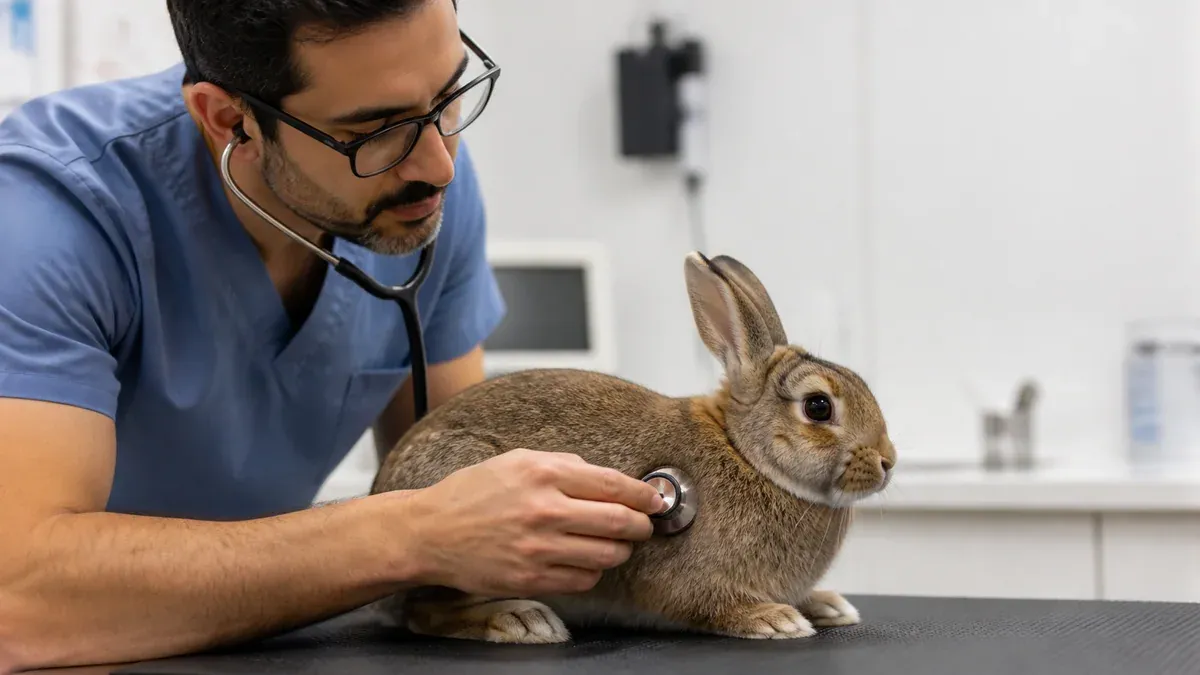
Veterinary warning — Persistent, rapid, or laboured breathing, especially if accompanied by signs of distress, is a veterinary emergency. If your rabbit is breathing with its mouth open, cannot stand, or is unresponsive, contact a vet immediately.
A resting rabbit breathes between 30 and 60 times per minute, silently and regularly. When this rate increases noticeably, or breathing becomes visible and audible, something is wrong. The cause may be minor — transient stress — or serious: early heatstroke, a respiratory infection, or severe pain. Knowing how to tell them apart prevents dangerous delays.
The most common causes
Acute stress
A rabbit that is moved suddenly, hears a loud noise, or senses a predator can switch to rapid breathing within seconds. This is a normal sympathetic nervous system response that typically resolves within 10 to 20 minutes in a safe, calm environment.
Signs that accompany simple stress: ears pricked or flattened, rabbit frozen or seeking cover, then gradual return to normal.
Excessive heat
This is the most common cause in summer and the most urgent to address. Rabbits cannot sweat and regulate their temperature almost entirely through the blood vessels in their ears. From 28°C (82°F), breathing accelerates as a compensatory mechanism. This stage precedes heatstroke — act immediately.
For first-aid steps and prevention, see our guide on rabbit heatstroke.
Upper respiratory infection
Snuffles (caused by Pasteurella multocida) is the most common infectious cause of respiratory problems in rabbits. It presents as clear or purulent nasal discharge, repeated sneezing, and increasingly laboured breathing as the infection progresses.
If your rabbit shows these symptoms alongside fast breathing, see our article on rabbit sneezing to recognise the early signs of snuffles.
Severe pain or shock
A rabbit in significant pain — GI stasis, injury, shock — may pant. Pain activates the nervous system and raises both heart rate and breathing rate. This is an indirect but serious signal.
For the other signs that reveal pain in a rabbit, see our guide on how to tell if a rabbit is in pain.
Cardiac or pulmonary problems
Less common, but relevant particularly in older or overweight rabbits: heart failure, pleurisy, pneumonia, or thoracic tumour. These causes produce rapid, often wheezy or noisy breathing that worsens progressively.
Assessing severity: the signs table
| Sign | Urgency |
|---|---|
| Fast breathing, rabbit active, eats, warm environment | Stress or heat — immediate monitoring |
| Fast breathing + rabbit motionless, hot ears, prostrate | Possible heatstroke — act immediately |
| Fast breathing + nasal discharge + sneezing | Respiratory infection — vet same day |
| Mouth-open breathing, head tilted, rabbit collapsed | Absolute emergency — vet immediately |
| Noisy/wheezy breathing + elderly or overweight rabbit | Cardiac or pulmonary cause — emergency |
What to do while waiting for the vet
- Remove the rabbit from any source of stress or heat.
- Place it in a quiet, cool, well-ventilated area — a room at 18–22°C (64–72°F), without direct draughts.
- Do not handle it unnecessarily — physical restraint worsens respiratory stress.
- Offer fresh water if the rabbit is conscious.
- Note when symptoms started and how they have changed — this information helps the vet.
- If the mouth is open or the rabbit collapses: transport immediately, do not wait.
What not to do
- Do not try to measure the breathing rate yourself by handling the rabbit: the stress of restraint worsens the situation.
- Do not wait for things to “sort themselves out” if any of the serious warning signs above are present.
- Do not give any human or veterinary medication without a prescription: some common anti-inflammatories are toxic to rabbits.
When it is clearly an emergency
Call a rabbit-savvy vet immediately if the rabbit:
- Is breathing with its mouth open or slightly open
- Has flared nostrils with each breath
- Is prostrate and unresponsive to usual stimuli
- Falls onto its side or loses balance
- Shows cyanosis (blue-tinged gums or lips, indicating oxygen deprivation)
For a complete overview of rabbit biology and care requirements, keep these respiratory warning signs in context.
Frequently asked questions
What is a normal breathing rate for a rabbit?
A resting rabbit breathes between 30 and 60 times per minute. During intense effort or acute stress, this rate can reach up to 120 breaths per minute. If fast breathing persists at rest for more than 10 to 15 minutes with no obvious cause, it is a signal that requires attention.
My rabbit is breathing fast but still eating and moving normally — should I worry?
Fast breathing on its own, with no other signs (prostration, open mouth, refusal to move), can indicate mild stress or an environment that is too warm. Move the rabbit away from the stress source, check the room temperature, and observe. If breathing does not normalise within 15 to 20 minutes in a calm, cool environment, see a vet.
Can rabbits breathe through their mouths?
No, not under normal conditions. Rabbits are obligate nasal breathers — they cannot switch between nose and mouth the way humans do. If you see a rabbit breathing with its mouth open or slightly open, this is an emergency: it means the rabbit's respiratory capacity is overwhelmed.
Can heat cause rapid breathing in a rabbit?
Yes, it is one of the most common causes. From 28°C (82°F), a rabbit speeds up its breathing in an attempt to dissipate heat. This is an early sign of heat stress that can progress to full heatstroke. Move the rabbit to a cool environment immediately.