My rabbit is drinking a lot: possible causes and when to see a vet
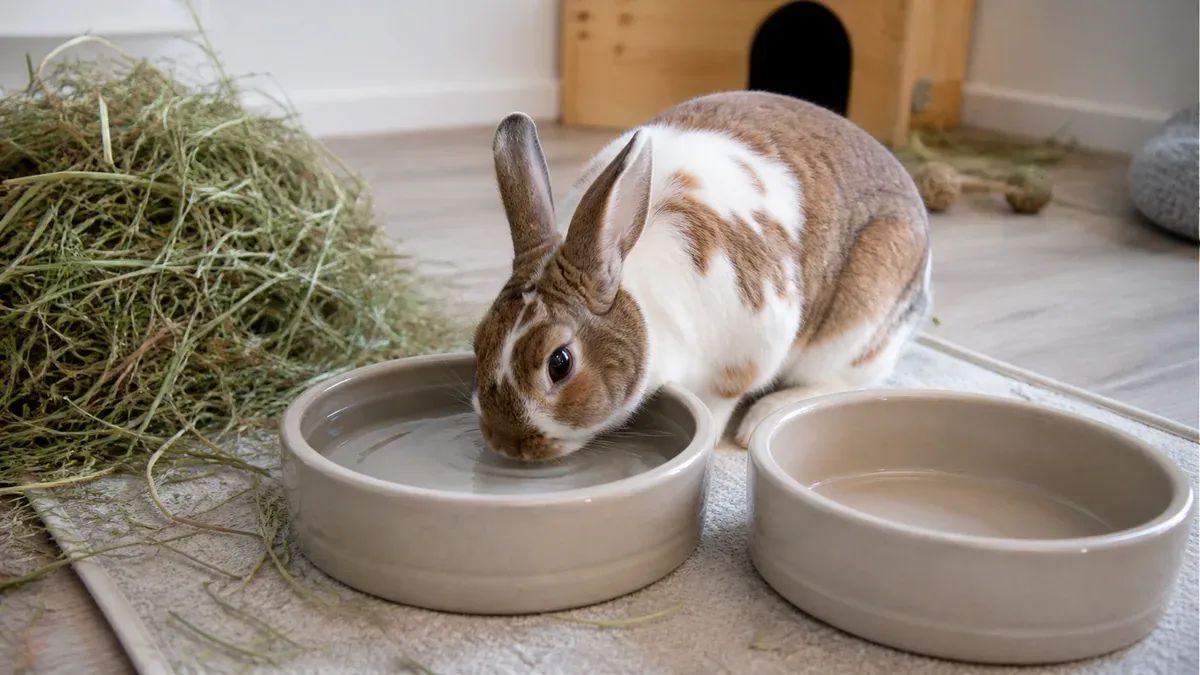
Veterinary warning — A clearly increased, sustained thirst (polydipsia) is not a quirk: in rabbits it often accompanies kidney or urinary disease. This article helps you measure intake and spot the associated signs, but it does not replace an exam by a rabbit-savvy vet.
Before worrying, measure. There is no single diagnostic cut-off that fits every rabbit: water supplied by greens, temperature, the drinking vessel and physiological state can greatly alter the volume drunk. A clear, persistent rise against the animal’s own baseline without hot weather or a ration change warrants veterinary advice — including investigation of kidney and urinary causes. Conversely, a rise explained by hot weather, a drier ration or a switch from bottle to bowl may be physiological.
Step 1: measure before you conclude
“He drinks a lot” is an unreliable impression: what you notice is an empty bowl, not a volume. To put a number on it:
- Fill the bowl using a measuring jug at a set time, and write down the volume poured.
- 24 hours later, pour what is left back into the jug and take the difference.
- Repeat for two or three days in a row: a single day tells you nothing, since rabbits drink erratically.
- Relate the result to body weight: divide the millilitres drunk by the weight in kg.
Two classic traps distort the figure: a shared bowl (separate the rabbits for the test) and evaporation or splashing in warm weather, which can account for several tens of millilitres. For normal intake reference points by body weight, see our article on how much water a rabbit drinks.
Also note what you see in the litter box: genuinely increased thirst almost always comes with more urine, a tray that soaks through faster, sometimes puddles outside the box.
Step 2: rule out the everyday explanations
Plenty of “rabbits drinking too much” simply have a good reason to drink.
- Heat. As the temperature rises, intake may naturally increase. If the rise coincides with a hot spell it is not alarming — the real question becomes heatstroke prevention, covered in how to keep a rabbit cool in summer.
- A ration that has become very dry. Fresh vegetables supply a substantial amount of water. A rabbit whose greens have been cut back, or that moves to a hay-and-pellets ration, logically makes up the difference at the bowl. See what greens to give a rabbit every day to rebalance.
- Switching from bottle to bowl. A sipper’s flow rate is low and many rabbits were in fact drinking too little. The visible rise is catching up, not a symptom.
- Pregnancy or lactation. Requirements soar in a doe feeding a litter.
- Salt and commercial treats. Salt licks and very salty or sugary treats increase thirst without providing any benefit; drop them (see are rabbit treats useful).
If none of these fits and the rise lasts more than a few days, move on to the next step.
Step 3: the medical causes to have ruled out
In rabbits, established polydipsia nearly always comes with polyuria (large volumes of urine). These are the leads a vet works through first:
- Kidney disease. The classic cause of the “drinks a lot / urinates a lot” pairing, often with gradual weight loss and a dull coat. If your rabbit is losing weight too, read my rabbit is losing weight: its table of associated signs is directly useful here.
- Bladder sludge and stones (hypercalciuria). Rabbit urine is naturally calcium-rich; when it thickens, urinating becomes painful and the rabbit drinks more. Chalky urine, a soiled rear end or an unusual colour are worth documenting — see red urine in rabbits to tell a dietary pigment from genuine bleeding.
- Urinary or uterine infection. In an unspayed doe, uterine disease can show up as more frequent urination and dullness.
- E. cuniculi. This parasite readily affects the kidneys and is among the causes of increased thirst, sometimes well before any neurological sign — see E. cuniculi in rabbits.
- Diabetes and diabetes insipidus. Rare in pet rabbits, but investigated once the other leads are excluded.
- Pain, stress or boredom. An under-occupied rabbit can develop repetitive behaviour around the bowl, much as it may chew its bars (see why does my rabbit chew the bars). This is a diagnosis of exclusion: only accept it after kidney and urinary causes have been ruled out.
What the vet will look at
A consultation for polydipsia usually rests on a urinalysis (concentration, crystals, blood, infection), blood work (kidney function, calcium, glucose) and, depending on findings, imaging of the kidneys, bladder and uterus. Bring your two- or three-day intake log and the rabbit’s weight: those two figures point the way fastest.
Associated signs: what changes the urgency
| What else you see | What it points to | Reasonable timeframe |
|---|---|---|
| Weight loss, dull coat | Kidney or chronic disease | Appointment within days |
| Chalky urine, wet rear end, straining posture | Sludge, stones, urinary infection | Prompt appointment |
| Puddles outside the box in a previously clean rabbit | Urinary pain or loss of control | Prompt appointment |
| Head tilt, loss of balance | E. cuniculi or ear involvement | Prompt appointment |
| The rabbit stops eating or passing droppings | Digestive emergency, whatever the thirst | Same day, no waiting |
| Marked dullness, fast breathing | General emergency | Immediately |
A rabbit that drinks a lot and stops eating is first and foremost a digestive emergency: see my rabbit is not eating: what to do and when to see an exotic vet for your rabbit to gauge urgency.
The one mistake never to make: rationing water
Some owners cut back the water to “limit the mess” in the litter tray. That is counterproductive and dangerous: if the rabbit drinks a lot because it is losing too much (kidney disease, poorly concentrated urine), withholding water causes rapid dehydration and worsens the risk of stones. Water stays freely available, clean and changed daily; it is the cause of the thirst that needs treating, not the thirst itself.
In the same spirit, don’t change three things at once. If you remove treats, add greens and move the bowl on the same day, you will no longer know what shifted the intake.
Going further
Logical next step: weigh your rabbit and track the trend. It is the second most informative indicator after water intake, and it steers the diagnosis. If measuring shows the opposite instead — intake collapsing — the approach to take is described in my rabbit is not drinking. Browse all our rabbit health guides and the rabbit species page for day-to-day monitoring.
Veterinary sources and caution notes
The sources below serve as veterinary or institutional reference points to frame the topic cautiously: this article helps you recognise possible causes, but it does not replace an exam by a rabbit-savvy vet. No treatment, dose or protocol is suggested here: those are for your vet to prescribe.
Sources used to frame the recommendations:
- RSPCA — Rabbit health and welfare
- Merck Veterinary Manual — Noninfectious diseases of rabbits
- VCA Hospitals — Rabbits, diseases
Frequently asked questions
How do I measure what my rabbit actually drinks?
Fill the bowl using a measuring jug at a set time, then measure what is left 24 hours later. Repeat over two or three days to smooth out day-to-day swings. If several rabbits share the bowl, separate them for the duration of the test, otherwise the figure means nothing.
My rabbit drinks more since I swapped the bottle for a bowl — is that a problem?
No, it is expected. Sipper bottles deliver a slow flow and many rabbits drink less than they actually need from them. Switching to a bowl often makes visible intake jump with no illness involved. That is catching up, not polydipsia.
Should I limit water for a rabbit that drinks too much?
Never. A rabbit drinking a lot is often replacing water it is losing (kidney disease, poorly concentrated urine, heat). Restricting water treats nothing and risks rapid dehydration and urinary complications. Keep water freely available and have a rabbit-savvy vet look for the cause.
Does a nursing doe always drink a lot?
Yes. Pregnancy and above all lactation sharply raise water requirements, and a nursing doe may drink several times her usual amount. That is physiological. A lasting rise in a neutered adult rabbit, with no heat wave and no diet change, has no such obvious explanation.