Are rabbit treats useful?
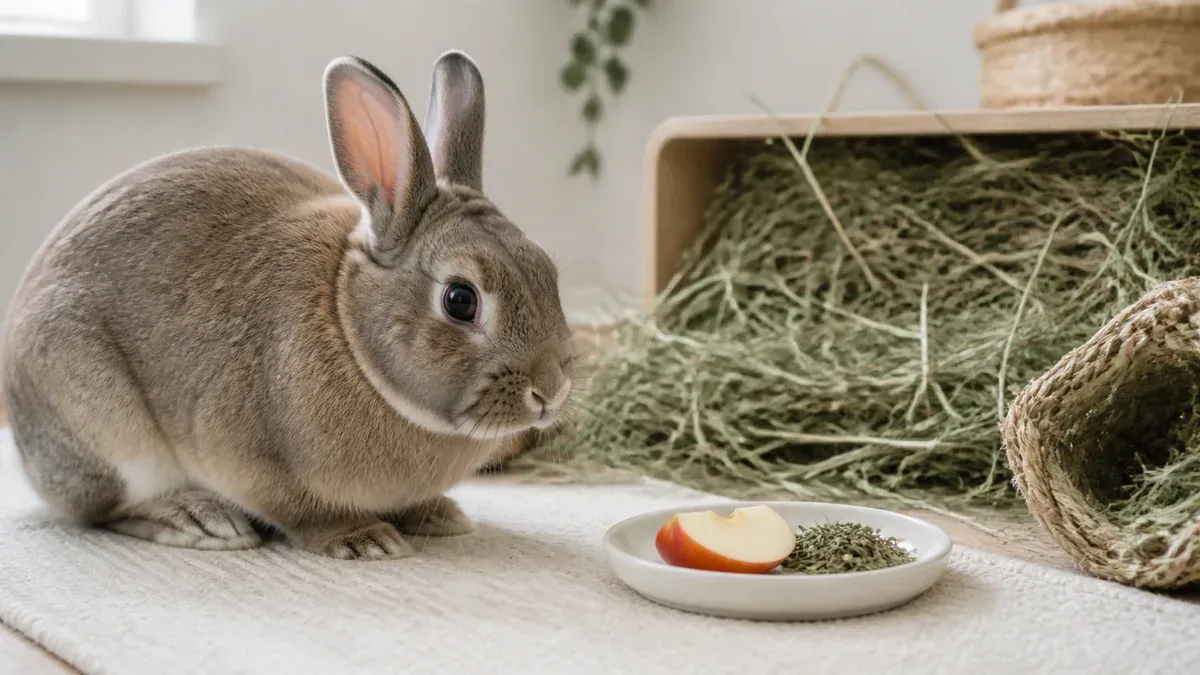
Most commercial rabbit treats are useless at best and counterproductive at worst. The only genuinely useful treats are tiny natural rewards given sparingly, without reducing hay intake or turning the rabbit into a sugar seeker.
Why commercial treats are often problematic
What’s hiding behind attractive packaging
Many commercial “rabbit treats” — fruit drops, honey sticks, seed bars, rodent biscuits — contain:
- Sugar or honey in high proportion
- Puffed cereals (corn, wheat, oats) that ferment abnormally in the cecum
- Colorants and flavorings that serve no purpose for an herbivore
- Added fats that increase caloric density without useful nutrition
These ingredients can unbalance cecal flora, promote abnormal fermentation, contribute to obesity, and reduce interest in hay — the most important food in the ration. For more on why starchy, sugar-rich mixes are a problem, read our seed mix guide.
The substitution effect
A rabbit that regularly receives highly palatable treats learns to anticipate them and ignore hay in the meantime. This is especially common when treats are given on a fixed schedule or the moment the owner enters the room. The result: steadily declining hay consumption and all the digestive and dental risks that follow. If your rabbit has already developed this pattern, see our guide on why rabbits stop eating hay.
Real treats: what is safe and useful
Fresh fruit (in very small amounts)
Fruit provides natural sugars (fructose) that are well tolerated in tiny quantities. The rule: one or two small bites per week, no more.
Suitable fruits:
- Apple (without seeds — they contain traces of cyanide)
- Pear, strawberry, blueberry, raspberry
- Grapes (1–2 seedless grapes maximum)
- Papaya and pineapple (contain digestive enzymes with potential benefits)
Fruits to use sparingly due to high sugar content: banana (~12 g sugar/100 g — one small slice is plenty), dried raisins, dried apricots, dates — all concentrated sugar forms are best avoided.
Fresh or dried aromatic herbs
This is the best treat category for rabbits:
- Dried chamomile — calming, very popular, no added sugar
- Fresh basil leaves — aromatic, fine in small quantities
- Mint leaves (small amount — mint is strong)
- Untreated rose petals — palatable, sugar-free, very natural
- Dried lemon balm — gentle, pleasant in small amounts
- Dried dandelion — fiber-rich, excellent
These herbs can also be tucked into hay to encourage foraging behavior and increase long-fiber consumption.
Unusual vegetables as contextual rewards
Offering a less frequent vegetable as a treat — a few arugula leaves, a cucumber slice, a small endive leaf — is healthier than any commercial treat and still fits within a balanced diet. See our vegetable guide for a full list of safe options.
Do treats actually serve a behavioral purpose?
For taming
Yes, to a limited extent. Holding out a fresh herb or a small piece of fruit at the moment a rabbit approaches reinforces the association “human hand = pleasant.” This is a classic taming technique, especially useful with wary rabbits. For a full approach to building trust, see our guide on taming a fearful rabbit.
For training
Rabbits can learn simple behaviors (entering a carrier, stepping onto a scale) with a food reward. A small sprig of aromatic herb is entirely sufficient — no honey stick needed.
For environmental enrichment
Tucking dried herbs into a foraging toy, hay ball, or cardboard tunnel encourages exploration and physical activity. This is the most constructive use of treats: as a driver of enrichment rather than a passive reward.
Maximum quantity to respect
The general rule: treats should never exceed 5 % of the daily ration, which in practice amounts to a few grams — one or two fruit bites or a few sprigs of dried herb. Beyond that, the risk of hay substitution and digestive imbalance increases meaningfully.
To keep overall proportions clear, revisit our complete rabbit feeding guide: treats fall into the “extras” category that must never erode the hay–vegetables–pellets foundation. Note too that carrots are far too sugary to be a daily vegetable and follow exactly the same logic as an occasional treat — despite their popular reputation.
What you can do starting today
- Remove or sharply reduce commercial drops, honey sticks, and biscuits.
- Replace with a fresh herb, an untreated rose petal, or a weekly piece of fruit.
- Use natural treats in the context of taming or enrichment.
- Never offer treats when the rabbit hasn’t eaten hay that day: it reinforces the wrong pattern.
- Check the label on everything marketed “for rabbits”: sugar, honey, puffed corn, and cereals at the top of the ingredient list are red flags.
Fruit follows the same logic: banana is the sugariest of the common treats, and that article gives the portion and frequency to hold to.
Frequently asked questions
Can I use treats to tame my rabbit?
Yes, but sparingly. A small piece of fresh fruit or a sprig of herb offered by hand creates a positive association. The key is keeping the quantity negligible (a few grams) and not letting the rabbit become dependent on treats for interaction.
Are honey sticks and fruit drops dangerous for rabbits?
They aren't immediately toxic but are strongly discouraged: very high in sugar and often based on puffed cereals, they promote obesity and digestive fermentation. Opt for a slice of apple or a basil leaf instead.
My rabbit is demanding treats and ignoring hay. What should I do?
This is a sign treats have taken too much space in the routine. Remove them for 1–2 weeks, cut pellets to the recommended dose, and watch whether hay consumption recovers. Hay must remain the foundation of the diet — not an option.
Are dried herbs sold as treats safe?
Most are fine as long as they contain no added essential oils or sugars. Dried chamomile, dried dandelion leaves, lemon balm, dried rose petals — these are excellent natural treats you can also prepare at home.