Why seed mixes are bad for rabbits
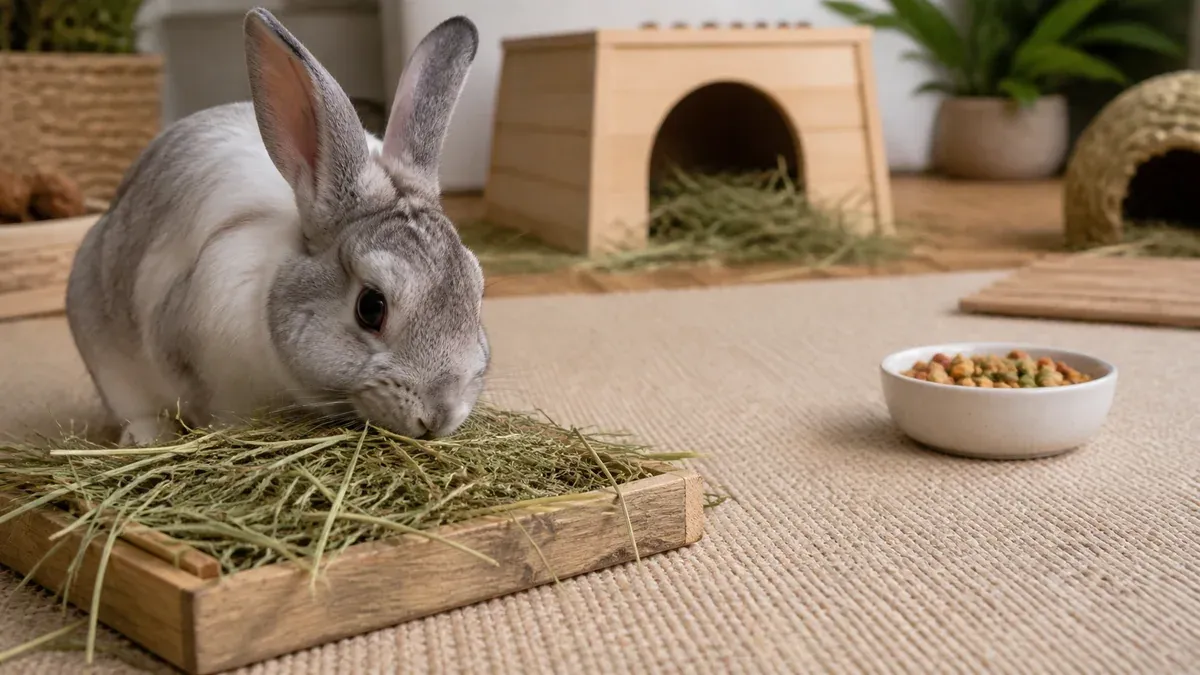
Seed mixes are bad for rabbits because they encourage selective feeding, reduce hay intake, and disrupt digestion. However attractive they look, muesli-style rabbit mixes are among the worst feeding choices you can make and should be replaced with a more uniform diet.
What a seed mix for rabbits actually contains
A typical commercial “rabbit mix” includes:
- Oil seeds (sunflower, flax, pumpkin seeds) — very high in fat, poorly tolerated
- Puffed or extruded cereals (corn, wheat, oats, rice) — rapidly fermentable in the cecum
- Dried vegetable flakes (often artificially colored) — low nutritional value
- Dehydrated alfalfa in small amounts
- Added sugars or honey to increase palatability
- Sometimes low-quality pellets mixed with the rest
The result is a product that is highly appetizing for rabbits — they select the sweetest, fattiest items first — but nutritionally unbalanced.
The selective feeding problem
This is the most immediate and visible consequence of seed mixes. Like a child at a buffet, the rabbit will eat its preferred elements first — oil seeds, sweet pieces — and leave behind the less appealing ones (dehydrated alfalfa, unsweetened flakes). The label may list a theoretically balanced composition, but what the rabbit actually absorbs does not match.
With a uniform single-component pellet, every bite has the exact same composition: the rabbit cannot select. This is the main reason exotic-vet practitioners unanimously recommend uniform pellets over mixes.
Health risks
Cecal fermentation
The rabbit’s cecum is a delicate fermenter: it breaks down long plant fibers to produce volatile fatty acids and cecotropes (the soft “night droppings” the rabbit reingest). This system is calibrated for long plant fibers — not simple cereals.
Puffed cereals ferment quickly and abnormally in the cecum, producing gas and disrupting bacterial flora. Short-term: bloating, abdominal discomfort, irregular droppings. Long-term: risk of gastrointestinal stasis or enterotoxemia. For signs of disrupted digestion, read our diarrhea in rabbits guide.
Reduced hay consumption
A rabbit satiated by dense, sugary food eats less hay. Yet hay is the irreplaceable foundation of rabbit feeding: its long fibers wear the teeth and stimulate gut motility. Even a 20 % reduction in hay intake meaningfully raises the risk of dental malocclusion and gut slowdown. Review our daily hay guide to understand why hay is non-negotiable.
Progressive obesity
Oil seeds and cereals are two to three times more calorie-dense per gram than hay. A rabbit regularly eating rich mixes tends to gain weight gradually without the owner noticing day to day. Obesity in rabbits promotes cardiovascular, hepatic, and joint problems, and reduces life expectancy.
Worsened dental wear
Seeds and soft cereals don’t require the same prolonged lateral chewing motion as hay. Over time, rabbit teeth wear less efficiently, risking the development of sharp spurs on the molars or outright malocclusion. Untreated malocclusion is painful and can make eating impossible.
What to feed instead
High-quality uniform pellets
Good adult rabbit pellets come as identical uniform nuggets, not a multicolored mix, and declare at least 18 % crude fibre with grass hay as the first ingredient.
The full label reading and the selection criteria are set out in how to choose rabbit pellets; the exact amounts by age and weight stay in how many pellets to feed a rabbit.
Unlimited hay as the absolute base
No pellet — however good — replaces unlimited hay. Hay must make up 80–85 % of the ration. For a deeper look at hay varieties, read our timothy vs. meadow hay comparison.
Fresh vegetables as a healthy complement
1–2 cups of varied fresh greens per kilogram of body weight each day rounds out the ration safely, provided they are introduced gradually. See our vegetable guide for rabbits for the full safe list.
How to make the transition
If your rabbit is currently eating a seed mix, switch to uniform pellets progressively:
- Weeks 1–2: mix 75 % old product + 25 % new pellets.
- Weeks 3–4: 50 % / 50 %.
- Weeks 5–6: 25 % / 75 %, then 100 % new pellets.
Keep hay abundant throughout. If the rabbit initially refuses the new pellets, that’s normal — dietary transitions in rabbits take time. Our rabbit diet transition guide walks through the method step by step.
The bottom line
Seed mixes for rabbits are popular but harmful: selective eating, cecal fermentation, obesity, hay avoidance, and dental wear issues. Switching to high-quality uniform pellets combined with unlimited hay and daily fresh greens is one of the best decisions you can make for your rabbit’s long-term health. For a complete overview of a healthy rabbit diet, revisit our full rabbit feeding guide.
Frequently asked questions
My rabbit has been eating seed mix for months with no visible issue. Should I really switch?
Problems from seed mixes are often slow and hidden: gradual weight gain, poor dental wear, unbalanced cecal flora without obvious external signs. Switching is worthwhile even with no acute symptoms. A gradual 3–4 week transition is all it takes.
Are all pellets equal?
No. Single-component extruded pellets are very different from seed mixes. Choose pellets with at least 18 % crude fiber, 12–14 % crude protein, no added sugars, and no colored cereals.
My rabbit picks out the seeds and leaves the rest. How do I fix this?
This is exactly the problem with mixes: the rabbit selects the sweetest, fattiest components and ignores the rest. Remove the mix entirely and offer uniform pellets. The transition may take 2–4 weeks; keep hay abundant throughout to prevent a severe caloric drop.
Can hamster or guinea pig mixes be given to rabbits?
No. Each species has very different nutritional needs. Hamster and guinea pig mixes are even higher in seeds and cereals than rabbit mixes, and are entirely unsuitable for rabbit physiology.