Can rabbits eat dandelions?
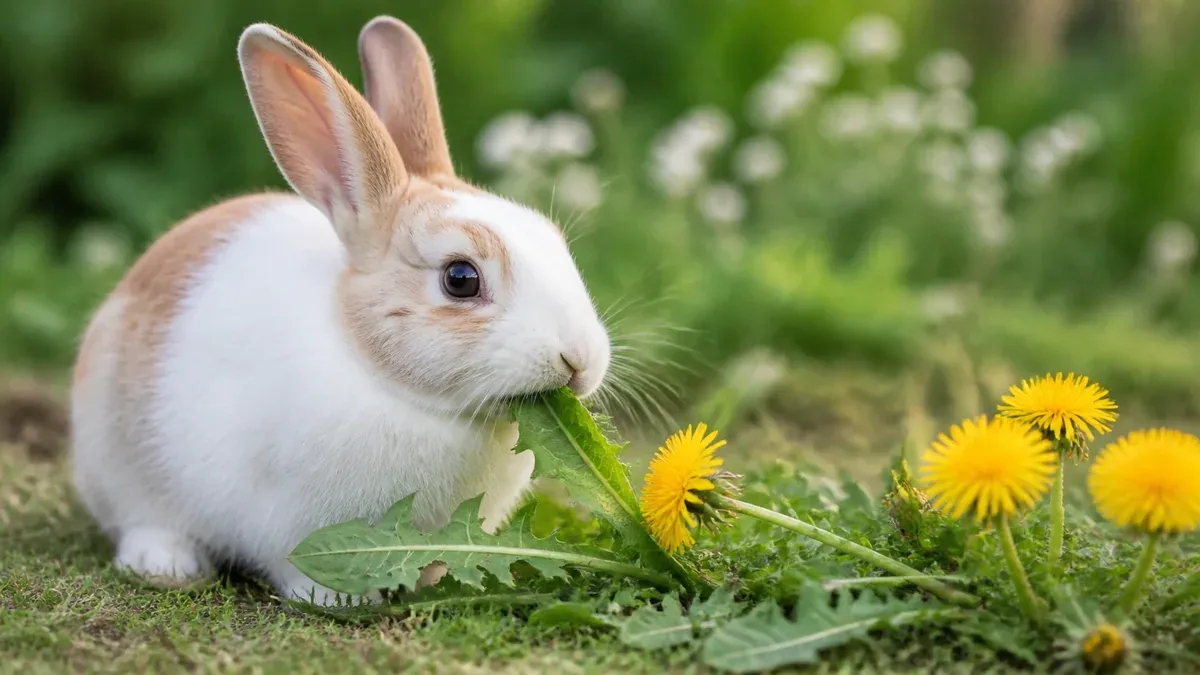
Yes — enthusiastically. Dandelion is one of the best wild plants you can offer a rabbit. Its leaves, flowers, and stems are all edible, and most rabbits will devour them eagerly. The one nuance to know: a high calcium content that calls for thoughtful rotation alongside lower-calcium greens.
Dandelion: a plant naturally suited to rabbits
Wild rabbits regularly graze on dandelions in their natural environment. This plant is part of their evolutionary diet, which explains why domestic rabbits tolerate it perfectly and seek it out with enthusiasm.
Nutritional composition of dandelion (leaves, per 100 g):
| Nutrient | Value |
|---|---|
| Water | ~86 % |
| Fiber | ~3.5 g |
| Vitamin A (beta-carotene) | Very high (~10,000 µg equiv.) |
| Vitamin C | ~35 mg |
| Vitamin K | ~778 µg |
| Calcium | ~187 mg |
| Iron | ~3.1 mg |
| Potassium | ~397 mg |
Dandelion is exceptionally rich in vitamin K and beta-carotene. Its vitamin C content exceeds most common vegetables. Its calcium — approximately 187 mg/100 g — is among the highest of rabbit-friendly plants, comparable to fresh mint and well above parsley.
Which parts to give
Leaves
The most commonly used part. Young, tender leaves (picked before flowering) are less bitter and better accepted by rabbits new to the plant. Mature leaves have a stronger flavor — some rabbits prefer them.
Flowers
The yellow flowers are often the most appreciated part. They are less bitter than the leaves, slightly sweet, and make a delicious natural treat. Offer them fresh, in modest amounts.
Stems
The stems contain a slightly bitter white latex. They are safe for rabbits but some will decline them. Include or remove them based on your rabbit’s preference.
Roots
The roots contain inulin, a prebiotic fiber beneficial for gut flora. In small amounts, fresh roots are fine. Avoid very large or woody roots.
The calcium nuance: rotation and balance
At ~187 mg of calcium per 100 g, dandelion is calcium-rich. This doesn’t make it dangerous — far from it — but it does mean it should be integrated into a varied rotation and not constitute nearly all of the daily greens ration.
Comparison with common rabbit greens:
| Green | Calcium (mg/100 g) |
|---|---|
| Romaine lettuce | ~33 mg |
| Lamb’s lettuce | ~38 mg |
| Zucchini | ~16 mg |
| Endive | ~26 mg |
| Parsley | ~138 mg |
| Dandelion | ~187 mg |
| Fresh mint | ~243 mg |
Dandelion pairs naturally with lower-calcium greens like romaine, lamb’s lettuce, or zucchini. For a balanced rotation plan, see our rabbit daily greens guide.
Recommended frequency and amount
For a standard adult rabbit (1.5–3 kg):
- Frequency: 3–4 times per week, always combined with lower-calcium greens
- Amount: a small handful of leaves (20–40 g) per serving
- Flowers: 3–5 fresh flowers, a few times per week
How to collect dandelions safely
This is the most important point. The safety of dandelion depends entirely on where it was collected.
Areas to avoid completely
- Roadsides and motorway verges (lead, fine particles, motor oils)
- Fields and meadows treated with herbicides or pesticides
- Public parks and urban green spaces (often treated or contaminated by animals)
- Industrial sites and brownfields
- Areas heavily frequented by unvaccinated or unwormed pets
Safe collection areas
- Your own untreated garden — ideal
- Rural meadows well away from cultivated fields and roads, in areas you know well
- Trusted organic vegetable gardens
Precautions before feeding
- Rinse thoroughly under clean running water even if the area seems clean
- Lightly dry before serving — very wet leaves can cause loose stools
- Introduce gradually if your rabbit has never had fresh dandelions
If you don’t have access to safe wild dandelions, organic dried dandelion sold at pet shops or health food stores is an acceptable supplementary green — though it doesn’t match the nutritional value of fresh plant.
Dandelion alongside other fresh herbs
Dandelion shares characteristics with other calcium-rich herbs given to rabbits in rotation. For useful comparisons, see our article on parsley for rabbits or our guide on fresh grass for rabbits for similar guidance on collection precautions and feeding frequency.
Summary table
| Criterion | Dandelion |
|---|---|
| Safety | ✅ Safe — all parts edible |
| Usable parts | Leaves, flowers, stems, roots |
| Calcium content | High (~187 mg/100 g) |
| Role in the diet | Rotation green (3–4 times/week) |
| Portion (2 kg rabbit) | 20–40 g of leaves per serving |
| Key point | Collection site must be free of pesticides and pollution |
| Availability | Spring–autumn (fresh) or organic dried year-round |
To build a balanced greens rotation after dandelion, continue with what greens to give a rabbit every day and then our complete rabbit feeding guide.
Frequently asked questions
Are dandelions toxic to rabbits?
No. Dandelion (Taraxacum officinale) is completely safe for rabbits. Every part of the plant is edible — leaves, flowers, stems, and roots. It is one of the most beneficial and well-tolerated wild plants for domestic rabbits.
Which parts of the dandelion can rabbits eat?
All parts are edible: the leaves (most commonly used), the yellow flowers, the stems, and the roots. The flowers are particularly well liked by most rabbits. The roots, which are higher in inulin, are best given in small amounts.
Where can I safely collect dandelions for my rabbit?
Collect from known, clean areas well away from roads, treated fields, and places frequently visited by cats and dogs. Avoid roadsides, golf courses, treated public parks, and industrial land. Your own untreated garden or quiet rural areas you know well are ideal.
Can dandelions replace hay in a rabbit's diet?
No. Dandelion is an excellent green but it cannot replace hay, which remains the essential foundation of a rabbit's diet (70–80 % of intake). Dandelion provides variety and vitamins; hay ensures dental wear and healthy gut motility.