Can rabbits eat broccoli?
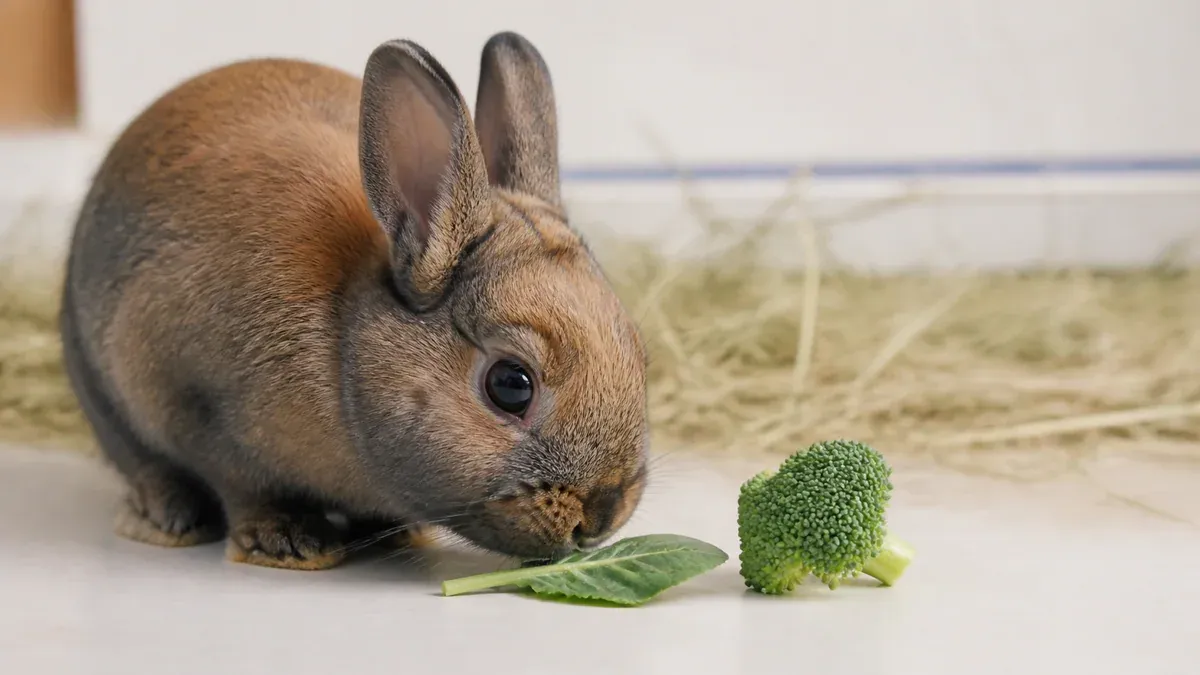
Yes, rabbits can eat broccoli — but in moderation. Broccoli is not toxic, but some parts can generate gas and bloating when given in excess. The key is choosing the right parts and keeping portions reasonable.
Broccoli and gas: what you need to know
Broccoli belongs to the crucifer family (Brassicaceae), alongside cabbage, cauliflower, and arugula. These vegetables contain glucosinolates and certain oligosaccharides that can ferment in the rabbit’s cecum and produce gas.
This fermentation is more pronounced with florets (the dense green heads) than with other parts of the plant. In small quantities, healthy adult rabbits typically tolerate them fine. In excess, gas accumulates and can cause abdominal pain — or trigger GI stasis in particularly sensitive individuals.
This isn’t a reason to avoid broccoli entirely, but it is a reason to feed it thoughtfully.
Which part of broccoli to choose
Not all parts of broccoli are equal for rabbits:
| Part of broccoli | Recommendation |
|---|---|
| Leaves | ✅ Excellent — fiber-rich, well tolerated |
| Stems | ✅ Good in small amounts |
| Florets (heads) | ⚠️ Acceptable in small amounts, more gas-forming |
Leaves: the best option
Broccoli leaves are the most overlooked part and the most valuable for rabbits:
- Higher in fiber than the florets
- Less fermentable
- Good levels of calcium, vitamin C, and vitamin K
- Leaf texture that rabbits enjoy
If you buy whole organic broccoli, always save and offer the leaves.
Stems: use in moderation
Stems are less fermentable than florets and offer useful fiber. Offer them in small amounts, cut into bite-sized pieces for easier handling.
Florets: occasionally
Florets can be given occasionally — one or two small heads once or twice a week poses no real risk for most healthy adult rabbits. The mistake is making them the only or dominant vegetable in the ration.
Recommended amounts and frequency
For a standard-sized rabbit (1.5–3 kg):
- Leaves: a small handful, 2–3 times per week
- Stems: 1–2 pieces, 2–3 times per week
- Florets: 1–2 small heads, once or twice a week at most
Broccoli should never exceed 15–20 % of the total daily greens ration. It fits into a rotation with other vegetables such as romaine, lamb’s lettuce, parsley, or endive.
How to introduce broccoli
If your rabbit has never eaten broccoli, introduce it very gradually:
- Start with one or two leaves — not florets
- Monitor droppings for 48 hours: round, firm pellets signal good tolerance
- If you notice gas, abdominal bloating, or a less active rabbit, stop immediately
A rabbit on a long-standing varied diet will generally tolerate broccoli without difficulty. It’s in rabbits with a previously limited diet where the risk of discomfort on introduction is highest.
Warning signs to watch for
After giving broccoli, observe your rabbit for 2–4 hours:
- Grunting or teeth grinding: possible abdominal pain
- Swollen or hard abdomen: gas buildup
- No droppings: serious sign — transit has stopped
- Lethargy or abnormal posture: veterinary emergency
If these signs appear, get your rabbit moving (let it exercise outside the enclosure), make sure it’s eating hay, and consult a vet if the situation doesn’t improve quickly. GI stasis is a medical emergency in rabbits.
Other crucifers: same principles apply
Other vegetables from the same family follow similar rules:
| Vegetable | Gas risk | Notes |
|---|---|---|
| Brussels sprouts | High | Very gas-forming, tiny amounts only |
| Green cabbage (leaves) | Moderate to high | Small amounts only |
| Cauliflower | Moderate | Avoid florets; leaves acceptable |
| Arugula | Low | Well tolerated, regularly recommended |
| Kale | Moderate | High calcium, small amounts |
Arugula, though a crucifer, is the best-tolerated member of this family and can be offered more frequently. It’s covered in our rabbit lettuce and greens guide.
Broccoli in a balanced rabbit diet
Broccoli can be a useful part of a varied rotation if you choose the right parts and keep quantities moderate. For an overall balanced diet, refer to:
- What do rabbits eat? (complete guide)
- What vegetables can rabbits eat?
- What greens to give a rabbit every day
And remember that the foundation of every healthy rabbit diet is ad-libitum hay, which drives gut motility and prevents digestive stasis.
Summary table
| Criterion | Broccoli |
|---|---|
| Safety | ✅ Safe in moderate amounts |
| Main risk | Gas and bloating in excess |
| Best parts | Leaves > stems > florets |
| Max frequency | 2–3×/week (leaves), 1–2×/week (florets) |
| Watch for | Swollen abdomen, stopped droppings |
| Introduction | Very gradual |
Frequently asked questions
Is broccoli dangerous for rabbits?
Broccoli is not toxic to rabbits, but it can cause gas and bloating in excess. The florets (heads) are the most fermentable parts. Broccoli leaves and stems are better tolerated and a smarter choice for regular feeding.
Which part of broccoli should I give my rabbit?
Broccoli leaves are the best choice: fiber-rich, less gas-forming, and well tolerated. Stems are acceptable in small amounts. Avoid giving only florets, as they are the most likely to cause digestive discomfort.
How much broccoli per day for a rabbit?
A small amount is enough: one to two florets or a small handful of leaves for a standard-sized rabbit. Limit to once or twice a week to avoid gas buildup. Broccoli should not exceed 20 % of the daily greens ration.
My rabbit ate a lot of broccoli — what should I do?
Monitor your rabbit: gas or mild abdominal bloating may appear within a few hours. Ensure hay is available at all times, offer fresh water, and encourage movement. If the abdomen is very swollen, the rabbit stops eating or producing droppings, call a vet immediately — GI stasis is a medical emergency.