Can you give fresh grass to a rabbit?
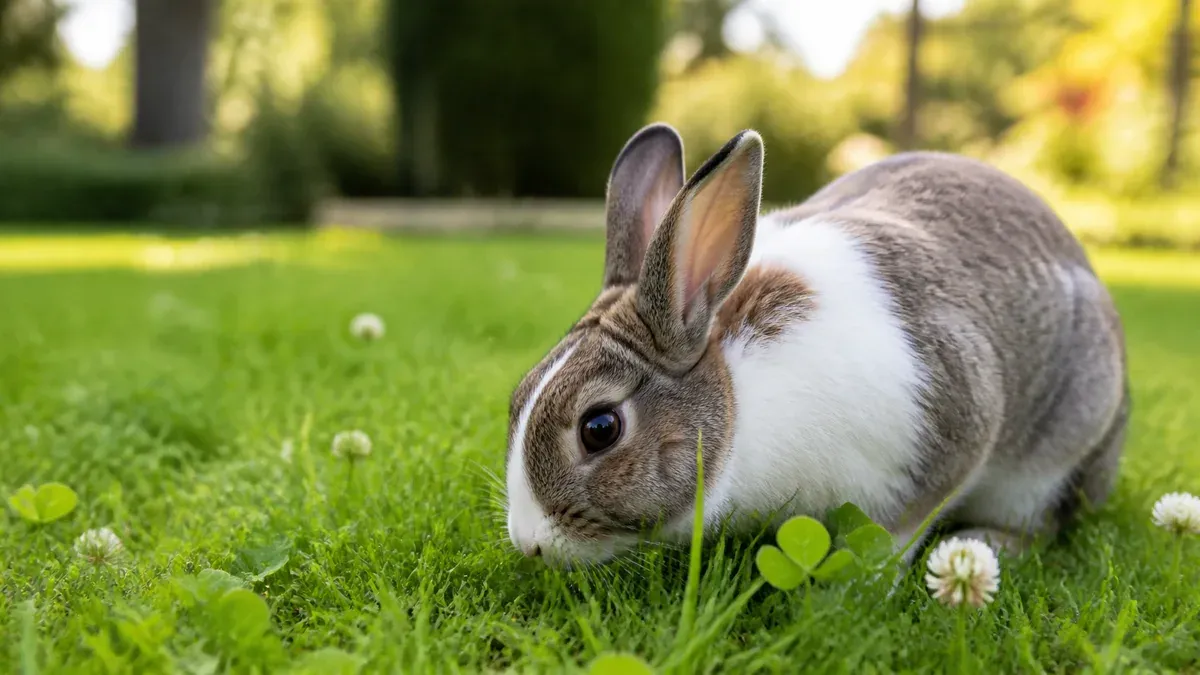
Fresh grass is the most natural food imaginable for a domestic rabbit — wild rabbits spend most of their time grazing a variety of grasses and plants. For pet rabbits, fresh grass is not only allowed but genuinely beneficial, provided you follow a few important rules. The short answer: yes, you can give fresh grass to your rabbit — and if you have access to it, you probably should.
Why fresh grass is good for rabbits
Superior nutritional richness compared to hay
Fresh grass contains more water, vitamins (C, E, beta-carotene) and phytochemicals than dried hay, which loses some nutrients during curing. It also provides a diversity of plant species and aromas that a single-type hay can’t match.
Natural hydration
A rabbit that regularly eats fresh grass hydrates its diet naturally, in addition to its water bowl. This doesn’t replace access to fresh water — rabbits must always have it — but it’s a welcome contribution, especially in summer. To understand a rabbit’s daily water needs, read our rabbit water consumption guide.
Behavioral and sensory enrichment
Grazing at ground level, sorting through grasses, sniffing varied smells — fresh grass stimulates the rabbit’s natural behaviors and reduces boredom. If your rabbit has access to an outdoor or indoor pen with grass, free access to fresh grass is one of the best forms of environmental enrichment available.
Non-negotiable conditions
Zero pesticides, herbicides, or chemical fertilizers
This is the single most important condition. Grass from a lawn treated with phytosanitary products can be dangerous for rabbits. Wait at least 3–4 weeks after the last treatment before offering grass from that area.
If you’re unsure of a lawn’s treatment history (public park, shared garden, roadside), it’s better to skip it or grow your own grass in a pot.
Avoid roadside and polluted areas
Grass growing alongside roads accumulates heavy metals (lead, cadmium) from vehicle traffic. Even untreated, it may be unsafe for a rabbit to eat.
Avoid mechanically mown grass
Grass cut by a lawnmower starts fermenting within hours of being cut. Given in large amounts, it can cause cecal fermentation and bloating. Cut grass with scissors and offer it freshly collected. Lawn-mower cuttings can be used in very small quantities if very fresh, but caution is warranted.
Introduce progressively
A rabbit accustomed only to dry hay may develop soft stools if suddenly given a large amount of fresh grass, due to the higher water content and different composition. Introduce fresh grass over one to ten days, starting with a small handful per day.
For any dietary change in rabbits, the same principle applies: go gradually and watch the droppings. Our rabbit diet transition guide outlines the general method.
Which grasses are safe for rabbits?
Common lawn grasses (excellent)
Most ordinary lawn grasses are excellent for rabbits:
- Ryegrass (perennial ryegrass) — very common in lawns, excellent
- Fescue (festuca) — well tolerated, appreciated
- Bluegrass (poa) — soft, nutritious
- Timothy grass — same plant as timothy hay, just fresh
- Orchardgrass (dactylis) — slightly coarser, still good
Edible wild plants (very good)
Your garden or roadside (untreated) often offers wild plants that are excellent for rabbits:
- Dandelion (leaves and flowers) — very popular, excellent
- Plantain (plantago) — well tolerated, mineral-rich
- Clover (in small amounts) — protein-rich, don’t overdo it
- Chickweed — mild, well tolerated
- Wild alfalfa — like cultivated alfalfa, limit for adults
These plants are part of the recommended daily greens rotation and can be foraged as a weekly supplement.
Wild plants to avoid completely
Some plants common in gardens and countryside are toxic to rabbits:
| Plant | Risk level |
|---|---|
| Yew (Taxus baccata) | Very high — lethal |
| Foxglove (Digitalis purpurea) | Very high |
| Buttercup (Ranunculus) in large amounts | Moderate |
| Lily of the valley (Convallaria) | High |
| Deadly nightshade (Atropa belladonna) | Very high |
| Elder (berries, leaves, raw stems) | High |
| Bracken fern | Moderate |
| Ragwort (Senecio jacobaea) | Moderate–high |
When in doubt about a plant, don’t offer it. For the full list of toxic foods and plants, see our rabbit toxic foods guide.
Fresh grass and hay: two complementary foods
Owners sometimes wonder whether fresh grass can replace hay in summer. The answer is no. Dry hay retains two advantages that fresh grass cannot replace:
- Long fibers for dental wear: a rabbit’s teeth need the prolonged chewing that only dry hay provides.
- Round-the-clock availability: hay sits in the rack at all hours. Fresh grass wilts quickly and cannot be left out for hours without fermenting.
The right approach is to offer both: ad-libitum hay at all times, and a portion of fresh grass once or twice a day when in season. For a reminder on hay’s role in the ration, see our hay quantity guide.
In summary
- Fresh grass is excellent for rabbits and fits naturally within a balanced rabbit diet.
- Mandatory condition: no pesticides, herbicides, or chemical fertilizers.
- Introduce gradually if the rabbit has never eaten grass before.
- Avoid mechanically mown grass and very wet grass in large amounts.
- Identify and exclude toxic plants (yew, foxglove, nightshade, lily of the valley).
- Fresh grass complements hay — it does not replace it.
Dandelions usually grow on the same lawn and can be fed whole — leaves, flowers and stems. The amounts, and above all the foraging precautions, are in can rabbits eat dandelions.
Frequently asked questions
Can I cut garden grass and give it directly to my rabbit?
Yes, provided the lawn hasn't been treated with pesticides, herbicides, or chemical fertilizers within the past 3–4 weeks. Cut with scissors rather than a lawnmower — mown grass ferments quickly and can cause digestive upsets.
Does fresh grass replace hay?
No. Fresh grass and dry hay are not equivalent. Dry hay contains long fibers essential for dental wear and gut motility. Fresh grass is a beneficial complement but does not replace ad-libitum hay. Both can coexist without issue.
My rabbit has never eaten fresh grass. How do I introduce it?
Start with one small handful per day for a week while monitoring droppings. If droppings remain normal (round, dry, well-formed), gradually increase. If you see soft stools or diarrhea, remove the grass and wait a few days before trying again with an even smaller amount.
Can I give grass wet from rain?
Preferably not. Very wet grass can accelerate intestinal fermentation and cause diarrhea in sensitive rabbits. Wait for dew or rain to evaporate, or pat it lightly dry before offering.