How to transition a rabbit's diet safely: the step-by-step guide
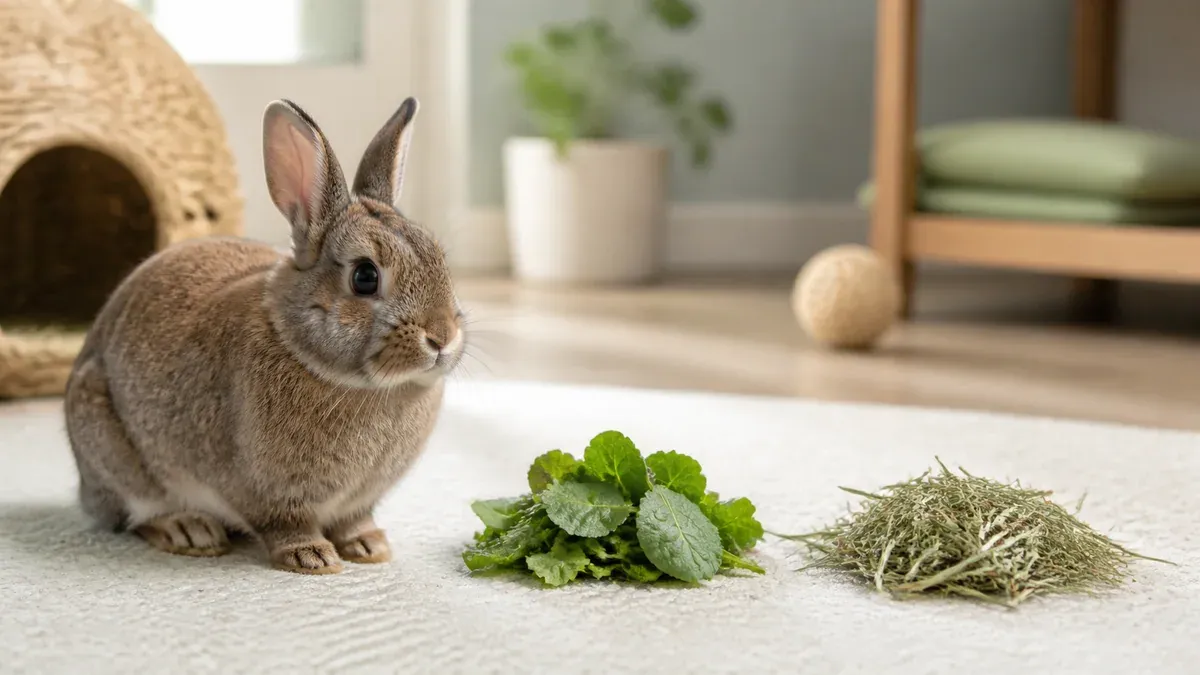
A safe rabbit diet transition follows a slow pattern: around 80% old food / 20% new in week one, then 50/50, then 20/80, and only 100% new food once droppings, appetite, and hay intake stay normal. Whether you are changing pellets, hay, or introducing the first greens, moving faster than that risks soft cecotropes, diarrhoea, bloating, and full GI stasis.
Understanding why transitions need to be slow makes it much easier to follow through with the necessary patience, especially when a new bag of better-quality pellets is sitting in the cupboard waiting to be used.
Why rabbit digestion is so sensitive to change
Rabbits are obligate herbivores with a specialised digestive system centred on the cecum — a large fermentation chamber that processes plant fibre and produces cecotropes, the soft nutrient-rich droppings that rabbits re-ingest directly from their hindquarters. This process depends on a carefully balanced colony of bacteria, fungi and protozoa.
When diet changes abruptly, the existing microbial population may not handle the new substrate well. The resulting imbalance — called cecal dysbiosis — can contribute to gas, diarrhoea and reduced gut motility. These signs need prompt veterinary advice rather than a countdown based on a fixed number of hours.
Hay is the single most important protection against these problems because its long fibers keep the gut moving. Never reduce hay during a transition — if anything, ensure it’s more freely available than usual. For context on why hay is so central, see our complete rabbit feeding guide and the hay quantity guide.
When does a rabbit need a diet transition?
The most common scenarios where a planned transition is needed:
Changing pellet brands. Even if the new pellets look similar, a different formula, ingredient order or fibre source will affect the cecal flora. The same transition protocol applies.
Switching hay types. Moving from alfalfa to Timothy at 6 months (the standard transition as a rabbit moves from junior to adult feeding) is one of the most important dietary shifts a rabbit goes through. It should be managed gradually, not switched overnight.
Introducing fresh vegetables for the first time. Vegetables are not an immediate addition to any rabbit’s diet. They require careful, staged introduction — a single new vegetable at a time, in tiny amounts.
Reducing pellets for an overweight rabbit. Cutting pellets significantly and quickly isn’t just unpleasant for the rabbit; it’s digestively risky. The reduction should happen slowly over several weeks.
Moving from a junior to an adult diet at 6 months. This involves changing both the hay type and the pellet quantity, making it one of the more involved transitions. See our guide on what to feed a 2-month-old baby rabbit for the full picture of how the diet evolves.
After illness or antibiotic treatment. A rabbit that has been unwell, especially one that received antibiotics (which disrupt gut flora directly), needs an especially careful and slow return to normal feeding. In this case, work alongside your vet rather than following a standard schedule.
The standard 3–4 week transition protocol
This framework applies to most diet changes — pellet brand switches, hay type changes and pellet volume adjustments.
Week 1: 80% old food, 20% new food
Start with a small proportion of the new food mixed in. For pellets, this might mean replacing one or two tablespoons of the daily ration with the new brand. For hay, mix a small handful of the new type into the existing hay. Keep everything else identical.
Monitor droppings closely. Normal droppings are round, firm, and consistently sized. A small temporary increase in cecotropes during the first few days is not unusual and usually settles on its own.
Week 2: 50% old food, 50% new food
If week one went smoothly, move to a roughly equal mix. Continue monitoring. Most healthy adult rabbits will handle this stage without difficulty.
Week 3: 20% old food, 80% new food
You’re almost there. By now the cecal flora has had time to adapt. Many rabbits show no digestive signs at all by this stage.
Week 4 onwards: 100% new food
Complete the transition. If you’ve been methodical, this should feel like a non-event.
Important: these timings are a minimum, not a target to rush toward. If your rabbit shows any symptoms — soft cecotropes, loose droppings, reduced appetite, fewer normal droppings — slow the transition down. Go back to the previous ratio for a few extra days before progressing again. There is no penalty for being cautious; there is a real cost to going too fast.
Introducing fresh vegetables: one at a time
Fresh vegetables require a slightly different approach because you’re adding a new food rather than replacing an existing one.
The key rules:
- One new vegetable at a time. Never introduce two new greens in the same week. If something causes a reaction, you need to know exactly what it was.
- Start with a thumb-sized portion. This is genuinely tiny — a few leaves of romaine, one sprig of coriander, a small piece of endive. The goal is exposure, not a full serving.
- Observe for at least three days before adding anything new. Watch droppings carefully. Any change in consistency, frequency or odour is a signal.
- Only expand portion size once the new vegetable is clearly well tolerated.
For the full list of safe greens and how to build a varied rotation, see our guide on what greens to give a rabbit every day.
Warning signs: when to slow down or stop
These symptoms during a transition mean the pace is too fast:
- Soft or smeared cecotropes on the fur around the hindquarters rather than being eaten cleanly
- Loose or watery droppings — real diarrhoea (distinct from cecotropes)
- Significantly reduced number of normal round droppings
- Reduced appetite for hay — this is a particularly important signal, as hay-eating drives gut motility
- Visible bloating or a hard, distended abdomen
- Tooth grinding (bruxism) or hunched posture indicating pain
If you see any of these, return immediately to the previous ratio and contact a vet if they persist. True diarrhoea, bloating, stopped droppings or complete food refusal require an immediate call; do not wait for an hourly threshold. For more on recognising an appetite emergency, see what to do if your rabbit stops eating.
Special cases
Newly adopted rabbits
The first two weeks after adoption are not the time to introduce any dietary change, regardless of how much you want to improve your rabbit’s food. Moving home is one of the most stressful events in a rabbit’s life. The gut flora is already under pressure from the environmental change. Layering a food change on top creates unnecessary risk.
Ask the shelter, breeder or previous owner exactly what the rabbit was eating — which brand of pellets, which type of hay, which vegetables if any, and in what quantities. Replicate this precisely for the first two weeks. Once the rabbit is settled, eating and behaving normally, you can begin any transitions you’ve planned.
Reducing pellets in an overweight rabbit
Weight management in rabbits is handled primarily by adjusting pellet quantities rather than switching to “diet” products. If your rabbit is overweight and you’ve been advised to reduce pellets, do it gradually over four weeks or more — a 10–15% reduction per week is a reasonable pace. Abrupt reduction can cause a stressed rabbit to over-eat hay (which is fine) but can also trigger anxiety-driven behaviours and digestive instability.
Never dramatically cut total food intake without veterinary guidance. A rabbit eating substantially less than usual needs prompt veterinary advice; complete refusal or stopped droppings is an emergency.
Post-illness recovery
After any illness, especially one involving the digestive system, the cecal flora may be significantly depleted or altered. In these cases, even a standard three-week transition may be too fast. Work with your vet on a personalised reintroduction schedule. This is especially true if antibiotics were part of the treatment, as they are known to cause cecal dysbiosis in rabbits.
Checklist before moving to the next stage
Before increasing the share of new food, make sure these four signals have stayed positive for at least 48 hours:
- Normal droppings: round, dry, and produced in the usual quantity
- No abnormal soft cecotropes sticking to the fur around the tail
- Normal or improving hay intake
- Normal overall appetite and behaviour
If even one of these markers slips, hold the current ratio or step back to the previous one for a few more days. For the full picture once the transition is complete, continue with the complete rabbit feeding guide. If the main challenge is hay acceptance rather than brand switching, also read why rabbits stop eating hay.
Sources
- RSPCA — Rabbit diet — states the principle this whole article rests on: “avoid sudden changes in diet though, as this can upset a rabbit’s digestive system and make them ill”. For moving off a muesli mix, the RSPCA explicitly recommends transferring “to a healthier diet gradually over several weeks”. For greens: “introduce new types of greens gradually, in small amounts, to avoid potential stomach upsets”.
How long it takes depends on the rabbit and the starting point. A rabbit that develops soft droppings, stops eating or becomes less active during the transition should be seen by a rabbit-savvy vet. This article has not been reviewed by a veterinarian.
Frequently asked questions
How long does a rabbit diet transition take?
A safe transition takes three to four weeks. Week one is roughly 80% old food and 20% new. Week two is 50/50. Week three is 20% old and 80% new. By week four you can feed the new food exclusively — but go slower if your rabbit shows any digestive symptoms along the way.
I just adopted a rabbit. Can I immediately switch to the food I've chosen?
No — wait at least two weeks before making any changes. Ask the breeder or shelter exactly what food, hay type and quantities the rabbit was receiving, and replicate that precisely during the settling-in period. Moving home is already stressful for a rabbit; a simultaneous diet change multiplies that digestive risk significantly.
My rabbit developed soft droppings during a transition. What should I do?
Slow down or pause the transition immediately. Return to a higher proportion of the previous food and keep hay freely available at all times. If soft droppings persist beyond 24–48 hours, or if you notice real diarrhoea, bloating or a complete stop in droppings, contact a vet without delay.
Do I need to transition hay as well, or just pellets?
Yes, hay transitions matter too. If you're switching from one type of hay to another — for instance from alfalfa to Timothy at 6 months, or between two brands with noticeably different textures — mix the old and new hay together gradually over two weeks rather than swapping overnight.