Can rabbits eat cucumber?
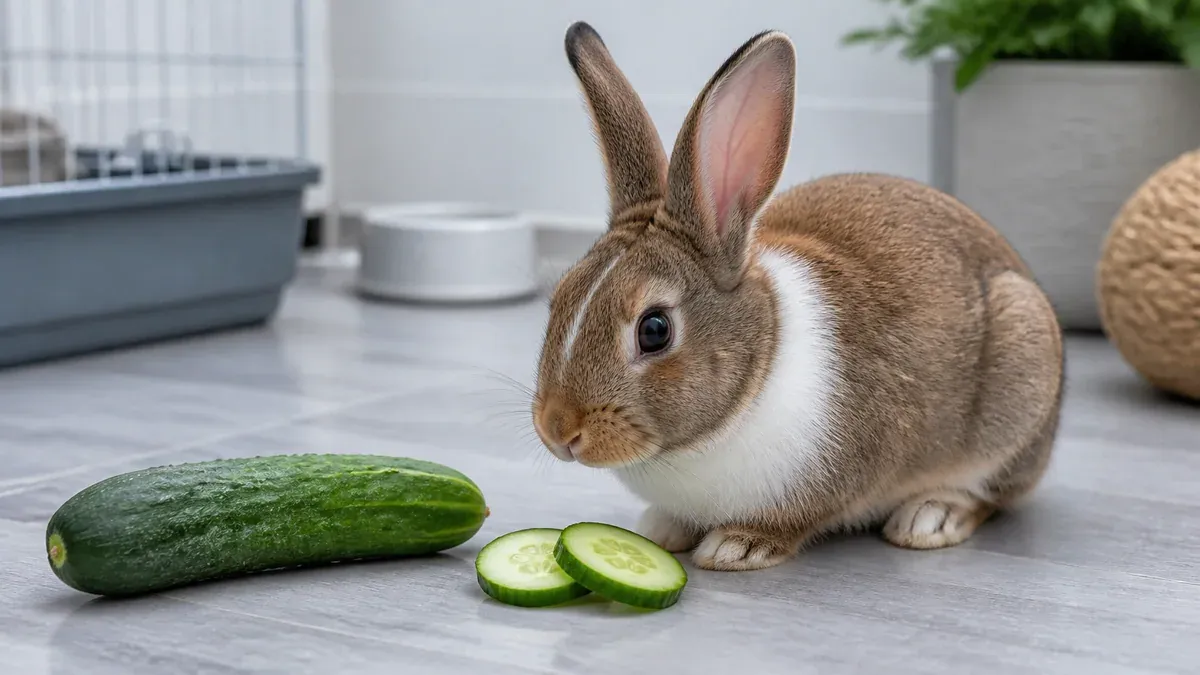
Yes, rabbits can eat fresh, plain cucumber as an occasional treat, according to the RSPCA. The cited sources give no cucumber-specific portion: ask your vet for an appropriate amount and keep hay and water available at all times.
Keep cucumber secondary
Cucumber should not become the basis of the diet. Prioritise hay, followed by a balanced ration of greens and pellets suited to your rabbit. The complete rabbit feeding guide explains these food groups; have your vet confirm individual quantities.
The RSPCA lists cucumber among occasional treats. It also recommends varying leafy greens: offering the same food repeatedly does not create variety.
How much cucumber can a rabbit have?
The cited sources set no numerical cucumber portion: ask your vet for an amount suited to your rabbit. The RSPCA places leafy greens at 10% of the diet; that general benchmark is not a cucumber dose, since it lists cucumber as an occasional treat rather than a staple leafy green.
Size and health matter
Do not transfer a large rabbit’s portion to a dwarf rabbit. Weight, age and health should inform the diet; a slice is not a standard measurement. For a sick rabbit or one on a prescribed diet, have any addition approved before offering it.
Introduce without changing the whole diet
The RSPCA recommends introducing new foods gradually, in small amounts, and seeking veterinary advice before changing the diet. To assess tolerance of cucumber, keep other familiar foods and avoid introducing several new foods together.
Use fresh cucumber, thoroughly washed and without dressing. Pickles in brine or dressed salads are not the food discussed here: the RSPCA advises against processed, salty or sugary human foods. Discard damaged or mouldy cucumber.
Tell caecotrophs from diarrhoea
Soft, sticky clusters may be caecotrophs, which rabbits normally eat. Shapeless or watery faeces replacing hard pellets may be diarrhoea. Appearance alone cannot establish a diagnosis, and cucumber is not necessarily the cause.
Signs to monitor and prompt advice
Note appetite, activity, the number of hard pellets and any soft faeces or uneaten caecotrophs. Pause the cucumber introduction and contact your vet promptly about abnormal droppings, even if your rabbit remains alert. The PDSA advises against waiting for diarrhoea to improve on its own.
The page on soft droppings and caecotrophs describes their appearance; it does not replace this veterinary advice.
Get urgent veterinary help
Call immediately if appetite drops, droppings markedly decrease or stop, faeces become watery, or your rabbit has a swollen belly, pain or lethargy. Do not wait for it to stop eating completely. The PDSA advises immediate contact when a rabbit’s appetite decreases.
Next step
If your rabbit eats normally and tolerates its diet, choose a variety of leaves and herbs from the guide to daily greens, then have your vet adapt quantities to its needs. Keep cucumber as an optional treat and fresh water always accessible.
Sources
These sources set no cucumber-specific slice count, thickness or numerical frequency. The 10% benchmark refers to leafy greens, not cucumber. This article has not been reviewed by a vet.
- RSPCA — Rabbit diet: feeding, occasional treats and gradual introduction
- PDSA — Diarrhoea in rabbits: caecotrophs, diarrhoea and prompt veterinary advice
- PDSA — Reduced Appetite in a Rabbit: reduced appetite and urgency
Frequently asked questions
My rabbit refuses only cucumber: should I keep trying?
No. If your rabbit eats its usual foods normally, there is no need to insist on this optional treat. A general drop in appetite requires an immediate call to your vet, even if your rabbit still accepts a treat.
Should I introduce cucumber as soon as a baby rabbit arrives?
Ask your vet when and how to change feeding based on the rabbit's age and current diet. Keep already tolerated foods while awaiting that advice; this article gives no universal age threshold or baby-rabbit portion.
What should I prepare before calling about abnormal droppings?
Note what your rabbit is eating, what the droppings look like and any recent food changes. A photo or sample may help your vet. If rabbits live together, explain if you cannot identify which rabbit is affected; do not delay calling to find out.