My rabbit is losing weight: possible causes and when to worry
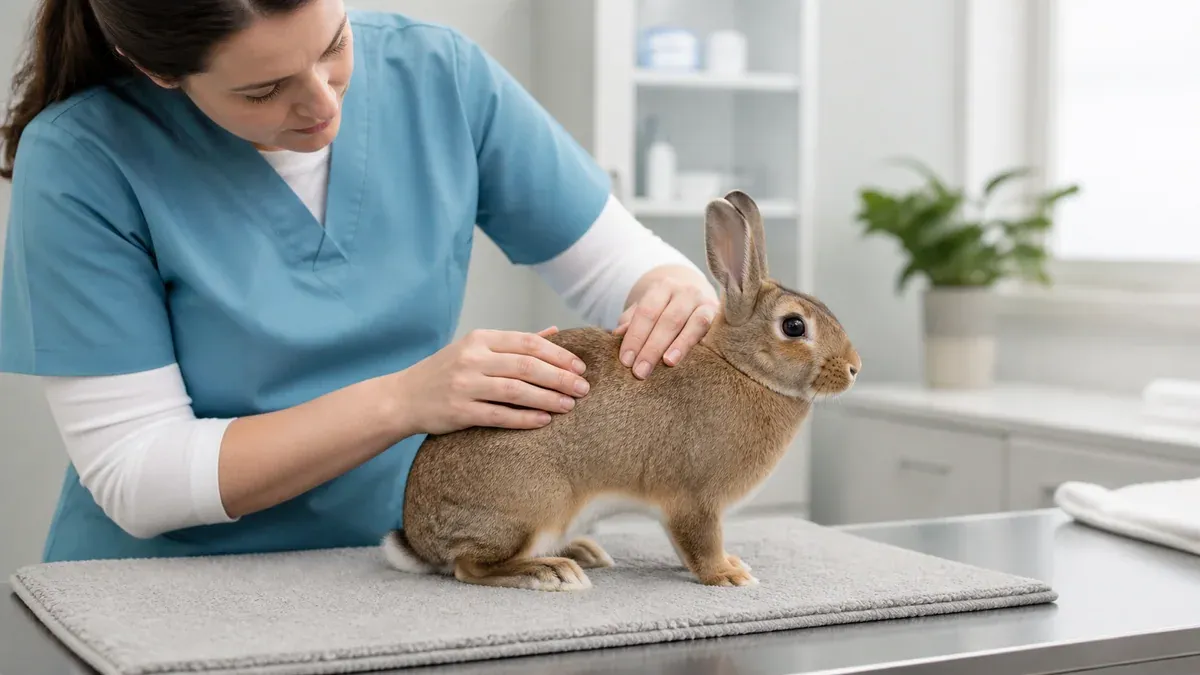
Veterinary warning — Weight loss in a rabbit is never trivial: it is often the first visible sign of an underlying illness. This article helps identify possible causes and associated signs, but it does not replace an exam by a rabbit-savvy vet, the only one able to make a diagnosis.
A rabbit losing weight most often has a dental or digestive problem, less often a chronic disease (kidneys, infection, E. cuniculi) or an unsuitable diet. Confirm the loss by touch and by weighing, then contact the vet without delay; if it is eating less or passing fewer droppings, request an urgent appointment.
First: check it really is losing weight
A rabbit’s coat gives a false impression of bulk. To assess body condition, rely on touch, not on looks:
- run your hand along the spine, the ribs and the hips;
- in a rabbit in good condition, these landmarks can be felt quite easily without sticking out;
- if they become prominent, angular, sharp under your hand, the rabbit is too thin.
The same method works the other way round: if the ribs become hard to feel and the curve climbs, the approach to take is set out in my rabbit is getting fat.
The most reliable method is regular weighing: a kitchen scale is enough. Weigh your rabbit under the same conditions each time and track the trend. The kit, the method and the mistakes that ruin a reading are covered in how to weigh a rabbit at home. It is the curve, more than a single figure, that reveals early weight loss. An adult rabbit has a stable adult weight: a repeated drop is not normal.
Two cases where weight loss goes unnoticed
- Two rabbits sharing a bowl. The amount that disappears does not tell you who is eating: the dominant or greedier rabbit can hide the other’s falling appetite. Weigh each rabbit separately and watch them at mealtimes.
- A young rabbit that is still growing. It may not actually lose weight: its curve plateaus when it should be rising. A lasting plateau in a young rabbit deserves the same exam as weight loss in an adult.
My rabbit is eating but losing weight: why?
A rabbit that is hungry but losing weight is often in pain when it eats: its teeth grow about 1 cm a month and, if they wear unevenly, spurs cut the tongue and cheeks. It chews less well, eats less and loses weight without losing interest in food. Having the vet examine its mouth is the priority.
The common mistake is to feel reassured because the bowl is empty. Watch how it eats:
- it sorts its food, leaves the hay and goes straight for soft food or pellets;
- it drops half-chewed strands, chews on one side or slowly;
- it drools or has a wet chin, or grooms less.
A rabbit that ignores its hay with no other sign may have another reason: why has my rabbit stopped eating hay helps tell the difference. If drooling accompanies the weight loss, see also my rabbit is drooling.
The most common causes
1. Dental problems
A rabbit’s teeth grow continuously. When they wear unevenly, spurs cut the tongue and cheeks: eating becomes painful, and an abscess can form. It is the first cause to have ruled out, even in a rabbit that is eating. See rabbit dental malocclusion to recognise these signs.
2. Digestive trouble
Slowed gut motility reduces appetite and absorption. A rabbit that eats less and passes fewer droppings loses weight and can tip into GI stasis, a life-threatening emergency. Conversely, abnormal stools over a prolonged period (see soft droppings in rabbits) reflect poor digestion that, over time, causes weight loss.
3. Chronic diseases
Several underlying conditions cause gradual weight loss:
- E. cuniculi: this parasite can affect the kidneys and nervous system and cause weight loss — see E. cuniculi in rabbits;
- kidney disease: often paired with increased thirst and urine output — see my rabbit is drinking a lot to measure intake before the appointment;
- chronic infection, a deep abscess or intestinal parasites that weaken the animal;
- chronic pain (arthritis in older rabbits, sore hocks) that curbs appetite and activity.
4. An unsuitable diet
A ration low in hay, too many low-grade pellets or poor-quality hay can, in some rabbits, sustain thinness. But never assume the cause is diet alone: correcting the ration without ruling out disease wastes precious time. Once a medical cause has been ruled out, review the basis of the diet with how much hay a rabbit needs.
The associated signs to note
Weight loss on its own tells you little; it is the signs that come with it that guide the vet. Note and report:
| Associated sign | The lead it suggests |
|---|---|
| Sorts food, drools, chews on one side | Dental problem |
| Fewer droppings, smaller droppings, bloating | Slowed gut |
| Drinks and urinates much more | Kidney or metabolic lead |
| Head tilt, balance trouble | E. cuniculi or ear involvement |
| Dull, hides, less active | Pain or general illness |
| Dull, poorly kept coat | The rabbit no longer grooms (discomfort, pain) |
To spot subtle signs of discomfort, lean on how to tell if a rabbit is in pain.
When should a rabbit that is losing weight see a vet?
The 1st measured weight drop warrants contacting the vet without waiting for another weighing, in line with the RSPCA guidance. If your rabbit is eating less, passing fewer droppings or none at all, request a same-day appointment: stopping eating can quickly become an emergency.
To prioritise:
- Emergency, same day: it has stopped eating, is eating much less, or droppings are reducing or have stopped; it is hunched, with a swollen or hard belly. See my rabbit is not eating: what to do.
- Veterinary advice without delay: one weighing shows a drop, or a sign from the table appears (sorting, drooling, increased thirst, head tilt), even if it is still eating.
- Monitor while making contact: note the weight, appetite and droppings to tell the vet; do not delay the call to complete the curve.
To gauge urgency in other situations, see when to see an exotic vet for your rabbit.
The vet usually starts with an oral exam; a full check of the back teeth often needs sedation, and skull X-rays show what the naked eye cannot. Blood work, urinalysis or other imaging follow depending on the signs.
What to do next
Weigh your rabbit today, write down the figure and the date, then bring that curve and your notes from the table to the appointment: it is what will save the vet the most time. In a senior rabbit, this monitoring is part of a wider follow-up: see senior rabbit health.
Browse all our rabbit health guides and the rabbit species page to monitor its weight and general condition day to day.
Veterinary sources and caution notes
The sources below serve as veterinary or institutional reference points to frame the topic cautiously: this article helps you recognise possible causes, but it does not replace an exam by a rabbit-savvy vet. In case of weight loss, refusal to eat or dullness, seek advice without delay.
Sources used to frame the recommendations:
- RSPCA — Rabbit health and welfare: change in weight or body condition as a sign of illness, daily check of appetite and droppings.
- VCA Hospitals — Dental disease in rabbits: tooth growth, weight loss of dental origin, sedation and X-rays.
- PDSA — Obesity in rabbits: assessing body condition by touch (ribs, spine, hips).
Frequently asked questions
Should I give it more pellets or treats so it regains weight?
Not until you know the cause. Adding pellets or treats hides the weight loss on the scale without treating the problem, and can worsen a digestive disorder. Keep hay unlimited and the usual ration; if assisted feeding is needed, what to give and how much is for your vet to prescribe.
Do older rabbits inevitably lose weight?
No. Old age alone does not explain weight loss. In a senior rabbit, weight loss often reveals a treatable dental, kidney or arthritic problem. Regular veterinary checks and consistent weighing let you act early rather than blaming the weight on age.
My rabbit lost weight after a move or a new companion: is it stress?
Stress can reduce appetite, but it is not an explanation to accept by default. If food intake or the number of droppings falls, talk to your vet straight away; if appetite is normal but the weight keeps dropping, look for another cause.