What temperature can rabbits tolerate? Heat and cold precautions
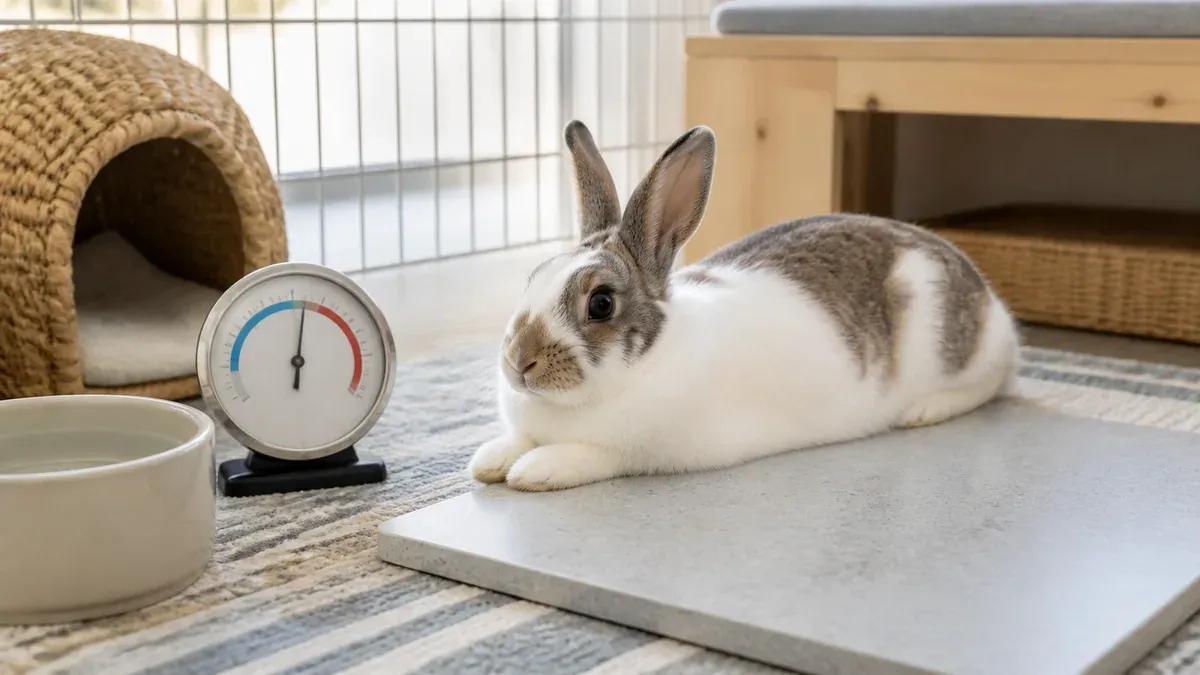
Domestic rabbits are sensitive to temperature extremes. They may tolerate cold with appropriate shelter, but heat quickly becomes a concern. Knowing the recommended housing temperatures, recognising signs of thermal stress and adapting their living space helps protect them year-round. No number replaces observing the rabbit and its surroundings.
The rabbit’s thermal comfort zone
The RSPCA recommends 10–20°C (50–68°F) for domestic rabbits. The PDSA says their living space should ideally stay at 18–20°C (64–68°F). These are housing recommendations, not temperatures at which a rabbit automatically becomes ill.
| Ambient temperature | Housing guidance |
|---|---|
| Approaching 0°C (32°F) | Consider moving the rabbit’s home to a protected space, especially if it is damp or windy (RSPCA) |
| 10–20°C (50–68°F) | Recommended range from the RSPCA |
| 22–25°C (72–77°F) | Start taking heat precautions (RWAF) |
| 26–28°C (79–82°F) | Increased risk: provide a cooler space and active cooling (RWAF) |
| From 28°C (82°F) | High risk of heatstroke (RWAF) |
The RWAF heat guidance helps you plan precautions; it cannot predict what will happen to an individual rabbit. Humidity, poor ventilation, direct sun and the rabbit’s health can worsen the risk even below 28°C (82°F).
Rabbits and heat: the main danger
Rabbits cannot sweat and regulate their body temperature poorly. Their only thermoregulation mechanisms are:
- Rapid breathing (thermal polypnea)
- Vasodilation in the ears (ears become red and hot)
- Postural change (lying flat on the floor to seek coolness)
These mechanisms may become insufficient in hot weather, especially in humid or poorly ventilated spaces. The RWAF recommends taking action before 28°C (82°F) and classifies temperatures from 28°C as dangerous.
Signs of heat stroke
Call a vet immediately if your rabbit shows several of these signs in hot weather:
- Very rapid, shallow breathing, possibly with mouth slightly open
- Burning hot, bright red ears
- Lying motionless, lethargic, minimally responsive
- Excessive drooling, dampness around the muzzle
- Convulsions or uncoordinated movements
Heat stroke is a life-threatening emergency. Act without delay: dampen the ears gently with cool (not ice-cold) water and transport the rabbit to a vet immediately. For the full first-aid procedure, see our dedicated guide on rabbit heatstroke.
How to protect your rabbit from heat
Indoors:
- Close blinds and curtains during the day to block solar radiation
- Avoid placing the enclosure in front of a sun-facing glass door or window
- Leave a ceramic or marble tile in the enclosure — the rabbit will lie on it to cool down
- Offer a frozen water bottle wrapped in a cloth
- Do not point a fan directly at the rabbit; aim it at the wall for indirect circulation
For the full set of safe cooling methods (and the mistakes to avoid), see how to keep a rabbit cool in summer safely.
Outdoors:
- Check the temperature inside the enclosure: shade alone may not help enough if the air stays hot and humid
- Bring the rabbit indoors during heat waves
Be especially careful about a transport carrier or cage left in a sunny spot: temperatures inside can rise dangerously fast, even in partial shade. For warm-weather travel, see our guide on keeping a rabbit outdoors.
Rabbits and cold
A rabbit accustomed to living outdoors may tolerate cold if its shelter is dry, insulated and draught-free. The MSD Veterinary Manual says some rabbits tolerate subzero temperatures with proper shelter. This does not set a universal safe threshold: damp, wind, acclimatisation and the rabbit’s health also matter.
Minimum conditions for an outdoor rabbit in winter
- Enclosed, well-insulated shelter: thick timber walls or added insulation, no gaps through which draughts can enter
- Plenty of bedding: deep straw (not hay) in the sleeping area, which the rabbit can burrow into for warmth
- Moisture protection: the floor should never be damp; raise the hutch off the ground if needed
- Protected sleeping area: monitor temperature and dampness inside the shelter; as freezing approaches, consider moving the rabbit to a protected space as the RSPCA advises
For indoor apartment rabbits, cold is rarely a problem — summer heat is the primary concern. For the full winter routine (insulated shelter, deep bedding, mistakes to avoid), see how to keep a rabbit warm in winter.
Vulnerable rabbits
- Kits under 3 months: thermoregulation not yet fully developed
- Rabbits over 7–8 years old: reduced thermoregulation capacity with age
- Sick or immunocompromised rabbits: any illness worsens cold sensitivity
- Short-coated or fine-boned breeds: less natural insulation
For these rabbits, discuss housing conditions with a rabbit-savvy vet and arrange a protected space when cold weather sets in. No single ambient temperature is safe for every rabbit.
In apartments: specific pitfalls
A house rabbit is generally protected from extremes, but certain situations are tricky:
- Top-floor flats: can reach 35–40°C in July–August even with windows open
- Direct sun through large glass doors: solar radiation heats the enclosure very quickly
- Poorly positioned air conditioning: a cold draught aimed directly at the rabbit causes stress and can trigger respiratory infections such as rabbit snuffles
- Proximity to a radiator: dry, hot air — ensure proper hydration and ventilation
For a complete guide to setting up a rabbit’s living space indoors, see rabbit in an apartment.
Quick reference
- RSPCA recommended range: 10–20°C (50–68°F)
- Heat: start precautions at 22–25°C (72–77°F); high risk from 28°C (82°F) according to the RWAF
- Cold: provide dry, insulated shelter and consider protected housing as temperatures approach freezing
- Heat stroke is a veterinary emergency — do not wait
- Damp cold is more dangerous than dry cold
For a complete overview of rabbit care and biology, visit the rabbit species page.
Sources, and what the figures cover
- RSPCA — How to keep a rabbit healthy and happy — recommends 10–20°C (50–68°F) and advises considering protected housing when temperatures approach freezing.
- PDSA — Heatstroke in rabbits — recommends an ideal living-space temperature of 18–20°C (64–68°F), describes signs of heatstroke, and gives a body temperature threshold of 40.5°C (104.9°F).
- RWAF — Keeping rabbits cool in hot weather — classifies ambient temperatures of 22–25°C (72–77°F) as needing precautions, 26–28°C (79–82°F) as increased risk, and 28°C (82°F) or more as dangerous.
- MSD Veterinary Manual — Housing of Rabbits — notes that rabbits may tolerate subzero temperatures with appropriate shelter and that humidity increases risk.
These temperatures are housing and prevention guidelines, not universal clinical limits. The body temperature cited by the PDSA is distinct from the air temperature. Also watch the rabbit’s breathing, activity and behaviour; if you see signs of heatstroke, contact a rabbit-savvy vet immediately.
Frequently asked questions
What is the ideal temperature for a rabbit?
The RSPCA recommends 10–20°C (50–68°F) for domestic rabbits; the PDSA says their living space should ideally stay at 18–20°C (64–68°F). At 22–25°C (72–77°F), the RWAF recommends starting heat precautions.
Can my rabbit live outside in winter?
A healthy, acclimatised adult rabbit may live outside in winter with a dry, insulated, draught-free shelter and plenty of bedding. As temperatures approach freezing, the RSPCA advises considering a move to a protected space. Young, elderly and unwell rabbits need particular care.
How do I know if my rabbit is too hot?
An overheating rabbit lies flat on its side with legs splayed, breathes rapidly and shallowly, and may have red, hot ears. In heat stroke, it may be unresponsive or have convulsions. This is a veterinary emergency.
Can I use a fan to cool my rabbit down?
Not aimed directly at the rabbit. A direct airflow can stress the rabbit and dry its mucous membranes. Pointing the fan at the wall to create indirect circulation is better. More effective alternatives include a cool ceramic tile and a frozen water bottle wrapped in a cloth.