Keeping a rabbit outdoors: risks, conditions and best practices
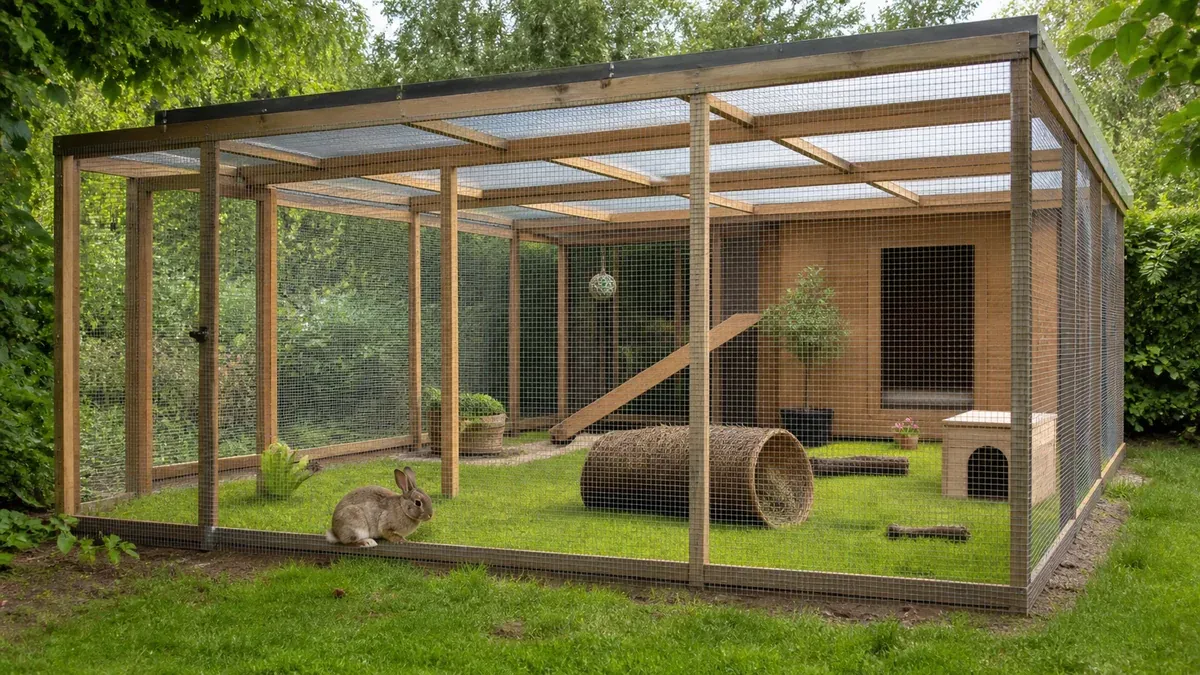
Keeping a rabbit outdoors is entirely possible — millions of owners do it successfully. But the key word is “successfully,” and success here depends on more than a wooden hutch and a latch. The right question is not whether outdoor keeping can work, but whether your specific setup actually meets the conditions that make it safe. When those conditions are in place, outdoor rabbits can live healthy, stimulating lives. When they are not, the risks are serious and sometimes fatal.
Risks that should not be underestimated
Before looking at what a good outdoor setup looks like, it is worth being direct about the hazards. These are not rare edge cases. They are regular causes of injury, illness and death among outdoor rabbits.
Predators
The threat from predators is probably the most underestimated risk, especially in suburban areas. Foxes are resourceful: they can open simple spring latches, pry apart poorly secured wire panels, and dig under the edge of a run that sits flat on the ground. A single visit from a fox — even one that does not get inside — can kill a rabbit from the stress of the encounter. Stray and neighbourhood cats are a persistent nuisance and can injure rabbits through wire. Birds of prey, including hawks and falcons, will target smaller breeds or young rabbits if the run has no solid overhead protection. Depending on where you live, weasels and mink are also a real danger, as they can squeeze through surprisingly small gaps.
The enclosure must address these risks comprehensively. That means wire buried 30 to 50 cm underground around the entire perimeter to prevent digging, fox-proof latches on every door and panel, no gaps larger than 2 cm anywhere in the structure, and a solid roof — not just a loose piece of wire netting, which a determined fox or large raptor can bend or tear.
Temperature extremes
Rabbits are more sensitive to heat than many owners expect. Above 28 to 30°C, the risk of heatstroke rises sharply, and it can be fatal within hours. Outdoor hutches, particularly wooden ones, can become significantly hotter than the ambient temperature when positioned in direct sun. A rabbit panting with its mouth open, lying flat and unresponsive in warm weather is already in serious danger.
Cold is less immediately lethal but still a genuine risk in the wrong conditions. The key variable is not temperature alone but the combination of cold and damp. A rabbit in a dry, well-insulated hutch at -5°C may cope reasonably well; the same rabbit in a damp, draughty hutch at 3°C is at real risk of pneumonia. Outdoor hutches must be genuinely waterproof, insulated, and protected from prevailing wind.
Social isolation
This risk is quieter but just as real. Outdoor rabbits often receive less daily attention than indoor ones — owners may go out to feed and check on them, but casual interaction throughout the day disappears. Rabbits are social animals that thrive on contact and stimulation. An outdoor rabbit that spends most of its time alone, without the sights and sounds of household activity and without the company of another rabbit, is at significant risk of boredom, stress, and the behavioural problems that follow.
A single outdoor rabbit in a hutch is, frankly, a welfare compromise. Two bonded rabbits kept together outdoors changes the picture substantially: they regulate each other’s body heat, play together, groom each other, and are simply much better equipped for the psychological challenges of outdoor life.
Fly strike in summer
Fly strike — the correct term is myiasis — is one of the most brutal conditions a rabbit can suffer and it is directly associated with outdoor living in warm months. Blowflies lay their eggs on soiled or moist skin, most commonly around the tail and anal area. The eggs hatch into larvae within hours. The larvae burrow into the skin, feeding on tissue, and can cause catastrophic damage quickly. A rabbit can go from apparently healthy to critically ill within 24 to 48 hours, sometimes less.
The prevention is simple but must be consistent: daily visual inspection of the tail, perineum, and anal area from May through October. Keep the hutch bedding clean and dry. A rabbit that has difficulty grooming itself — due to weight, dental problems, or arthritis — is at much higher risk, and owners of such rabbits should inspect twice daily and consider applying a veterinary prevention product during high-risk months.
The conditions that make outdoor keeping work
A suitable hutch
Size is not optional. A dwarf rabbit needs at minimum an enclosure of around 2m x 1m as a baseline, and larger breeds need proportionally more space. A hutch that is merely a sleeping box is not sufficient on its own — there must be a separate exercise area. Walls should be solid and genuinely insulated, not just thin plywood. The hutch should be raised off the ground — this improves ventilation underneath, makes it harder for rats to nest beneath the structure, and reduces damp rising from the ground. It should be positioned with its back and sides sheltered from the prevailing wind, and ideally under a roof overhang or in a shed during the worst weather.
A predator-proof run
The attached or separate run is where most outdoor setups fall short. Wire should be buried at least 30 to 50 cm deep around the entire perimeter, bent outward at the bottom to foil digging predators. The roof must be solid and properly secured — wire netting on its own is insufficient protection against foxes and large birds. All latches should require two distinct actions to open (bolts or clips combined with a lever) rather than simple push-down or pull-out mechanisms. Inspect the run regularly for bent wire, gaps, or signs of digging activity around the edges.
Appropriate bedding
Choosing the right bedding matters more outdoors than indoors because conditions are harder to control. Hemp bedding or straw are both practical choices: they provide good insulation and absorb moisture well. In winter, use a thicker layer — rabbits will burrow into it for warmth. In summer, change bedding more frequently because heat accelerates bacterial growth and increases fly strike risk. Avoid damp or mouldy bedding; a hutch that smells strongly of ammonia is not being cleaned frequently enough and presents both a respiratory and fly strike hazard.
Vaccination: non-negotiable for outdoor rabbits
An outdoor rabbit is directly exposed to the vectors that carry rabbit-specific diseases. Myxomatosis is transmitted by mosquitoes and biting insects; an outdoor rabbit will encounter these regularly throughout the warm months regardless of how clean or well-managed its environment is. Rabbit Haemorrhagic Disease exists in two strains (RHD1 and RHD2), transmitted by insects, direct contact, and contaminated material on clothing or equipment. Both diseases are potentially fatal and neither has a treatment — prevention through vaccination is the only meaningful protection.
If you are unsure about which vaccines your rabbit needs or how often, the answer is covered in detail in the guide to rabbit vaccination.
One additional point worth making: outdoor rabbits are seen less. They receive less casual daily observation, which means illness signs — reduced appetite, abnormal droppings, lethargy — are often noticed later than they would be with an indoor rabbit. This makes regular, deliberate health checks more important, not less, and makes a slightly more frequent check-in with a vet a reasonable precaution for outdoor rabbits.
The indoor-outdoor hybrid: often the best option
Many owners find that a hybrid approach gives them the best of both worlds. The rabbit has access to an outdoor run during the day in good weather, with the owner present or checking regularly, and comes inside at night or when conditions are poor. This eliminates most nocturnal predator risk (the time when foxes are most active), provides temperature protection during extremes, and crucially keeps the rabbit integrated into the household.
A practical setup for this approach: an outdoor run that is secure for supervised daytime use, connected to or near an indoor space where the rabbit sleeps. A pen or large cage indoors provides a safe nighttime base. The transition should be managed consistently so the rabbit can predict its routine — rabbits cope well with consistent schedules and poorly with unpredictable changes.
What does not change outdoors
Several fundamentals of rabbit care apply regardless of where the rabbit lives.
Unlimited hay remains the foundation of the diet. Fresh water must be available at all times; in winter, check water containers twice daily because drinking bottles and bowls can freeze overnight even at temperatures that do not feel extreme. A frozen water supply for even a day causes dehydration and gut slowdown.
The social requirement does not disappear outdoors — if anything it matters more. Two bonded rabbits housed together outdoors have measurably better welfare outcomes than a single rabbit in the same setup. If a second rabbit is not possible, the owner needs to spend more active time with the animal, not less.
Health observation needs to be deliberate. Build a habit of looking carefully at your rabbit every day: coat condition, posture, whether it is eating, whether droppings look normal. The signs that something is wrong are the same outdoors as indoors — they are just easier to miss when you are not living alongside the animal.
For precise temperature thresholds — exactly when cold or heat becomes dangerous, how humidity factors in, and which rabbits are most vulnerable — see our dedicated article on what temperature rabbits can tolerate.
Without a garden, a balcony can offer access to fresh air, but it carries its own dangers (falling, escaping through the railings, sun): see how to make a balcony safe for a rabbit before any outing.
For a broader overview of the species and its needs, the rabbit care guide is a useful starting point. If you are still deciding between a hutch and a pen-based setup, the comparison in rabbit cage or pen covers the key considerations for sizing and layout.
Outdoor keeping is not a low-effort alternative to indoor keeping. In many respects it requires more active management. But with the right infrastructure, the right vaccinations, and consistent daily attention, a garden rabbit can live a full and healthy life.
Frequently asked questions
Can a rabbit live outside year-round?
Technically yes, if the hutch is well-insulated, raised off the ground, and fully protected from wind and damp. In practice, domestic rabbits struggle with extremes: summer heat above 28–30°C is dangerous, and cold combined with damp raises pneumonia risk. An indoor/outdoor hybrid system is often safer and improves welfare.
What predators threaten outdoor rabbits?
Foxes, cats, birds of prey (hawks, falcons), and depending on the area, mink or weasels. A fox can open a simple latch and dig under an unsecured run. The hutch and run must account for these risks even in suburban areas.
Does an outdoor rabbit need vaccinating?
Yes, it is essential. Outdoor rabbits are exposed to mosquitoes (myxomatosis vector) and insects (RHDV/VHD vectors). Vaccination against myxomatosis and both strains of RHD is strongly recommended — and in many regions considered mandatory — for any rabbit with outdoor access.
What is fly strike and how common is it in outdoor rabbits?
Fly strike (myiasis) occurs when blowflies lay eggs on soiled or moist skin — usually around the rabbit's tail and anus. Larvae hatch and can penetrate the skin within hours, causing severe tissue damage and potentially death within 24–48 hours if untreated. Daily inspection of the tail area from May to October is non-negotiable for outdoor rabbits.