Why does my rabbit grind its teeth?
Veterinary warning — Loud, slow tooth grinding, especially in a rabbit that has stopped eating or sits hunched, is a sign of pain. See a rabbit-savvy vet without delay: in rabbits, digestive or dental pain can worsen quickly.
A rabbit grinding its teeth is almost always doing one of two very different things: either purring with contentment (soft, quick chatter, a sign of wellbeing) or grinding in pain (loud, slow grinding, a warning sign). The whole point is telling which, because they call for completely different responses. This guide helps you tell them apart in seconds.
Two sounds, two opposite meanings
Rabbits use their teeth to “talk”, one of many signals covered in the rabbit species profile. Depending on intensity and context, the same action says two opposite things:
| Contented purring | Painful grinding | |
|---|---|---|
| Intensity | Soft, subtle, quick | Loud, forceful, slow |
| Audible from afar? | No, you have to be close | Yes, often audible across the room |
| Context | Relaxed rabbit, being stroked, at rest | Hunched, balled-up, still rabbit |
| Associated signs | Half-closed eyes, loose body | Loss of appetite, hunched posture, refusal to move |
| What it means | Wellbeing, trust | Pain — to be taken seriously |
So it is the whole picture — the sound and the rabbit’s attitude — that gives the meaning, not the chattering alone.
Contented tooth-purring
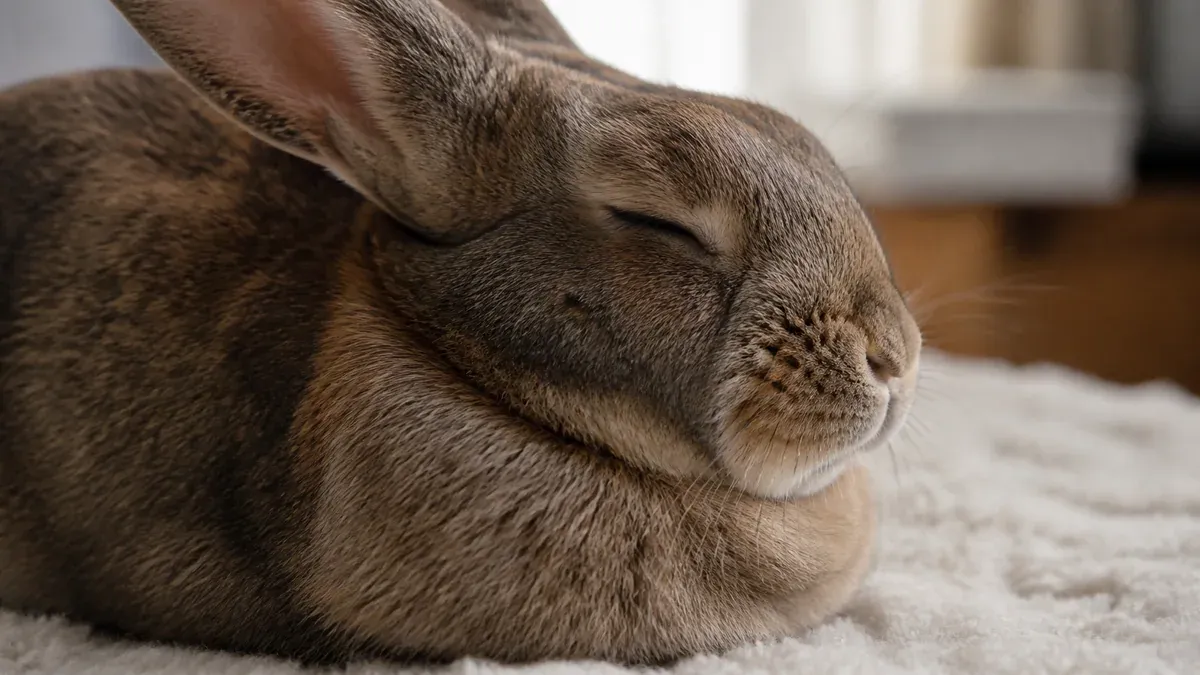
This is the good scenario, and the most common. When a relaxed rabbit, often being stroked or settled comfortably, gently vibrates its jaw, it is expressing contentment. This fine, quick chatter is the equivalent of a cat’s purr.
You recognise it by its context:
- the rabbit is calm and relaxed, sometimes with half-closed eyes,
- the body is loose, with no tension or withdrawal,
- it happens during a stroke, a grooming session or a quiet rest.
It is a valuable sign: a rabbit that tooth-purrs with you is showing its trust. Nothing to do but enjoy it.
Painful grinding: the signal not to miss
At the opposite end, loud, slow, forceful grinding is one of the main signs of pain in rabbits. It almost always comes with other signals, because a rabbit instinctively hides its suffering:
- a hunched, still posture, often pressed into a corner,
- loss of appetite or a complete refusal to eat,
- reduced movement, avoidance of usual interactions,
- sometimes grinding at the slightest touch.
This picture should raise the alarm immediately. To weigh up all the clues, lean on our dedicated guide: how to tell if a rabbit is in pain. In rabbits, pain is often the first visible sign of a serious problem — especially digestive or dental — that can move fast.
Common causes of painful grinding
Painful grinding is not a disease in itself but a symptom. The most common origins:
- Digestive pain: a slowing or shutdown of the gut, bloating. This is a common emergency in rabbits.
- Dental problem: a malocclusion or dental spurs make chewing painful. The grinding often comes with drooling and difficulty eating.
- Other pain: a wound, infection, urinary problem, post-operative pain.
When grinding comes with drooling or a wet chin, a dental origin is likely and warrants a mouth exam by a rabbit-savvy vet, who alone can see the back teeth.
What to actually do
- Soft purring, relaxed rabbit: nothing to do — it is a positive sign.
- Loud grinding + otherwise normal rabbit: watch closely over the next hour (appetite, droppings, attitude); at the slightest doubt, get it checked.
- Loud grinding + loss of appetite, listlessness or drooling: see a rabbit-savvy vet without delay. Don’t try home remedies, don’t force anything; describe the exact signs you have seen.
The rule to remember: when unsure about intensity, the overall behaviour settles it. A rabbit that eats, moves and interacts normally is not grinding in pain; a hunched, off-food rabbit that grinds is.
To understand more broadly how your rabbit communicates, explore the other signals covered in the rabbit behaviour cluster.
Frequently asked questions
How do I tell tooth-purring from painful grinding?
Listen to the intensity and read the context. Contented purring is soft, quick and quiet, in a relaxed rabbit being stroked. Painful grinding is louder, slower and audible from across the room, in a hunched, still rabbit that won't eat. Context makes all the difference.
My rabbit grinds its teeth when I stroke it — is that good?
Yes, almost always. Soft chattering during strokes, with a relaxed body and sometimes half-closed eyes, is the rabbit equivalent of a cat's purr: a sign of contentment and trust.
Should a rabbit that grinds its teeth loudly see a vet?
Yes, promptly. Loud, forceful grinding, especially with loss of appetite, a hunched posture or unusual stillness, is a pain signal. In rabbits, digestive or dental pain can escalate quickly, so don't wait.
Can tooth grinding come from a dental problem?
Yes. Malocclusion or painful dental spurs can cause grinding, often with drooling, difficulty eating or a preference for soft foods. In that case a rabbit-savvy vet needs to examine the mouth.