Why does my rabbit sleep so much?
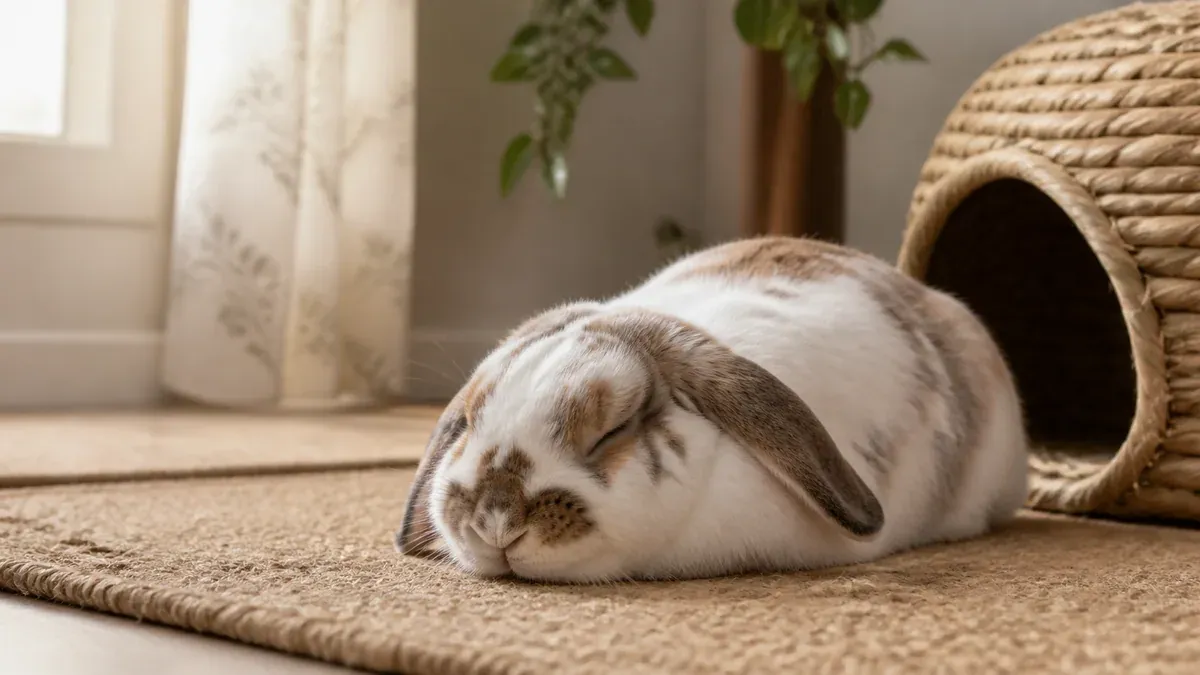
A rabbit that seems to sleep for much of the day is usually perfectly fine: it is a crepuscular animal, most active at dawn and dusk, and dozes in short stretches the rest of the time. This guide explains that natural rhythm, what normal sleep looks like, and the handful of signs that do call for closer attention.
Rabbits are crepuscular, not nocturnal
Contrary to popular belief, rabbits are not nocturnal: they are crepuscular, meaning their activity peaks around sunrise and sunset. In the wild, this rhythm lets them feed when visibility is reduced for both daytime and nighttime predators, while also avoiding the hottest hours of the day in summer.
In practice, this means a pet rabbit is often:
- very active early in the morning and in the evening,
- noticeably calmer and sleepier around the middle of the day,
- also intermittently active at night, with sleep broken up into stretches.
A rabbit sleeping a lot in the afternoon is not, on its own, a sign of illness or abnormal fatigue — it is simply its natural biological rhythm.
How many hours of sleep are normal?
Most rabbits sleep around 6 to 8 hours a day, and a relaxed pet rabbit that feels safe can sometimes exceed that average. What sets rabbits apart is less the total duration than how it is distributed: rather than one long continuous sleep, they take many short naps spread across the 24-hour cycle, broken up by brief periods of alertness or activity.
This fragmented, or polyphasic, sleep pattern is directly linked to their status as a prey species: staying alert in short bursts reduces the risk of being caught off guard by a predator during a long, deep sleep.
Why does my rabbit sometimes sleep with its eyes half-open?
It is not unusual to see a rabbit dozing with its eyes half-closed rather than fully shut. This behaviour reflects residual alertness: even at rest, the rabbit retains some ability to detect movement or a suspicious shadow. It is not a sign of discomfort or poor sleep — it is a natural prey-animal adaptation, not to be confused with signs of pain in rabbits, which show up differently (hunched posture, teeth grinding, prolonged stillness in a corner).
What affects how much a rabbit sleeps
Several factors naturally shift the amount of sleep you will observe:
| Factor | Effect on sleep |
|---|---|
| Age | Senior rabbits generally sleep more and are less active |
| A secure environment | A rabbit that feels safe sleeps more deeply and for longer |
| Ambient heat | Excess heat increases drowsiness and reduces activity; panting, weakness or sudden dullness call for a quick response |
| Daytime stimulation | An under-stimulated rabbit may sleep more out of boredom, just as a well-stimulated rabbit sleeps more after an active session |
| Household presence | Many rabbits adjust their rhythm to their owners’, staying awake longer in the evening |
Normal sleep vs lethargy: how to tell the difference
A rabbit that sleeps a lot is not necessarily an apathetic rabbit. The distinction lies in the overall behaviour, not the sleep duration alone:
Normal sleep:
- wakes up easily and reacts to your presence, to the sound of hay or food
- keeps eating, drinking and toileting normally
- stays alert and lively during its waking periods, especially at dawn and dusk
- moves around normally once awake
Signs that warrant attention:
- refusing food or a clear drop in appetite
- no reaction to familiar stimuli (food, a usual noise)
- abnormal posture during rest (especially if the posture looks more like a problem than normal rest; our guide on lying on its side helps tell the difference)
- a sudden change from your rabbit’s known habits
If any of these signs accompany unusually long sleep, a veterinary check is recommended to rule out a medical cause.
Working with your rabbit’s natural rhythm
- Avoid systematically waking a rabbit that is sleeping during the day: let it follow its crepuscular rhythm.
- Offer free-roaming and play sessions preferably early in the morning or in the evening, when the rabbit is naturally more active — it is often also when it does the most binkies, the most visible sign of its wellbeing.
- Keep the environment calm during the day to support quality rest, especially if the home is noisy during the hours your rabbit usually sleeps.
Frequently asked questions
Is a rabbit that sleeps all day healthy?
Generally, yes. Rabbits are crepuscular animals: they concentrate activity at dawn and dusk, and doze on and off the rest of the time, including in the middle of the day. It is only a concern if the sleep comes with a change in appetite, mobility, or interaction with you.
Why does my rabbit sometimes sleep with its eyes half-open?
This is a well-known rabbit behaviour, inherited from being a prey species: dozing with eyes half or partly open lets it keep some residual awareness of potential danger even while resting. It is not, by itself, a sign of discomfort.
How many hours of sleep are normal for an adult rabbit?
Most rabbits sleep between 6 and 8 hours a day, split into many short naps rather than one long stretch. A relaxed pet rabbit that feels safe in its home can exceed that average without it being abnormal.
Do senior rabbits sleep more than young rabbits?
Yes, generally. Physical activity declines with age and rest periods lengthen, similar to many other mammals. A gradual, age-appropriate drop in activity is not worrying; a sudden change, on the other hand, warrants a veterinary check.