Why does my rabbit dig everywhere? Understanding and redirecting this instinct
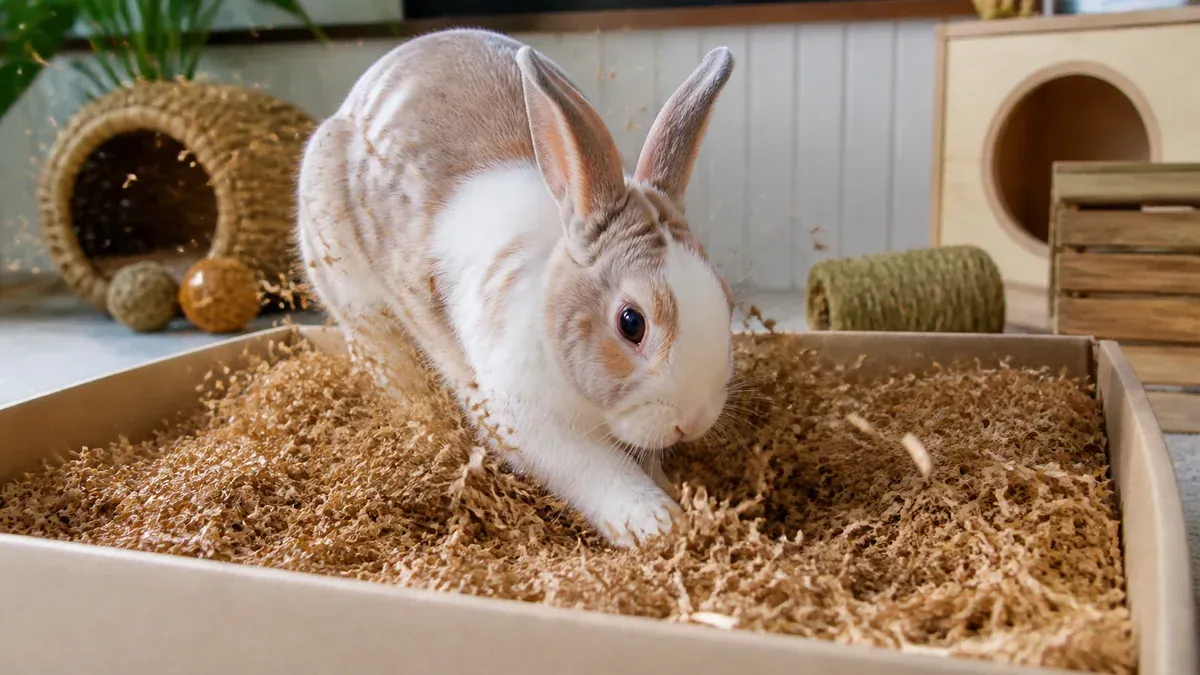
A rabbit that digs is not a destructive rabbit — it is a rabbit expressing one of its most fundamental behaviours. Wild European rabbits build complex warren systems themselves. This burrowing memory remains fully intact in the domestic rabbit, whether it lives in a flat or an outdoor enclosure. Understanding why it digs leads to smarter responses that respect the animal and protect your home.
Why rabbits dig
Burrowing: a biological drive
The rabbit is, by nature, a fossorial animal. In the wild, the warren is its refuge from predators, its reproductive space and the environment where it regulates its temperature. Even without predators and without any real need to burrow, the domestic rabbit retains this digging drive — it is as hardwired as binkies or foot-thumping.
This behaviour is impossible to train away. It can only be redirected towards appropriate surfaces.
Exploration and territorial marking
Digging is also exploration. A rabbit free-roaming a room scratches a rug, a cushion or the floor to test its texture, smell and give. It is also physically claiming the space — a way of mapping and owning its environment.
Boredom and under-stimulation
A bored rabbit digs more, often repetitively and compulsively — what animal behaviourists call a stereotypy. Excessive, relentless digging differs from expressive digging: it signals a lack of stimulation, space or social interaction. For the signs of boredom in a solitary rabbit, see our article on rabbit social needs.
Hormones and nesting
In unspayed does, digging intensifies sharply during pseudopregnancy or pregnancy. The female is looking to prepare a nest and may target enclosed spaces under furniture or in corners. This behaviour is hormonal and subsides after the pseudopregnancy phase; spaying eliminates it long-term. When the digging concentrates on a single corner and comes with hay being carried there and fur pulled from the dewlap, that is the picture described in false pregnancy in rabbits.
Intact bucks may also dig more during hormonal peaks as part of territorial behaviour.
What rabbits target and why
| Target | Likely reason |
|---|---|
| Litter box | Natural foraging; rearranging its space |
| Rugs and cushions | Soft texture resembling soil; exploratory behaviour |
| Room corners | Sheltered spots that resemble burrow entrances |
| Sofa or seat cushions | Softness, familiar scent, pliable material |
| Enclosure bars | Seeking to expand space; boredom or insufficient exercise — see why rabbits chew bars |
How to redirect digging behaviour
The digging box: the main solution
This is the most effective response. A digging box is a container filled with material the rabbit can scratch, move and rearrange at will.
What to put in a digging box:
- Loose, untreated hay (the simplest and most natural option)
- Shredded newspaper or kraft paper
- Compressed grass or hay blocks
- Plain potting compost or children’s play sand (no additives or pesticides)
Practical tips:
- Place the box near the areas the rabbit already targets — it is more likely to use it
- Vary the content to maintain interest
- A box that is too small will be ignored: aim for at least 40 × 40 cm, ideally larger
Environmental enrichment
A sufficiently stimulated rabbit digs less compulsively. Diversifying its outlets reduces excessive digging:
- Tunnels and hides (an alternative to burrowing)
- Chew toys and manipulable objects (untreated apple branches, natural wood toys)
- Object rotation to sustain novelty
- Regular free-roaming sessions — at least 3 hours per day in a safe area
Neutering and spaying
In does, spaying eliminates pseudopregnancy episodes and significantly reduces hormonal digging. In bucks, castration calms testosterone-driven territorial behaviours, including excessive digging.
Protecting your home
Redirect, not punish
A rabbit does not dig out of malice — it follows its biology. Punishment is ineffective and damages the relationship. What works: redirect to the digging box and physically protect vulnerable areas.
Practical protective measures:
- Plastic leg guards on furniture legs
- Cork tiles or jute rugs laid over targeted carpet corners (less appealing to scratch)
- Flexible barriers or thick cardboard panels in front of wall corners being scratched
The same nose-and-paw movement is what lifts and flips a food bowl, something the container itself almost always fixes (why does my rabbit tip over its bowl).
Digging is only one of the shapes the damage takes: to sort by what is being destroyed — skirting boards, furniture, sofa, cables — and know which substitute belongs where, see my rabbit destroys everything.
For the full picture on making a room safe for a free-roaming rabbit — cables, plants, floor surfaces and escape zones — see our guide on rabbit-proofing a room.
To understand another signal often linked to irritation or territorial defence, see why does my rabbit grunt.
Frequently asked questions
My rabbit digs at night — should I be worried?
No, this is consistent with the rabbit's natural rhythm. Rabbits are crepuscular and can be active very early in the morning or in the evening. Digging in its enclosure or a foraging box at those times is normal. If the noise disturbs you, move its space away from your bedroom or provide a sound-dampening box (a wooden crate with litter inside).
My rabbit only digs in its litter tray — does it want to come out?
Not necessarily. Digging in the litter is a classic foraging behaviour expressing natural exploratory instinct. If the digging is accompanied by thumping or agitation, the rabbit may genuinely want more space or a roaming session.
How do I stop my rabbit from digging into my furniture or cushions?
You cannot suppress this behaviour — it is instinctive. You can redirect it towards an appealing digging box (hay, shredded paper, compressed grass) placed near the areas the rabbit targets. Protect vulnerable furniture with plastic leg guards, and enrich the environment so the rabbit has more varied outlets.
Does a female rabbit in a false pregnancy dig more?
Yes, noticeably so. Digging and nest-building are typical preparatory behaviours in pregnant or pseudopregnant does. She may target spaces under furniture or enclosed corners. Provide a nest corner with hay and avoid disturbing her during this phase; spaying eliminates these episodes long-term.