Why does my rabbit grunt? Causes and how to respond
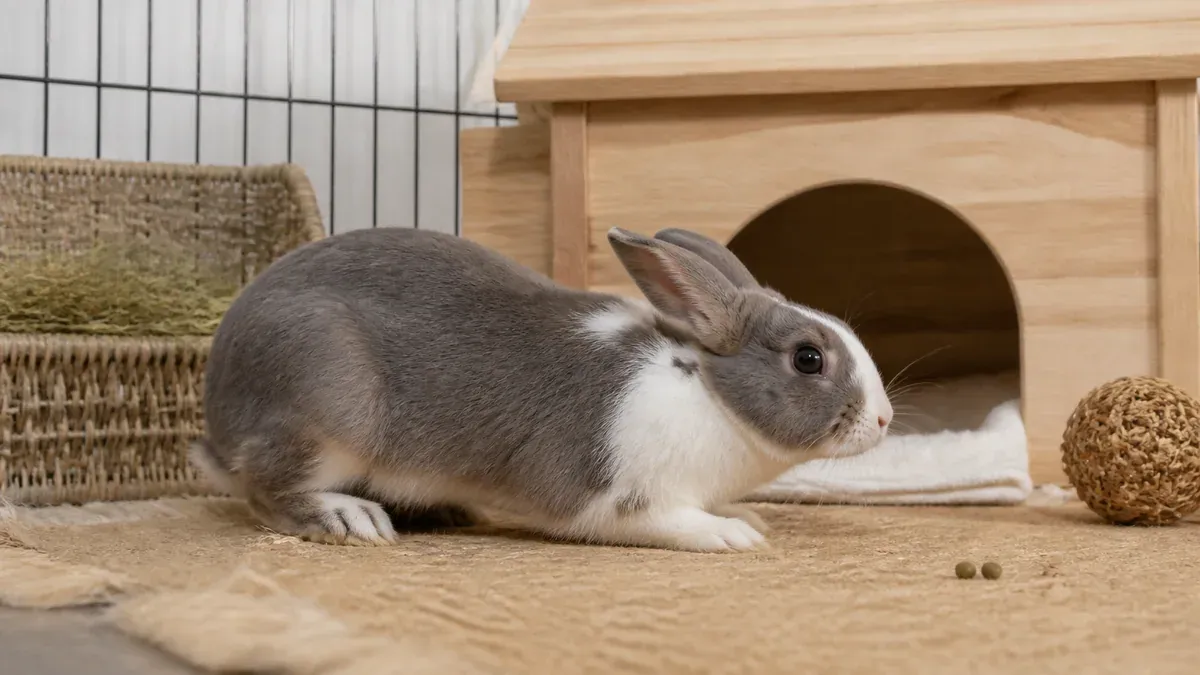
A grunting rabbit is not a bad-tempered rabbit. It is a rabbit that is communicating — clearly and consistently. Grunting is one of the vocal signals in a domestic rabbit’s repertoire, and it has a specific meaning that is worth understanding so you can respond appropriately.
What a grunt means
A grunt is a low, short, muffled sound made with the mouth closed. It is distinct from other rabbit sounds:
| Sound | Meaning |
|---|---|
| Grunt | Warning, defence, refusal, territory |
| Soft tooth grinding (tooth purring) | Contentment, relaxation |
| Loud tooth grinding (bruxism) | Pain or discomfort — monitor closely |
| Squeal or scream | Intense fear or acute pain |
| Teeth chattering | Mild unease or anxiety |
A grunt almost always means “stop” or “this is my space”. It typically precedes other defensive behaviours: charging (lunging suddenly towards the intruder), thumping, or biting if the warning is not respected.
Common situations that trigger grunting
Intrusion into the territory
Rabbits are strongly territorial animals. They regard their enclosure, litter box, and sleeping corner as private zones. Reaching in to clean or rearrange these spaces — especially without warning — is one of the most common triggers.
What helps: Announce your presence before intervening (rest your hand at the entrance and let the rabbit sniff it), and carry out cleaning when the rabbit is out of its space.
Unwanted handling
Many rabbits dislike being picked up or handled against their will. Grunting can occur at the first attempt to grab them.
What helps: Avoid lifting the rabbit unless medically necessary. Prioritise contact at floor level, on the rabbit’s terms. A rabbit that approaches you voluntarily will not grunt.
Resource guarding
Some rabbits grunt to protect their food bowl, hay rack, or favourite toy. This resource-guarding behaviour is more pronounced in unneutered animals.
Fear and surprise
A rabbit approached from behind, startled by a sudden noise, or touched unexpectedly may grunt as a defensive reflex before it has even identified the threat.
Hormones and territorial behaviour
Unneutered rabbits (male or female) tend to be more territorial, particularly during hormonal peaks. Unspayed females may grunt intensely during phantom pregnancies, vigorously defending a territory against any perceived intruder.
It is also why a grunt aimed at another rabbit means something different: it signals territorial defence, and it means going back to neutral ground, as set out in how to introduce two rabbits.
How to respond to grunting
What to do
- Stop what you are doing: the grunt is a warning — respecting it prevents escalation
- Stay calm: do not shout, do not punish. Rabbits do not understand punishment and will associate it with a threat
- Move back slowly, then try again differently (hand flat on the floor rather than descending from above)
- Let the rabbit take back control of the interaction: it comes to sniff, not you imposing contact
What not to do
- Continue the gesture despite the grunt: the quickest path to a bite
- Punish verbally or physically: reinforces mistrust and defensiveness
- Systematically ignore the grunt: the rabbit will escalate until it is heard
Distinguishing defensive grunting from real aggression
An isolated grunt is a healthy communication signal. Real aggression involves repeated charging, biting without any warning grunt, or a disproportionate intensity.
If your rabbit bites without grunting first, see our article on why rabbits bite — the causes and responses are different.
If grunting is combined with repeated thumping, see our article on why rabbits thump: the two signals together indicate strong agitation.
When grunting becomes a concern
Occasional grunting is normal. Consult a rabbit-savvy vet if:
- The rabbit grunts at everything and constantly, even without apparent reason (chronic pain can make any animal more defensive)
- Grunting is sudden and new in a previously calm rabbit (pain, illness, or a stressful environmental change)
- It is combined with other behavioural changes: loss of appetite, withdrawal, reduced activity
For a full overview of the domestic rabbit’s body language and communication, visit the rabbit species page.
Frequently asked questions
My rabbit grunts when I try to stroke it — is it aggressive?
Not necessarily. A grunt when you reach out to stroke often means the rabbit does not want to be touched at that moment or in that spot. This is communication, not aggression. Respect the signal, offer contact differently (let the rabbit come to you), and the relationship will likely improve gradually.
Do rabbits only grunt when they are angry?
No. Grunting mainly expresses fear, refusal, or territorial defence — not necessarily anger. A rabbit that is surprised, handled against its will, or displaced from a space it considers its own may grunt as a defensive reflex, even if it is normally sociable.
My rabbit grunts but never bites — should I be worried?
No. Grunting without biting is a clear and healthy warning signal — the rabbit is saying 'I object, but I am not escalating.' That is preferable to a rabbit that attacks without warning. Respect the signal and adjust your approach.
Does neutering or spaying reduce grunting?
Often yes, especially in unneutered males whose territorial behaviour is amplified by hormones. Castration generally reduces urine marking, charging, and territory-related grunting. The effect varies and takes a few weeks to a few months to stabilise.