Adopting a rabbit from a rescue: how it works
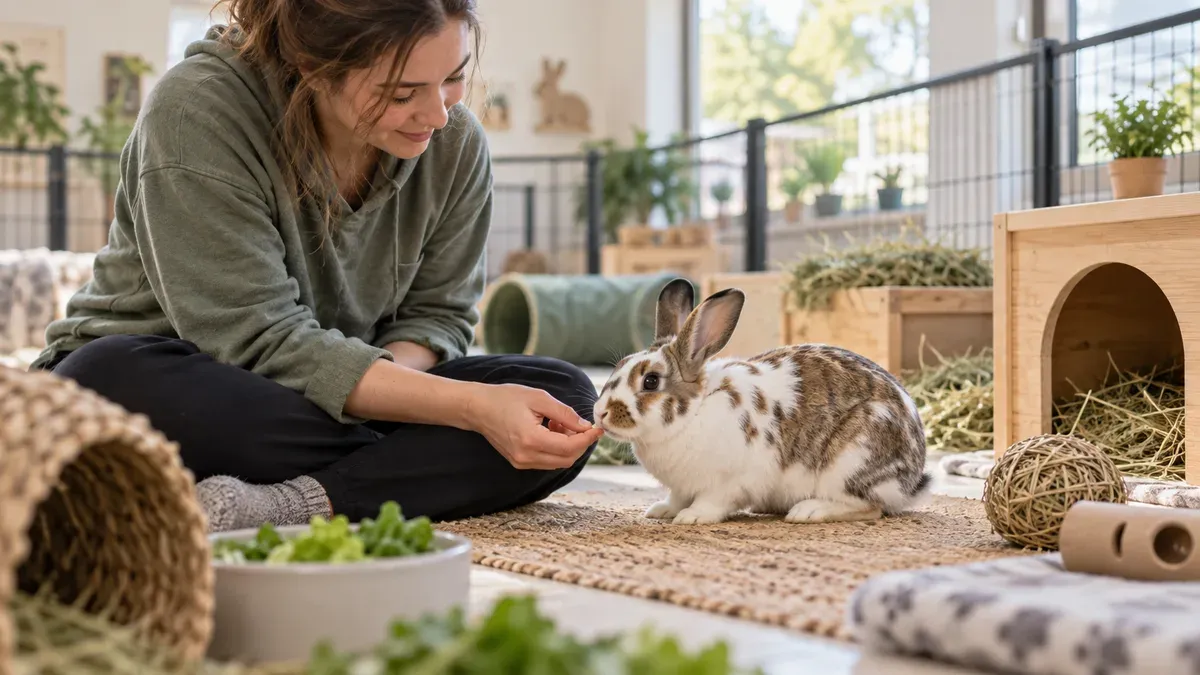
Adopting a rabbit from a rescue follows a short, predictable process: find the rescues that actually rehome rabbits, make contact describing your situation, complete an adoption application, meet the rabbits in person, then go home with a contract and the animal’s veterinary history. Allow anything from a few days to a few weeks.
It is not a deterrent bureaucracy. Criteria and reasons for refusal vary by rescue. The housing you describe — such as a pen that is too small or an unsafe outdoor setup — is one point to prepare before applying. If you are still choosing between routes, the rescue / breeder / pet shop comparison is in should you adopt or buy a rabbit.
The process and the figures below reflect the UK and Western Europe; practice varies between organisations.
Where to look for rabbits
- General animal shelters and rehoming centres take in rabbits regularly, often far less visible on their website than the dogs and cats. Phone rather than trusting the online list.
- Rabbit-specific and small-animal rescues usually work through foster homes. This is the most useful route: the rabbit lives in a living room, its character is observed daily, and the information you get is far more precise than from a run.
- Rabbit-savvy vet practices occasionally rehome animals left with them. Asking the clinic where you plan to register costs one phone call.
- Local rescue groups, mostly visible through social media and word of mouth among owners.
A serious organisation shows four signs: it lets you visit, it neuters or requires neutering, it uses a written contract, and it takes the animal back if the situation becomes impossible. Conversely, anywhere rehoming unweaned babies, refusing visits or handing out rabbits first-come-first-served is not a rescue, whatever it calls itself.
First contact: what to say up front
A well-constructed call or email saves a week. Set out immediately:
- Your home and the space planned, in real floor area and in daily run time.
- Who lives with you: children and their ages, other animals, dogs and cats in particular.
- Whether you already have a rabbit, its sex, neutering status and character.
- Your experience with the species, without embellishment. Being a beginner is not disqualifying; claiming expertise and then asking beginner questions is far worse.
- What you are looking for: a calm adult, a pair, a litter-trained rabbit, a large breed. If the age bracket is still open, what each one actually involves is compared in what is the best age to adopt a rabbit.
Expect questions in return about the vet budget, the time you are at home and exactly where the rabbit will live. These are not morality tests: they are the three commonest reasons rabbits come back.
The application and the check: what to expect
The standard process has three parts:
- An adoption form, online or on paper: housing, experience, other animals, exercise plans, intended vet.
- A proper conversation, by phone or on site, where the rescue is mainly checking that you know what a rabbit needs — daily exercise, unlimited hay, a vet budget, a life expectancy of 8 to 12 years.
- Sometimes a home check or photos of the setup, particularly for a free-range or outdoor rabbit.
Have ID ready and, depending on the rescue, proof of address or your landlord’s permission. Some also ask for your vet’s name: having already identified a rabbit-savvy practice is a genuine plus, and necessary afterwards in any case (when to see an exotic vet for your rabbit).
On the day: what to look at
| What you see | What it tells you | The question to ask |
|---|---|---|
| Clean litter, unlimited hay, fresh water | An organisation that knows the species | ”What exactly is he eating, and how much?” |
| A curious rabbit that comes to the mesh | A socialised animal, a good starting point | ”How does he behave when handled?” |
| A hunched rabbit, dull coat, wet eyes or nose | Possibly ill, or very stressed | ”Has he been seen by a vet, and when?” |
| Rabbits housed in pairs or groups | An organisation attentive to the social need | ”Is he bonded to another rabbit?” |
| A volunteer advising you against an animal | A sign of competence, not obstruction | ”Which rabbit would you suggest, and why?” |
Ask to sit on the floor beside the pen without forcing contact. A rabbit that comes over to sniff your shoes tells you more than ten minutes holding it — and most rabbits dislike being picked up, which says nothing about how sociable they are (my rabbit doesn’t like being picked up).
The questions that shape the first six months
- Is he neutered, and on exactly what date? A neutered male can stay fertile for up to 6 weeks according to the Rabbit Welfare Association & Fund, so that date governs any cohabitation with an unspayed female.
- What is his vaccination status, against what, and when is the next booster? The schedule is set out in rabbit vaccination schedule.
- Is he microchipped, and what transfer paperwork comes with him?
- What is he eating right now, pellet brand included, and how much? Changing the diet abruptly causes digestive upset: the diet transition is prepared before arrival, not after.
- What is his medical history: consultations, treatments, dental problems, abscesses, episodes of gut stasis?
- How does he behave day to day in the foster home: litter habits, reaction to noise, to children, to other animals?
- Has he lived with another rabbit, and how did that go?
Adopting a bonded pair: the underrated option
Many rescues home bonded pairs and refuse to split them — rightly so: breaking an established bond is a real loss for both animals, and adopting a pair skips the trickiest stage of life with two rabbits, the introduction. The extra cost is smaller than people expect: the space has to be bigger, but hay, litter and care time do not double.
If you already have a rabbit, say so at first contact: some rescues run supervised bonding on site and only let the newcomer go once the match is confirmed. That is a valuable service, since introduction is the riskiest phase (how to introduce two rabbits), and long-term harmony then depends on the setup (keeping two rabbits together without fighting).
The contract, the fee and what it covers
The adoption fee is not a sale price: it part-funds care already given. For orientation, our budget guide uses £80–£200 for neutering and £45–£80 for annual vaccination; check which procedures were actually completed and confirm local prices. This can make rescue adoption less expensive than buying a rabbit and then arranging the same procedures — the full reasoning is in our monthly cost breakdown.
The adoption contract usually covers a commitment not to pass the animal on, an obligation to neuter if it has not happened yet, and the right to return the rabbit to the rescue rather than to a third party. Read the neutering clause: it often comes with a deadline.
Leave with the vaccination record or veterinary certificate, the date of the last booster, and enough of the current food to run a proper diet transition.
If the application does not go through
The commonest reasons are concrete and fixable:
- A pen that is too small, or a rabbit expected to live caged full time. Sizing benchmarks are in what size enclosure for a rabbit.
- An unsafe outdoor setup (predators, heat, no shelter).
- A rabbit presented as a child’s own pet, when the adult remains responsible for its care (are rabbits good pets for children).
- Refusing the neutering required by the contract.
- No suitable rabbit available, which is a wait rather than a refusal.
In every case, ask for the precise reason and offer the fix. An application resubmitted with a suitable pen succeeds most of the time, and widening the search to neighbouring counties often works faster than a local waiting list.
Collection day and the first week
- The setup is ready before arrival, not assembled that evening: pen, two trays, hay, water, a hide with two exits. The starting list is in what accessories are truly essential for a rabbit.
- Travel in a rigid carrier, never a cardboard box or a bag. The journey precautions are in how to transport a rabbit by car.
- Change nothing about the food for the first few days: same pellets, same hay if possible, gradual transition afterwards.
- Let the rabbit come to you. The first days are for exploring, not for forcing a bond; the step-by-step method is in how to tame a fearful rabbit, and the full course of that period in first days with a new rabbit.
- Book a vet appointment in the first few days, even for an animal declared healthy: it is the moment to confirm the sex, check the teeth and start a weight record (how to weigh a rabbit at home).
- If you already have a rabbit, plan a separate observation period before any contact, on veterinary advice.
If you have already got a rabbit by another route, a pet shop in particular, the checks to run in the first few days are set out in buying a rabbit from a pet shop.
Where to go next
Logical next step: call two rescues in your area this week, describe your space and your constraints, and ask which rabbits would suit — that call, rather than browsing listings, is what unblocks most adoptions. Many rescue rabbits have already been neutered: what that changes for the budget and the settling-in period is covered in adopting an already neutered rabbit. Prepare the setup in parallel, then browse our rabbit adoption guides and the rabbit species page.
Sources and references
The sources below frame the health aspects mentioned here: this article describes an adoption process, and does not replace an examination by a rabbit-savvy vet when the rabbit arrives.
- RSPCA — Rabbit health and welfare
- Rabbit Welfare Association & Fund — Neutering, castration and spaying
Frequently asked questions
How long does a rescue adoption take?
Anything from a few days to a few weeks, depending on the rescue and on what you are looking for. An adult rabbit already neutered can go home within a week of the visit; a youngster waiting for neutering, a bonded pair or a specific type (giant breed, long coat) takes longer. Rescues running on foster homes usually want a conversation first, which adds a few days but prevents mismatches.
Can you adopt a rabbit if you rent your home?
Often, but the rescue and landlord set their own conditions. Some rescues ask for written permission from the landlord, particularly for a rabbit that will live free-range indoors. Raise it at first contact rather than discovering it at signing: it is an administrative point that takes one email to settle, but it can hold an adoption up for a week.
Do you choose the rabbit yourself, or is one assigned to you?
You choose, but rarely alone. A good rescue steers you towards two or three animals that suit your situation — children at home, an existing rabbit, a flat, the time you have — and then lets you decide. Being advised against a nervous rabbit when you want a sociable one is not a restriction; it is precisely the service a pet shop does not provide.
Can you adopt from a rescue that is far away?
It is possible, but settle the transport question before committing. Most rescues refuse to ship a rabbit and expect the adopter to collect, partly because handover is also the final check. Some arrange volunteer relays. A long journey has to be planned as a risk to manage, not treated as an errand.