Rabbit vaccination schedule: timing and booster guide
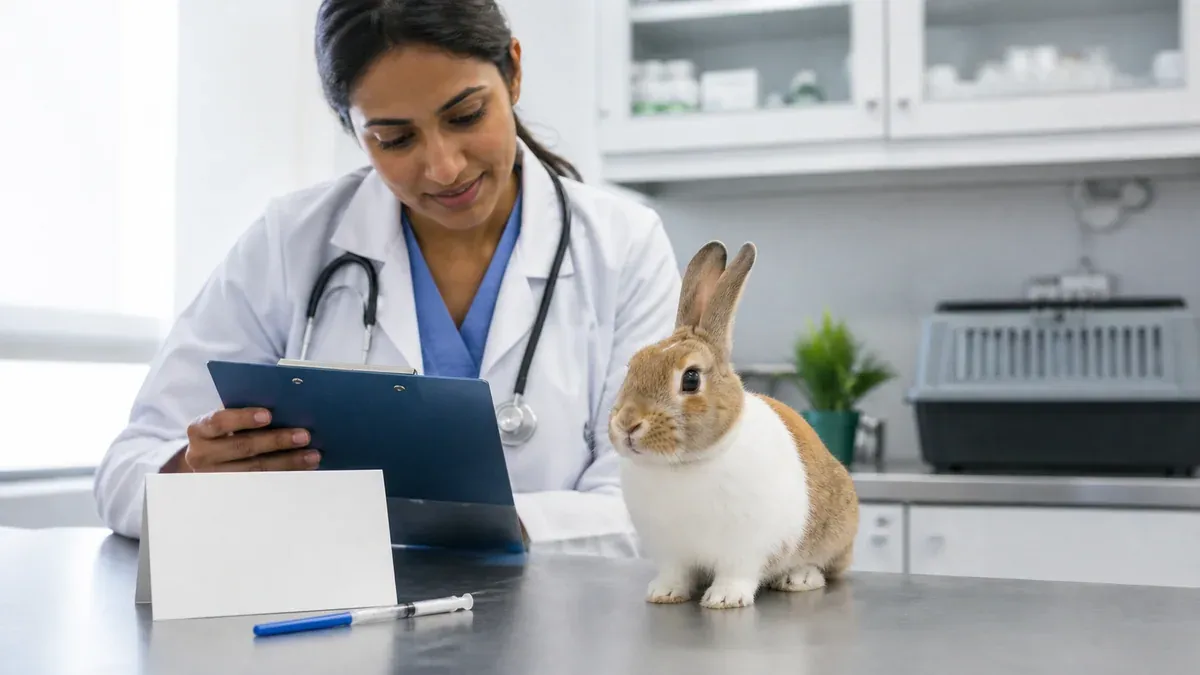
Rabbit vaccination aims to reduce the risk of serious viral diseases: myxomatosis, RHD1, and RHD2. These diseases have no specific curative antiviral treatment, so vaccination and exposure reduction are central. This guide gives practical timing to confirm with your vet.
Why vaccinate: a quick reminder
Before detailing the protocol, here is what vaccination protects against:
| Disease | Mortality without vaccination | Transmission |
|---|---|---|
| Myxomatosis | Very high in acute unvaccinated cases | Biting insects, direct contact |
| RHD1 | Very high in unvaccinated adults | Indirect contact, short-range aerosol |
| RHD2 | > 70% | Highly resistant in the environment |
An unvaccinated rabbit is exposed to all three diseases, whether it lives indoors or outdoors. For in-depth information on each disease, see our dedicated articles on rabbit myxomatosis and rabbit haemorrhagic disease.
Available vaccines (UK/Europe)
The vaccines your vet can offer vary by country and current marketing authorisations:
| Vaccine type | Diseases covered | Notes |
|---|---|---|
| Bivalent myxomatosis + RHD2 | 2 diseases | Does not cover RHD1 |
| Trivalent myxomatosis + RHD1 + RHD2 | 3 diseases | Full coverage — recommended |
Availability varies by region and stock levels. Your vet will advise on the best product for your local epidemiological situation.
Standard primary vaccination schedule
Unvaccinated rabbits (kits or adults never vaccinated)
Documented example: Nobivac Myxo-RHD Plus (EMA):
| Step | Age / Interval | Detail |
|---|---|---|
| Primary vaccination | From 5 weeks | According to this product’s information |
| Onset of immunity | 3 weeks after injection | For the three covered diseases |
| Duration of immunity | 1 year | Booster timing must follow the product information and veterinary advice |
Important: this example is not a universal schedule. Other products may specify a different minimum age, primary course, or booster interval.
Adult rabbits never vaccinated
An unvaccinated adult can often be vaccinated after a veterinary examination. The protocol depends on the product used and the rabbit’s health status: primary vaccination followed by boosters according to your vet’s recommendation.
Boosters: what you need to know
Booster frequency should not be inferred from lifestyle alone. It depends on the vaccine’s product information, the rabbit’s history, and the local epidemiological context. Indoor rabbits can also be exposed through insects or contaminated materials. Follow the due date recorded by the veterinarian and ask for advice during a local outbreak.
What happens at the vaccination appointment
Vaccination is not simply an injection. An exotic animal vet (or rabbit-savvy vet) will routinely:
- Conduct a full clinical examination before any injection (checking weight, temperature, mucous membranes, teeth, abdomen)
- Review the health record or vaccination history
- Administer the subcutaneous injection (typically in the scruff or flank)
- Provide a vaccination certificate or record to keep
Important: if the rabbit shows any signs of illness on the day (fever, cough, loss of appetite), the vet will postpone vaccination. A sick rabbit should not be vaccinated.
How much does rabbit vaccination cost?
The total cost varies by clinic, location, vaccine and services provided. Ask the clinic for its current fee instead of relying on an unofficial national range. The main factors include:
- Geographic location
- The vet practice and their rabbit expertise
- The vaccine product used (bivalent or trivalent)
Budget for this annually. For a full picture of rabbit running costs, see the rabbit species page.
Vaccine interactions with other treatments
- Antiparasitic treatments: tell the vet which product was used and when
- Ongoing medications: always mention any current treatment to your vet before vaccination
- Corticosteroids or immunosuppressants: can reduce the immune response to the vaccine; your vet will decide the best timing
- Recent surgery: wait for full recovery before vaccinating
Summary table
| Age | Recommended action |
|---|---|
| Minimum age in the product information | Primary vaccination after veterinary examination |
| Interval stated by the product | Onset of immunity |
| Due date stated by the product | Booster adapted to the vaccine and risk |
| Any age if unvaccinated | Ask the veterinarian for the protocol matching the available product |
To understand in detail what you are protecting your rabbit from, see our articles on rabbit myxomatosis and rabbit haemorrhagic disease. For the broader question of whether vaccination is truly necessary for your rabbit, read our guide on rabbit vaccination.
For a comprehensive overview of rabbit health, visit the rabbit species page.
Veterinary sources and caution notes
The sources below are provided as veterinary or institutional reference points to frame the topic cautiously: this article can help you recognise possible signs, but it does not replace an examination by a rabbit-savvy veterinarian. If you are unsure, or if your rabbit shows pain, lethargy, refusal to eat, abnormal breathing, or rapidly worsening signs, contact a veterinary clinic without delay.
Sources used to frame the recommendations:
- EMA — Nobivac Myxo-RHD Plus
- ANSES — Nobivac Myxo-RHD Plus product information
- Merck Veterinary Manual — Viral diseases of rabbits
Frequently asked questions
At what age can a rabbit be vaccinated for the first time?
The minimum age depends on the vaccine. The product information for Nobivac Myxo-RHD Plus, for example, allows vaccination from 5 weeks. The vet must follow the product information and examine the rabbit before vaccination.
How long does the rabbit vaccine last?
Duration of immunity and booster timing depend on the product. Nobivac Myxo-RHD Plus states a one-year duration of immunity. The schedule must follow the product used and veterinary advice.
Is one vaccine enough to cover myxomatosis and RHD?
Combined vaccines covering myxomatosis, RHD1 and RHD2 are available. The number of injections and booster frequency still depend on the product and vaccination history.
Can my rabbit be vaccinated if it is unwell?
The veterinarian decides after examining the rabbit. Report any symptoms, weight loss, or current treatment before vaccination; the appointment may be postponed if the rabbit's condition warrants it.