How to trim a rabbit's nails without hurting it
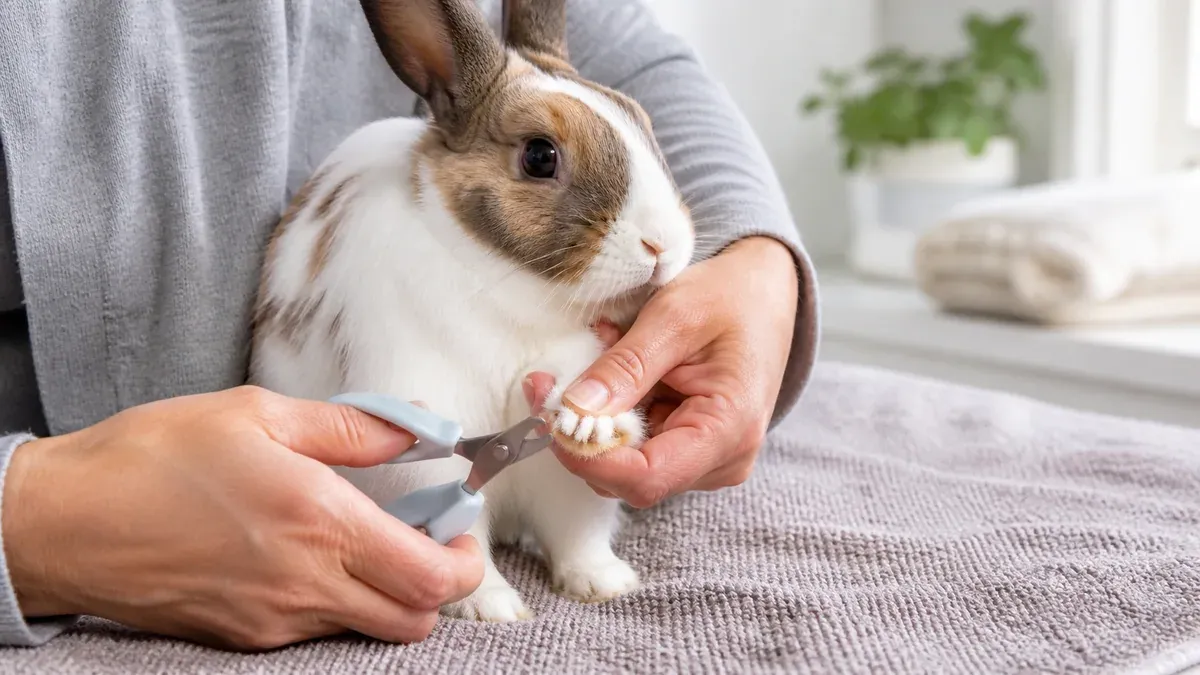
Veterinary warning — Trimming nails is routine care, but a badly restrained rabbit can injure itself struggling, up to a spinal fracture. If you’re not comfortable or your rabbit panics, have a vet or a rabbit-savvy groomer do it rather than forcing it.
To trim a rabbit’s nails, first find the pink quick visible through each nail, then cut 2 to 3 mm beyond its tip with clean clippers, holding the rabbit firmly but without stressing it. It’s a simple job done roughly every 4 to 8 weeks: overgrown nails curl, hamper walking, snag on fabric and can snap painfully at the base.
Why nail care matters
In the wild, a rabbit wears its nails down by digging and moving over varied ground. At home, on carpet and hard floors, they grow faster than they wear. An overgrown nail:
- curls over and forces the rabbit’s weight onto an abnormal paw position;
- snags in carpet, fabric or the wire of a pen — a rabbit that yanks free can tear the nail off;
- changes how the foot lands and, over time, adds pressure points under the feet, an aggravating factor for sore hocks (pododermatitis) in rabbits.
Nail care is part of basic upkeep, alongside monitoring teeth and weight.
The kit: good clippers are enough
No expensive gear needed:
- a pair of small-animal nail clippers (scissor or guillotine type) or, failing that, sturdy human nail clippers for a young rabbit with thin nails;
- a light source (lamp or daylight) to see the quick through the nail;
- styptic powder within reach in case you cut too short — or cornflour, or a bar of dry soap; it is one of the few products worth keeping in stock, alongside the rest of a rabbit first aid kit;
- something to wrap the rabbit (a towel) and a healthy treat to finish on a positive note.
Sharp clippers cut cleanly without crushing the nail; a blunt blade splits it and hurts. Replace them when they no longer cut cleanly.
Finding the quick, the part you never cut
Each nail contains a quick: a living pink zone full of blood vessels and nerves that must never be cut.
- Pale nails: the quick shows through when you hold the nail to the light. It’s the pinkish part at the base; the translucent tip beyond it is the part to cut.
- Dark nails: the quick isn’t visible. Cut in small successive slices and look at the cut face-on: while the centre is white/dry you’re well clear of the quick; the moment a small dark or pink dot appears in the centre, stop.
Either way, cut 2–3 mm beyond the quick, never flush. Better to cut too little and go again than to cut too short.
Restraint: holding without stressing
Rabbits dislike being pinned on their back. The best position depends on the animal:
- On a non-slip surface, the rabbit sitting normally while you lift one paw at a time. Suits calm rabbits.
- Wrapped in a towel (“burrito”), one paw out at a time. Reassuring for many rabbits.
- As a pair: one person holds the rabbit against them, the other clips. Often the fastest and safest.
Never put a rabbit into a trance on its back thinking it’s “relaxed”: that stillness (rabbit tonic immobility) is actually a prey fear response. And never let it kick out into thin air: a rabbit that gives a violent kick while poorly held can fracture its spine. If yours dislikes being handled, first read my rabbit doesn’t like being picked up to improve your handling before you start.
The trim, step by step
- Settle somewhere quiet, with no other pets or fuss around.
- Choose a suitable hold and free a single paw.
- Gently part the fur around the nail so you can see it clearly.
- Find the quick against the light (pale nails) or cut in small slices (dark nails).
- Cut with a clean, decisive snip 2–3 mm beyond the quick.
- Move to the next nail; don’t forget the dewclaw (the small raised nail on the inner side of the front paws), often missed and prone to curling into a hook.
- Finish with a treat and let the rabbit go.
A rabbit usually has 18 nails (5 in front including the dewclaw, 4 behind). You don’t have to do them all at once: two short, calm sessions beat one long wrestling match.
If you cut too short
It happens, even to old hands. The nail bleeds because you’ve reached the quick. Stay calm:
- Press the nail tip into styptic powder (or cornflour, or a bar of dry soap) and hold pressure for one to two minutes;
- keep the rabbit calm while it clots;
- watch for any restart of bleeding within the hour.
A bleeding nail almost always stops on its own. But if the bleeding won’t stop after a few minutes, if the nail is torn out, or if the foot is swollen over the following days, contact a vet.
When to leave it to a professional
There’s no obligation to do it yourself. Turn to an exotic vet or a rabbit-savvy groomer if:
- your rabbit panics and struggles enough to risk a fall;
- its nails are very dark and you can’t spot the quick;
- a nail is deformed, broken or infected;
- you’re simply not comfortable — a hesitant hand stresses the animal.
Trimming is often a quick, low-cost job at the clinic. If you’re unsure whether a visit is warranted, our guide on when to see an exotic vet for your rabbit helps you prioritise.
Going further
Well-kept nails mean a foot that lands properly and less risk of injury. To spot a rabbit that’s uncomfortable or in pain day to day, see how to tell if a rabbit is in pain, and browse all our rabbit health guides plus the rabbit species page for its upkeep needs.
Veterinary sources and caution notes
This article describes routine care; it does not replace a vet’s advice, especially if a nail is broken, infected or bleeding persistently.
Sources used to frame the recommendations:
Frequently asked questions
How often should I trim a rabbit's nails?
On average every 4 to 8 weeks, but it depends on the rabbit: one that lives on hard surfaces and digs a lot wears its nails down naturally and needs it less often, while an indoor rabbit on carpet needs it more often. The real cue isn't the calendar but the look: if the nail clearly extends past the fur of the foot and starts to curl, it's time to trim.
I cut too short and it's bleeding — what do I do?
Press the tip of the nail with a gauze pad and styptic powder (or, failing that, cornflour or a bar of dry soap) for one to two minutes. Bleeding from a nail quick almost always stops on its own. Keep the rabbit calm and watch that it doesn't start again. If bleeding persists beyond a few minutes or the nail is torn out, call a vet.
Can I file a rabbit's nails instead of clipping them?
A file can round off an edge after clipping, but it's impractical for shortening on its own: it means holding the paw still for a long time, which most rabbits tolerate poorly. Clippers stay the main tool; the file is an optional extra.
What if my rabbit struggles too much during the trim?
Don't force it and risk a fall: a rabbit that arches and kicks violently can fracture its spine. Trim only one or two nails per session, or work as a pair. If nothing helps, an exotic vet or a rabbit-savvy groomer will do it in a few minutes, often for a small fee.