Fleas in rabbits: signs, safe treatment and the mistakes to avoid
Veterinary warning — Never apply a flea product to a rabbit on your own initiative, and never a fipronil-based product (such as Frontline): it is potentially toxic in rabbits. Choosing a suitable antiparasitic, its dose and its frequency belongs to a rabbit-savvy vet.
A rabbit that scratches a lot, seems restless and has tiny black specks at the base of its fur most likely has fleas. It is a less common external parasite than ear mites in rabbits, but a real one — especially when a cat or dog lives in the home. Fleas are more than a nuisance: they transmit myxomatosis and, in heavy infestations, can weaken a young rabbit. The good news: they respond well to treatment, as long as you go through the vet and never improvise with a dog or cat product.
Which fleas affect rabbits?
Species found on pet rabbits include the cat flea (Ctenocephalides felis), the dog flea (C. canis) and the human flea (Pulex irritans). They generally arrive with another household animal or from a contaminated environment, so an indoor rabbit is not protected from infestation.
Signs to watch for
| Sign | What it points to |
|---|---|
| Frequent scratching, restlessness, shaking | Itching caused by the bites |
| Tiny black specks at the base of the fur | Flea dirt (digested blood) — the most reliable sign |
| Small brown fleas darting through the fur | Visible adult fleas, especially back and nape |
| Broken hairs, scabs, small bald patches | Scratching lesions, especially rump and neck |
| Pale gums or membranes in a young rabbit | Warning sign of anaemia in heavy infestation |
The simple test: comb the rabbit over damp absorbent paper. If the black specks you collect turn reddish-brown, they are flea dirt (they contain digested blood). This test separates a genuine flea problem from ordinary dust.
Don’t confuse it with other skin problems
Several conditions cause itching or fur loss but don’t call for the same treatment:
- Ear mites (Psoroptes cuniculi): thick crusts inside the ear canal, with no black specks in the body fur — see ear mites in rabbits.
- Skin mites (Cheyletiella): heavy “walking dandruff” over the back, with no black dirt.
- Ringworm: round, dry, crusty, barely itchy patches, more around the face — see ringworm in rabbits.
- Normal moult: fur loss with no redness, crust or black specks; to tell them apart, see rabbit moulting: normal or not.
When in doubt, the veterinary exam decides: treating a flea, a mite or a fungus are three different things.
Why fleas genuinely matter
They transmit myxomatosis
This is the most important point. Flea bites can transmit myxomatosis, an often-fatal viral disease. Flea control is therefore an integral part of prevention, alongside vaccination: see rabbit myxomatosis to understand the stakes and discuss the vaccination protocol with your vet.
They can weaken a young rabbit
A heavy infestation drains blood. In a kit or a small rabbit, this can lead to anaemia (pale membranes, weakness) that quickly becomes serious. That’s a reason not to let it drag on.
Treatment: always led by the vet
The absolute rule: no self-medication. Rabbits are particularly sensitive to certain antiparasitics.
- Never fipronil (Frontline and generics): this molecule is potentially toxic in rabbits, even applied topically. It is the most dangerous and most common mistake.
- Over-the-counter “cat” or “dog” flea products are not interchangeable: wrong dose, sometimes a dangerous molecule.
- The vet prescribes a product genuinely suited to rabbits. The choice of product, dose and frequency belong strictly to the vet, based on the animal’s weight, age, and condition.
So never “try” a product from a pet shop or the dog’s cupboard: a call to the clinic before any purchase prevents the accident.
Treat the environment, not just the rabbit
Most fleas (eggs, larvae) live in the environment, not on the animal. Treating the rabbit alone lets the home re-infest it. Useful steps:
- treat every pet in the household at the same time (cat, dog, other rabbits), each with a suitable product;
- wash textiles hot — bedding, cushions and fabrics in contact with the animals;
- vacuum thoroughly — floors, skirting boards and crevices, then discard the bag or empty the canister;
- clean and replace the rabbit’s bedding.
Skip this step and the fleas are back within weeks.
How to avoid re-infestation
- Control fleas on the household’s other pets: that is the main way in.
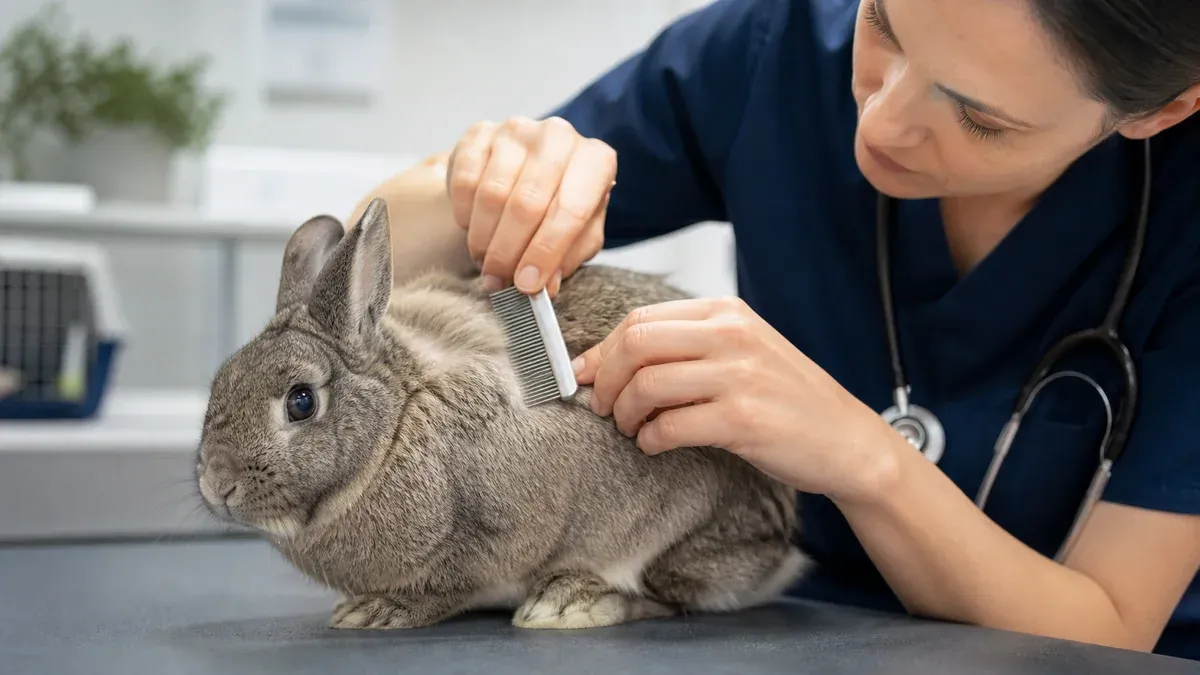
- Inspect the rabbit’s coat regularly (back, nape, rump) during petting sessions, just as you would to spot subtle discomfort or pain.
- For a rabbit that goes out or lives partly outdoors, be extra vigilant in summer and autumn, when fleas and mosquitoes are most active.
- Set up, with your vet, a coherent antiparasitic plan built into the vaccination follow-up.
When to see a vet
Book an appointment as soon as you confirm fleas (black specks turning red, visible fleas), especially before applying anything. See a vet without delay if the rabbit is a kit, if it seems weak, with pale membranes, or if it is scratching hard enough to injure itself. To gauge how urgent a sign is, see when to see an exotic vet for your rabbit.
Going further
Browse all our rabbit health guides and the rabbit species page to care for its skin and coat through the seasons.
Veterinary sources and caution notes
The sources below are provided as veterinary or institutional reference points to frame the topic cautiously: this article can help you recognise possible signs, but it does not replace an examination by a rabbit-savvy vet. Faced with an infestation, an affected kit or a weakened rabbit, seek advice without delay.
Sources used to frame the recommendations:
- Merck Veterinary Manual — Parasitic diseases of rabbits
- Merck Veterinary Manual — Skin disorders of rabbits
- RSPCA — Rabbit health and welfare
Frequently asked questions
Can I use a cat or dog flea product on a rabbit?
Never without veterinary advice, and never a fipronil-based product (like Frontline): it is potentially toxic in rabbits. Some molecules used in cats or dogs are wrongly dosed or dangerous for rabbits. Only the vet chooses a suitable molecule, its dose and its frequency based on the animal's weight.
How do I recognise fleas on a rabbit?
Look for tiny black specks (flea dirt) at the base of the fur, especially on the back, the nape and the rump. Placed on damp paper, they turn reddish-brown because they contain digested blood. You may also see small brown fleas moving quickly when you part the fur.
Can an indoor rabbit catch fleas?
Yes. Fleas are most often brought in by a cat or dog in the household, or carried in from outside. A rabbit that never goes out can still be infested. That is also why flea control is part of myxomatosis prevention, since the flea is a vector for it.
Are rabbit fleas dangerous to people?
Fleas can bite people opportunistically, but they don't live on us long-term. The real risk is the diseases they pass to the rabbit (myxomatosis) and, in heavy infestations, anaemia in a young rabbit. Treat the rabbit, the other pets and the environment at the same time.