Ringworm in rabbits: symptoms, treatment and the risk to people
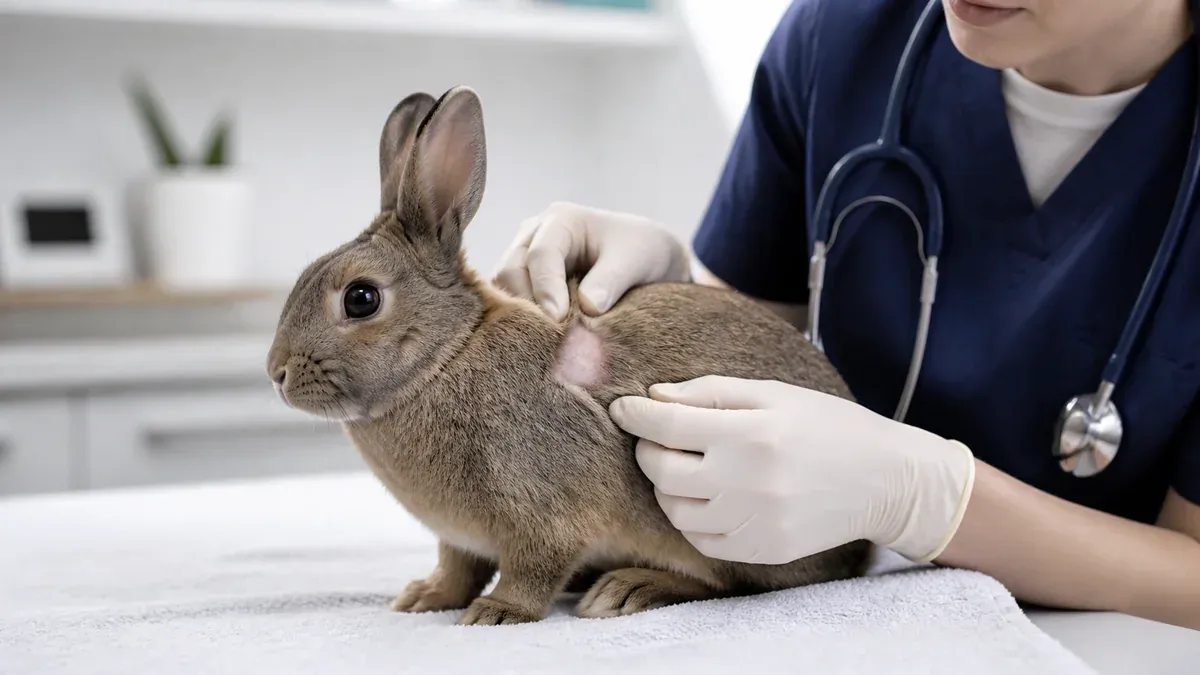
Veterinary warning — Ringworm is contagious to other animals and to people. This article helps you recognise it, but it does not replace a veterinary diagnosis: only an exam (often a fungal culture) confirms ringworm, and the choice of antifungal belongs to the vet.
Rabbit ringworm shows up as round, hairless, reddened patches capped with white flakes, which usually appear first on the head (nose, around the eyes, ears) before they can spread to the rest of the body. It is a fungal infection that is contagious to other animals and to people: it needs a veterinary diagnosis and treatment, plus methodical cleaning of the home.
What is rabbit ringworm?
Ringworm is a dermatophytosis: an infection of the skin and fur by a fungus, most often Trichophyton mentagrophytes and occasionally Microsporum canis. It spreads by direct contact or through contaminated objects such as a brush. Symptom-free carriers are very common, so a rabbit that looks perfectly healthy can still infect others.
It mostly appears against a background of poor living conditions: stress, an unbalanced diet, overcrowding or poor hygiene. That is why the vet also looks for whatever weakened the rabbit, on top of treating the skin.
The signs to look for
| Sign | What it points to |
|---|---|
| Round hairless patches, well defined | Area where the fungus has damaged the fur |
| Raised, reddened edge | Active inflammation |
| White, bran-like flakes on the patch | Typical look of a ringworm lesion |
| First seen on the head: nose, eyes, ears | Usual starting point, before possible spread |
| Variable itching | Not a reliable way to tell on its own |
| Matching lesion on another animal or on your skin | Strong suspicion of active spread |
The most misleading clue is itching: it can’t settle the question, because fur mites often don’t cause much scratching either. Go by the shape instead. A round patch with a red rim and a flaky centre points to ringworm; diffuse dandruff that shows when you part the fur points more to a mite. To tell ordinary fur loss from a skin problem, our guide rabbit moulting: normal or not walks through the difference.
Don’t confuse it with other skin problems
Several conditions look alike but don’t call for the same treatment — which is why the veterinary diagnosis matters. If the rabbit is scratching with no clear patch appearing, start with the sorting by area described in my rabbit keeps scratching:
- Ear mites (Psoroptes cuniculi): thick brown crusts inside the ear, with a rabbit that shakes its head and scratches at its ears. Nothing like the dry patches of ringworm: see ear mites in rabbits.
- Fur mites (Cheyletiella): heavy dandruff that shows when you part the fur, often with no marked itching and no round patches. Watch out: these mites can also cause a mild rash in people, especially on the arms. A lesion on your skin does not, on its own, prove ringworm.
- Abscess: a firm lump under the skin, with no dry bald patch — see rabbit abscess.
- Chronically wet areas (drool, weepy eye, urine): fur drops where the skin stays wet, pointing to a dental, eye or urinary problem to treat at the source.
The veterinary diagnosis
A rabbit-savvy vet doesn’t rely on the look of the lesions alone, because other diseases mimic them. They may use:
- a Wood’s lamp exam (some fungal species fluoresce, but not all: a negative test does not rule ringworm out);
- microscopic examination of hairs or a skin scraping taken at the lesion edge;
- a fungal culture, the reference method, which is usually read over at least two weeks.
While you wait for the result, already apply the precautions below (gloves, isolation, cleaning): a pending result is not a green light.
How long does ringworm treatment last?
Expect several weeks: the protocols the MSD Veterinary Manual describes for rabbits run for 4 to 6 weeks. Treatment often combines an antifungal on the skin with one given by mouth. Regrowing fur does not mark the end; a cure confirmed by your vet does, ideally with a negative follow-up test.
Because a rabbit licks and grooms constantly, the choice of drug, the dose and the duration belong strictly to the vet. Some antifungals used in dogs or people are poorly tolerated by rabbits, especially when swallowed during grooming. So apply no antifungal cream on your own initiative.
The most common mistake is stopping as soon as the patches grow fur again: the skin can still harbour the fungus, and relapse is then likely. If the care feels hard to keep up for several weeks, talk to your vet rather than spacing out the doses.
Alongside this, the vet looks for a predisposing cause: stress, overcrowding, an unbalanced diet or an underlying illness. Weight loss or a change in general condition warrants a broader work-up.
In what order should you clean the home?
Remove hair and debris first, wash, then disinfect with a product effective against Trichophyton, and repeat this full clean once or twice a week for the whole treatment. Shed hairs carrying spores keep the infection going: without this cleaning, the rabbit re-infects itself. The order matters more than the product:
- Remove hair and debris first with a vacuum or wipes. This is the key step: a disinfectant applied over a hair-covered surface works poorly.
- Wash with detergent, then apply a disinfectant labelled as effective against Trichophyton, or the one your vet recommends.
- Machine-wash blankets and fabrics, and throw out litter and hay that touched the affected rabbit.
- Keep one brush for the affected rabbit only and disinfect it: poorly cleaned brushes are among the objects that spread ringworm most.
- Repeat this full clean once or twice a week during treatment, removing hair in between.
Isolate the affected rabbit from other animals during treatment, and handle it wearing gloves.
Protecting yourself: a genuine zoonosis
Ringworm spreads to people through direct contact and causes round red patches on the skin (the classic “ring”), which respond well to treatment. Wash your hands after every contact, wear gloves for care, and see a doctor if a lesion appears on your skin. Warn other households that have been in contact with the rabbit too.
When to see a vet
- Keep an eye on it: diffuse fur loss with no clear patch, in a rabbit that eats and behaves normally. Check the head and paws of every rabbit in the home over the following days.
- Book promptly: a round, hairless, reddened or flaky patch, especially on the face or paws, or a matching lesion on another animal or your own skin.
- See a vet without delay: if fur loss comes with weight loss, dullness or a refusal to eat. This is no longer just a skin issue. To gauge urgency, see when to see an exotic vet for your rabbit, and to spot subtle discomfort, how to tell if a rabbit is in pain.
Next step: seeing the treatment through
If the vet prescribes an oral antifungal, plan how you will hold your rabbit beforehand with our method for giving a rabbit medication without stressing it. For other skin and coat issues, browse all our rabbit health guides and the rabbit species page.
Veterinary sources and caution notes
The sources below serve as veterinary reference points to frame the topic cautiously: this article helps you recognise possible signs, but it does not replace an examination by a rabbit-savvy vet. The cleaning and end-of-treatment guidance comes from the MSD Veterinary Manual’s dog and cat chapter, as no equally detailed rabbit guidance exists there. In case of doubt, a skin lesion or a lesion on a person, seek advice.
Sources used to frame the recommendations:
- MSD Veterinary Manual — Bacterial and mycotic diseases of rabbits (Dermatophytosis section)
- MSD Veterinary Manual — Parasitic diseases of rabbits (ear and fur mites)
- MSD Veterinary Manual — Dermatophytosis in dogs and cats (diagnosis, cure, cleaning)
Frequently asked questions
My other rabbit has no patches: should it be checked too?
Yes, tell your vet about it. Symptom-free carriers are very common in rabbits: a companion that looks healthy can harbour the fungus and re-infect the one being treated. The vet decides whether to sample or treat it. In the meantime, don't use the same brush on both.
My doe might be pregnant: does treatment change?
Yes, tell the vet before anything is prescribed. The MSD Veterinary Manual notes that griseofulvin, a classic antifungal, may cause birth defects and should not be used in pregnant does. The vet will pick another option; the drug, dose and duration remain their call.