Rabbit moulting: normal or a problem? What should worry you
Veterinary warning — This article helps tell an ordinary moult from a skin problem, but it does not replace a veterinary exam. Any bare, red, crusty or itchy skin, and any weight loss or change in general condition alongside hair loss, warrants a consultation.
A normal moult is a rabbit renewing its coat by shedding dead fur, without ever leaving bare skin or scratching: the skin underneath stays healthy, clean and intact. As soon as you see bare, red, crusty patches, itching, or the rabbit losing weight or acting differently, it’s no longer a moult but a skin or health problem that calls for the vet. Telling the two apart saves you both needless worry and the risk of letting a real illness slide.
What a normal moult looks like
Rabbits renew their fur year-round, with seasonal peaks: many moult noticeably in spring and autumn, as day length changes. An ordinary moult shows several signs:
- fur comes away easily when you stroke or brush the rabbit;
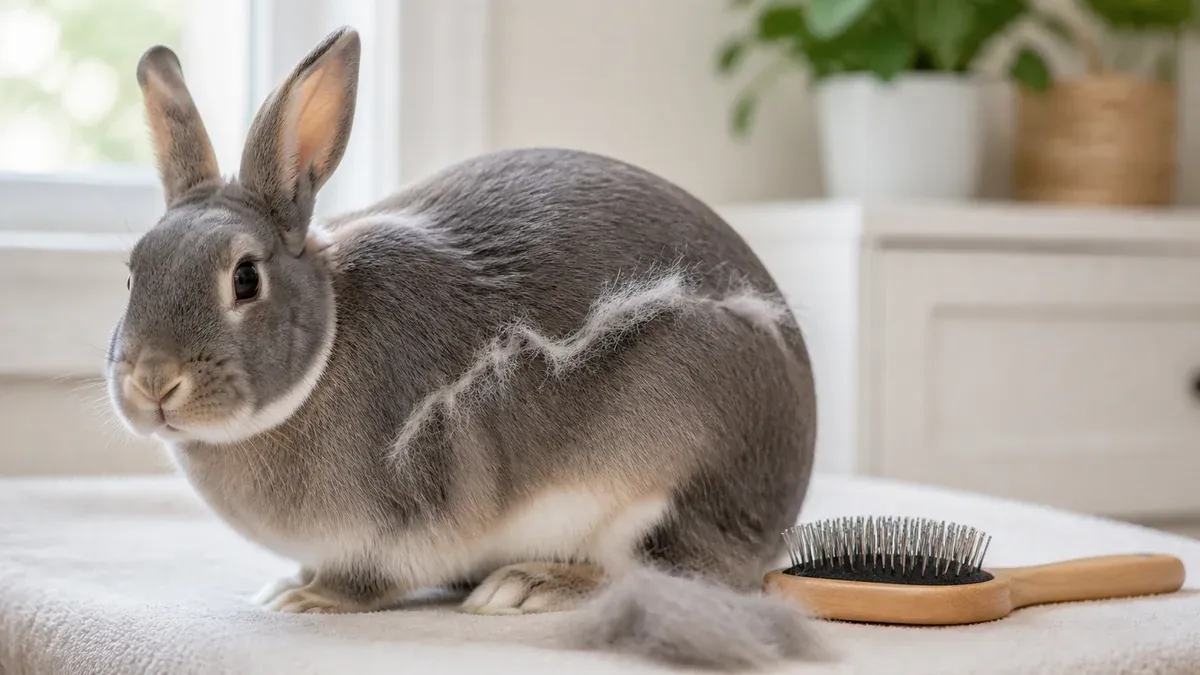
- the moult often advances as a “moult line”: a visible edge between old and new fur, giving a temporary uneven, sometimes dramatic look that’s harmless;
- the skin underneath stays healthy: no redness, no crust, no wound;
- the rabbit eats, drinks and behaves normally.
Young rabbits also swap their baby coat for their adult one at a few months old: a normal, sometimes slightly messy, stage.
What is NOT a moult and should worry you
Fur loss becomes a red flag when it comes with any of the following:
- bare, red, thickened or crusty skin under the thinning area;
- itching: the rabbit scratches, nibbles at itself, seems agitated;
- heavy dandruff, especially over the back and neck (“walking dandruff”, suggestive of a mite);
- round patches with crusts, often around the nose, ears or paws (a ringworm clue, and transmissible to humans);
- symmetrical, localised fur loss on the dewlap or belly in a female (may be hormonal or nest-building);
- fur pulled out by the rabbit itself or a cage mate (over-grooming, “barbering”);
- fur loss alongside weight loss, apathy or digestive trouble.
These pictures need a veterinary diagnosis: skin parasites (mites such as Cheyletiella), ringworm, abscess, wound, or an underlying disorder. Don’t treat blindly with a dog or cat antiparasitic: some common antiparasitic drugs are toxic to rabbits, and the choice of product belongs to the vet.
Watch out for common mix-ups
Several causes of fur loss look alike but don’t call for the same treatment. When the rabbit is actively scratching, the sorting is done by body area first, using the method set out in my rabbit keeps scratching:
- Skin mites (often Cheyletiella): heavy dandruff over the back, mild itch. To be distinguished from ear mites in rabbits, which affect the inside of the ears with thick crusts.
- Ringworm: round, crusty patches, contagious to other animals and to people.
- Over-grooming or barbering: a stressed, bored or subordinate rabbit may pull out its own fur or a companion’s.
- Chronically wet areas (drool, weepy eye, urine): fur drops where the skin stays wet, pointing to a dental, eye or urinary problem to treat at the source.
The common thread: it’s the state of the skin and behaviour, not just the amount of fur, that separates a moult from a problem.
How to support a normal moult
During a heavy moult, your job is mainly to help remove dead fur:
- brush regularly, with a suitable soft brush, following the lie of the coat; long-haired rabbits (angora, lionhead) need far more frequent brushing;
- run a damp hand over the coat to collect loose fur;
- never bathe the rabbit: a bath is severely stressful and unnecessary — the exact risks and the rare cases where spot cleaning is justified are set out in can you bathe a rabbit.
Brushing has a double benefit: it eases the rabbit and reduces how much fur it swallows while grooming.
The real risk of moulting: the gut
Rabbits cannot vomit. All the fur they swallow while grooming must travel through the entire digestive tract. During a moult, a rabbit that drinks little or eats too little hay sees its transit slow, which can progress to GI stasis — a life-threatening emergency. Fur doesn’t mechanically “block” the stomach as was long believed: it’s mainly the slowed transit that lets it pile up.
Prevention is simple and comes down to three things: unlimited hay, fresh water always available, and regular brushing during the moult. The detail of what actually reduces how much fur is swallowed, and what to watch in the litter tray during a heavy moult, is gathered in rabbit swallowing fur: how to lower the hairball risk. A rabbit that, mid-moult, stops eating or passing droppings must be seen urgently.
When to see a vet
Book an appointment promptly if you notice: a bare, red or crusty patch of skin; itching; heavy dandruff; fur loss that spreads or lasts several weeks with no regrowth; or fur loss with weight loss. To spot subtle signs of discomfort, see how to tell if a rabbit is in pain, and to gauge urgency, when to see an exotic vet for your rabbit.
Use brushing sessions to check overall condition too: it’s a good moment to check the nails, with our guide on how to trim a rabbit’s nails.
Going further
If you have not adopted yet and coat volume is one of your criteria, which rabbit breed sheds the least compares grooming demands breed by breed.
Browse all our rabbit health guides and the rabbit species page for its upkeep and seasonal monitoring needs.
Veterinary sources and caution notes
This article helps tell an ordinary moult from a skin problem; it does not replace an examination by a vet. Faced with a skin lesion or any doubt, seek advice.
Sources used to frame the recommendations:
- RSPCA — Rabbit health and welfare
- Merck Veterinary Manual — Disorders and diseases of rabbits
- Merck Veterinary Manual — Parasitic diseases of rabbits
Frequently asked questions
How long does a rabbit's moult last?
A seasonal moult usually lasts from a few days to two or three weeks. Many rabbits moult noticeably in spring and autumn, with quieter turnover the rest of the year. A moult that drags on for months, or leaves bare patches of skin, is no longer an ordinary moult and warrants a vet's opinion.
Is it normal for a rabbit to lose fur in patches?
A moult can advance as a 'moult line': a clear edge where old fur lifts away, giving a temporary uneven look. But a true patch of bare skin that is red, crusty, itchy or spreading is not a moult — it points to parasites, ringworm or another skin problem: see a vet.
Should I bathe a rabbit that's shedding heavily?
No. Rabbits should not be bathed: a bath stresses them enormously and can cause shock. To help during a moult, brush gently and regularly to remove dead fur. Brushing is enough and also cuts down how much fur the rabbit swallows while grooming.
My rabbit swallows a lot of fur while moulting — is that dangerous?
Rabbits cannot vomit: swallowed fur must pass through the whole gut. During a moult, a rabbit that drinks little or eats little hay risks its transit slowing. The best prevention is unlimited hay and fresh water, plus regular brushing. A rabbit that stops eating or passing droppings mid-moult is an emergency.