Rabbit swallowing fur: how to lower the hairball risk
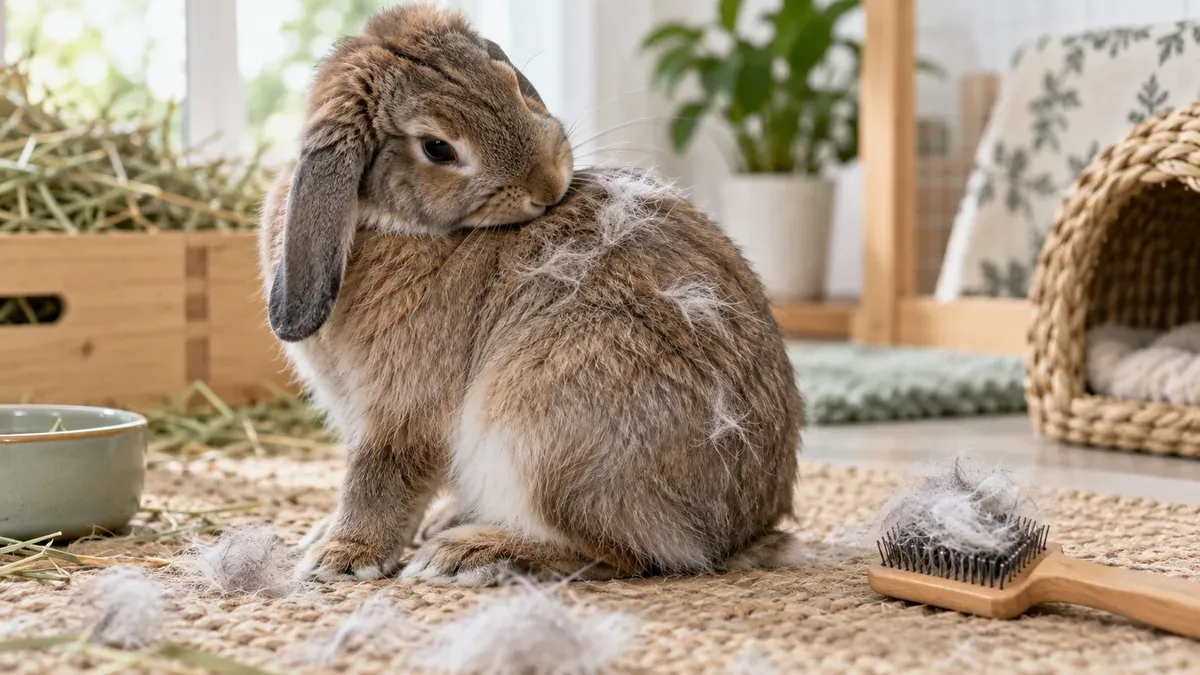
Veterinary note — This article explains how to reduce the amount of fur a rabbit swallows and how to watch its gut during a moult. It does not replace a clinical examination. A rabbit that stops eating, passes fewer droppings or sits hunched needs to be seen promptly by a rabbit-savvy vet.
A rabbit swallows fur every time it grooms itself. That is normal, there is no way to prevent it, and no reason to try. What can be prevented is that fur piling up in a gut that has slowed to a crawl. So the useful levers are simple: strip out the dead fur before it gets swallowed, keep hay and water available at all times, and protect daily activity.
The distinction matters, because it changes what you buy and what you watch. A rabbit cannot vomit: unlike a cat, it will never bring a ball of fur back up. Everything it takes in travels the entire digestive tract, and only moves along while the gut keeps working. That is exactly why “hairball” products do nothing useful here, while a properly fibrous diet does.
Why swallowed fur is not the real problem
For a long time the picture was a stomach “blocked” by a ball of fur. Current thinking runs the other way: in most affected rabbits, it is the slowing gut that lets fur accumulate, not the fur that stops the gut. A rabbit eating plenty of hay, drinking normally and moving around keeps its digestive contents travelling, fur included.
That has a practical consequence. Faced with a moulting rabbit that starts eating less, the right question is not “how do I shift the fur?” but “why is its gut slowing down?”. Pain, dental disease, a diet too low in hay, stress, confinement: the full mechanism is set out in rabbit GI stasis, a life-threatening emergency for which moulting is only one aggravating factor among several.
The rabbits that swallow the most
| Situation | What raises the amount swallowed | What it changes in practice |
|---|---|---|
| Seasonal moult (often spring and autumn) | The rabbit strips its own dead fur out by licking | Frequent brushing for as long as the moult lasts |
| Long or dense coat (Angora, lionhead) | Far more dead fur, and mats that form quickly | Daily grooming; clipping by a professional if needed, never with scissors |
| Two rabbits that groom each other | Each one also swallows the other’s fur | Brush both, not just the one moulting hardest |
| Senior or overweight rabbit | Less effective self-grooming, dead fur that stays put then comes out all at once | Regular checks of the back and rear, areas the rabbit often cannot reach |
| Rabbit pulling its own fur out (stress, over-grooming) | Heavy, localised intake | Look for the cause, see rabbit moulting: normal or not |
The last row deserves particular attention: a rabbit that pulls its fur out, or whose companion pulls it out, is not moulting. Telling an ordinary moult apart from a skin parasite or over-grooming is the subject of rabbit moulting: normal or not, and it is settled by the state of the skin, not by the amount of fur.
Strip out the dead fur before it gets swallowed
Brushing is the one action that genuinely reduces how much fur is ingested, because it removes the fur instead of the rabbit doing it.
- During a moult, brush daily, in short sessions rather than one long weekly effort. A rabbit that tolerates five minutes will not tolerate twenty.
- Work with the lie of the coat, using a soft brush or a fine comb, and never pull at a mat.
- Run damp hands over the coat afterwards: it is the simplest way to collect the loose fur that would otherwise be swallowed within the hour.
- Concentrate on the back, the neck and the rear, where dead fur builds up and where the rabbit licks hardest.
- Avoid bladed tools such as stripping knives unless you know how to use one: rabbit skin is very thin and cuts easily.
- Never bath a rabbit to “get the fur off”: bathing causes major stress and serves no purpose here.
If your rabbit refuses to be brushed, do not turn the session into a fight: start with a few passes of a damp hand while it eats its hay, and build up gradually. A grooming session is also a good moment to check general condition, as described in how to trim a rabbit’s nails, which uses the same calm, floor-level handling.
Keep the gut moving: three levers
What protects a moulting rabbit is not a product, it is its daily routine.
- Unlimited hay, first and foremost. Its long fibre supports normal gut motility. Top it up before the rack is empty and monitor how much is actually eaten; practical benchmarks are set out in how much hay does a rabbit need. A rabbit snubbing its hay during a moult stacks two risk factors: the possible reasons are sorted out in why has my rabbit stopped eating hay.
- Fresh water, available at all times. Focus on any change from your rabbit’s normal intake; the factors that affect consumption are detailed in how much water does a rabbit drink; mid-moult, check the water point actually works, since a failed bottle goes unnoticed easily.
- Movement. Activity supports normal gut motility. Give the rabbit as much daily access as possible to a secure exercise area, rather than treating a few hours as a maximum; its needs are explained in how many hours of exercise does a rabbit need.
These three points apply all year round, but letting them slip costs more during a heavy moult.
What to watch during a heavy moult
A moult is a good time to look in the litter tray every day. Three observations are enough:
- The size and number of droppings. Droppings that become noticeably smaller, scarcer or irregular signal a slowing gut well before the rabbit looks unwell.
- Droppings strung together by fur. During a moult, this “string of pearls” mostly reflects a large fur intake. On its own, in a rabbit eating and behaving normally, it is no cause for alarm; alongside smaller droppings or a drop in appetite, it means something else.
- The hay actually eaten, not the hay offered. A rack still full in the evening is information in itself.
A moulting rabbit that stops eating or stops producing droppings is past the point of prevention: that is the scenario covered in rabbit not eating: what to do, and it is handled by phoning, not by waiting for the moult to end.
What does not work, or wastes time
- Hairball pastes and malt: designed for cats, which bring fur back up. They dissolve nothing in a rabbit.
- Paraffin or mineral oil: no demonstrated benefit here, and a real risk of it going down the wrong way.
- Pineapple or papaya juice and chunks: the idea that their enzymes “dissolve” fur is a stubborn myth, and these fruits mostly add sugar to an animal whose gut flora copes badly with it.
- Human laxatives, in every case.
- Waiting for “the moult to pass” in a rabbit that is eating less.
These products are among those that have no place in a rabbit first aid kit, precisely because they reassure at the worst possible moment.
When to call the vet
- Call immediately as soon as the rabbit refuses its usual food or its droppings become fewer, smaller or absent: veterinary sources warn that the condition can deteriorate within hours.
- Additional emergency signs: a tense or bloated abdomen, hunched posture, withdrawal or abnormal breathing. The full criteria are gathered in rabbit emergency warning signs.
- Book an appointment: a moult that drags on, bald patches, itching, or a rabbit visibly no longer able to groom itself — common in older or arthritic animals, as covered in senior rabbit health.
Where to go next
The next step takes two minutes: brush your rabbit tonight and look at how much fur comes off. If the brush fills up, switch to daily brushing and check the hay rack and water point every morning until the moult ends. To tell a normal moult from a genuine skin problem, go back to rabbit moulting: normal or not; for the wider care picture, browse our rabbit health guides and the rabbit species profile.
Sources and veterinary references
The sources below frame the general recommendations on coat care and prevention of digestive problems. They replace neither a clinical examination nor prescribed treatment.
- RSPCA — Rabbit health and welfare
- Merck Veterinary Manual — Skin disorders of rabbits
- VCA Hospitals — Gastrointestinal stasis in rabbits
- MSD Veterinary Manual — Nutrition of rabbits
Frequently asked questions
Should I give a moulting rabbit a hairball paste?
No. Malt pastes and mineral oils are designed for cats, which bring their fur back up; rabbits cannot vomit, and these products dissolve nothing. The real risk is feeling reassured by a remedy while the gut genuinely slows down. The levers that work are unlimited hay, water always available, daily movement and brushing the dead fur out yourself.
Droppings strung together by fur — is that a worry?
During a moult, droppings linked by a few strands of fur are common and mainly show how much fur the rabbit is swallowing while grooming. What matters is what comes with them: if they get smaller or scarcer, or if the rabbit eats less hay, the gut is slowing down and the situation deserves prompt veterinary advice.
Should I cut the fur of a rabbit that is moulting heavily?
Never cut it yourself. Rabbit skin is extremely thin and scissors go through it easily, especially when you are working around a mat. A long or matted coat should be clipped by a vet or a groomer used to small pets. Day to day, regular brushing is what stops mats forming in the first place.
Does a short-haired rabbit really need this?
Yes, though less intensively. Every rabbit grooms itself and swallows fur, and a strong seasonal moult happens in short coats too. The difference is volume: a long or dense coat sheds far more dead fur, and a bonded pair that grooms each other doubles what each one takes in.