Should you adopt or buy a rabbit?
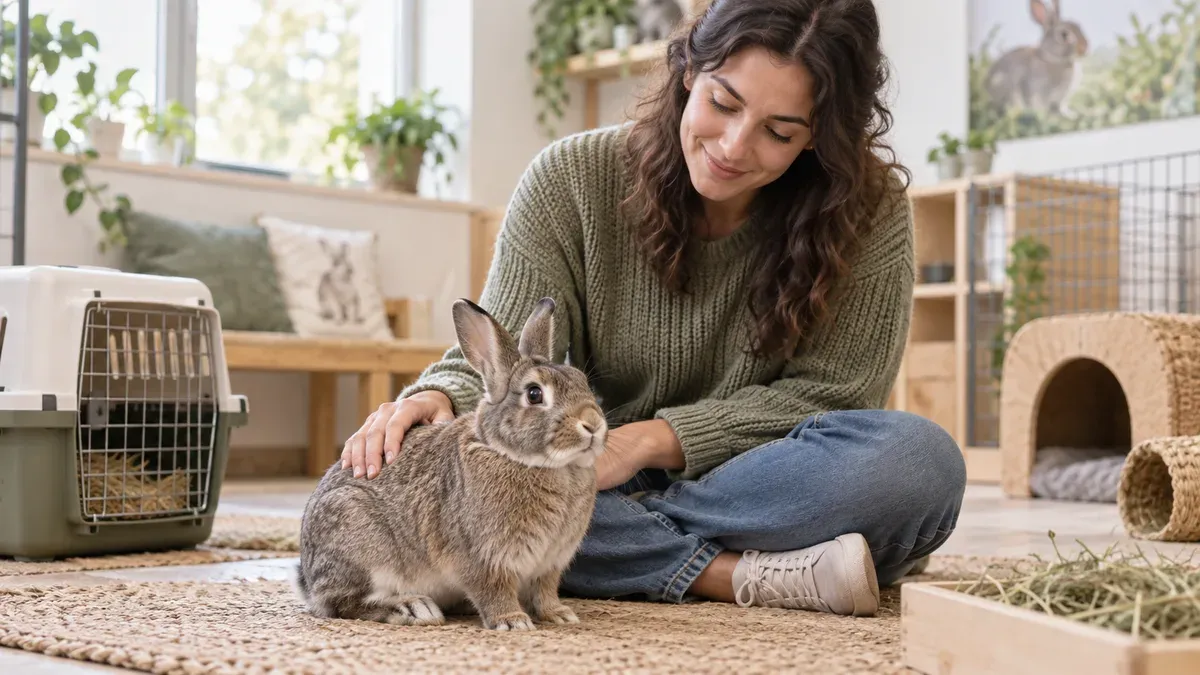
For most first-time owners, adopting from a rescue is the better starting point: the rabbit is usually already neutered, correctly sexed, health-checked and known in terms of temperament, which removes the three most common nasty surprises in one go. Buying still makes sense from a reputable breeder when you want a specific size or coat type and accept that neutering will be on you.
It is the pet shop that concentrates the real risks: rabbits sold too young, unreliable sexing, no support afterwards. And financially, the purchase price is by far the smallest line in the budget — the real cost plays out over the following months (how much does a rabbit cost per month).
The prices and practices below are indicative for the UK and Western Europe; both vary by country and region.
The four routes, criterion by criterion
| Criterion | Rescue | Reputable breeder | Pet shop | Private seller |
|---|---|---|---|---|
| Age at handover | Usually adult | Fully weaned | Often very young | Highly variable |
| Reliability of sexing | Good, verified | Good | Often approximate | Pot luck |
| Neutering | Frequently already done | Rarely | Never | Exceptional |
| Microchip and vaccination | Often done | Variable | Rarely | Rarely |
| Temperament known | Yes, observed over time | Partly | No | Sometimes, if the seller is honest |
| Support afterwards | Yes, advice and often a return policy | Often | No | No |
| Purchase price | Adoption fee, sometimes none | £25–£120 | £25–£120 | Low to nothing |
| Real cost at 6 months | Lowest | Middling | Highest | Unpredictable |
The table says the essential thing: the routes are not separated by the price on the label but by what has already been done to the animal when it reaches you.
What a rescue actually changes
Four concrete advantages, rarely spelled out:
- The temperament is already known. A rabbit watched for weeks by volunteers is described as it is: sociable or reserved, tolerant of handling or not, litter-trained or still learning. With a baby rabbit, all of that is guesswork.
- The sex is reliable. Sexing a very young rabbit is fiddly, and the mistake costs a litter. In a rescue the check has been done, usually backed up by neutering.
- The initial veterinary work is often covered. Neutering, microchipping, sometimes vaccination — none of it landing on your budget three months later.
- Support exists. Many rescues stay contactable after adoption, help through the first weeks and take the rabbit back if the situation becomes impossible. No pet shop offers that.
The trade-off: a questionnaire, sometimes a home visit, sometimes a waiting list for a specific profile. That is not suspicion — it is what keeps the return rate low. The process itself — where to look, what the application asks, what to check on the day — is set out in adopting a rabbit from a rescue.
When buying from a breeder makes sense
A reputable breeder is the right call in three cases: you want a specific breed for size or grooming reasons, you want to follow the animal from a young age, or no rescue within reach has a rabbit matching your situation.
Markers of a decent breeder:
- They let you see the mother and the living conditions, rather than meeting you in a car park.
- They do not release a young rabbit before it is fully weaned — natural weaning happens between 6 and 8 weeks, and a rabbit taken earlier is digestively fragile (what to feed a 2-month-old rabbit). The questions that let you verify it are listed in when is a rabbit weaned.
- They ask you questions about your setup and turn down a sale that does not suit them.
- They provide a health history and the current diet, so you can avoid an abrupt food change.
- They do not advertise “toy” dwarfs or rabbits that “stay tiny forever”: that is marketing, not rabbit breeding.
The full screening method — the five questions to ask on the phone before you travel, what the visit must show you and the paperwork to insist on at collection — is set out in how to choose a rabbit breeder.
Pet shops: the risks are not theoretical
Three problems come up again and again:
- Age. A rabbit sold barely weaned copes badly with a change of food and surroundings. That is exactly when digestive trouble appears, and it is also the most demanding age to take on: the full baby / adult / senior comparison is in what is the best age to adopt a rabbit.
- Sexing and mixed pens. Young rabbits housed together and sexed carelessly produce unwanted litters weeks after purchase — a classic that rescues then inherit.
- No follow-up. No later advice, no return option, no history. The first vet appointment becomes the moment you discover the animal’s real condition.
There is also a commercial mechanism at work: the rabbit is usually sold alongside an undersized cage and a muesli-style seed mix, two things you will have to correct immediately. What is genuinely worth buying is sorted out in what accessories are truly essential for a rabbit. If the purchase has already happened or is under way, the checks that genuinely change what follows — sexing, date of birth, diet transition, the first two weeks — are gathered in buying a rabbit from a pet shop: what to check.
Private sellers: the most variable route
You find both the best and the worst here — an honest owner rehoming a neutered adult with its equipment and history, or an “accidental” litter passed on far too early with no sexing and no support.
The practical rule: treat the advert as an adoption, not a purchase. Ask the exact age, the sex and how it was checked, the vaccination and neutering status, the reason for rehoming, and see the rabbit where it lives. A seller who refuses a visit or rushes the decision has told you enough.
The purchase price is not the point
This is what most comparisons miss. A rabbit that is free or costs £40 but is not neutered, not vaccinated and not microchipped means, over the following months, £80–£200 for neutering and £45–£80 for annual vaccination — before the first consultation. A rescue rabbit whose adoption fee already covers that work is cheaper, even when the fee looks steep.
Add the initial setup, around £180–£500 depending on your choices, then roughly £55–£85 a month for a well-kept dwarf rabbit. Over twelve months, the gap between routes is decided there, not on the sticker price.
These are orders of magnitude for the UK and Western Europe, taken from our detailed monthly budget: they vary widely by city and by practice. Get a quote from a rabbit-savvy vet near you before letting cost decide between two routes.
Neutering is not only a financial question either: it shapes behaviour, makes companionship possible and, in females, prevents uterine disease. The case is set out in should you spay a female rabbit.
Questions to ask before saying yes
Whichever route you take:
- Exactly how old, and how long since weaning?
- What sex, checked by whom — a vet, an experienced volunteer, or nobody?
- Neutered, microchipped, vaccinated? Against what, and when?
- What is it eating now? A diet change is planned, not improvised.
- Has it lived with other rabbits, and how did that go?
- How does it handle being handled — approached, picked up, treated?
And one question for yourself: male or female matters less than people claim once the rabbit is neutered, but it is still worth settling first (male or female rabbit).
Red flags to walk away from
A rabbit showing any of these should not be “rescued” on impulse: report the situation, but leave without it unless you are ready for immediate veterinary care.
- Discharge from the nose or eyes, repeated sneezing, matted fur on the front paws.
- A soiled bottom, or soft droppings in the tray.
- A hunched, dull-coated animal with a spine you can feel sharply.
- A head tilt, loss of balance, intense ear scratching.
- Young rabbits housed together with no separation by sex, or clearly sold too young.
- A seller who knows neither the age, nor the sex, nor the diet of the animal.
Adopting an adult, a senior or a bonded pair
Three consistently underrated options:
- The adult: known temperament, finished growing, often already litter-trained. The safest choice for a first rabbit, with the criteria set out in how to choose your first rabbit.
- The senior: calmer, very keen on attention, best suited to homes that accept closer veterinary monitoring.
- The bonded pair: two rabbits that have lived together for months arrive with their social balance intact, which skips the whole process described in how to introduce two rabbits — at the price of doubled resources. What going from one to two actually changes for budget and space is costed in should you adopt one or two rabbits.
Going further
Logical next step: list the rabbit rescues within reach, call two of them to hear which rabbits are available, and get the setup ready before the animal arrives rather than after. Whichever route you take, what follows plays out the same way: it is described day by day in first days with a new rabbit. To go further, browse our rabbit adoption guides and the rabbit species page.
Sources and reference points
The sources below are used as institutional and veterinary reference points for the health aspects mentioned here: this article helps you choose where to get a rabbit, and does not replace an examination by a rabbit-savvy vet when the animal arrives.
- RSPCA — Rabbit health and welfare
- Rabbit Welfare Association & Fund — Neutering, castration and spaying
Frequently asked questions
Is adopting from a rescue really cheaper?
Almost always, provided you compare like with like. A rescue rabbit often arrives already neutered, microchipped and vaccinated: the adoption fee covers part of work that would otherwise cost £80–£200 for neutering and £45–£80 for annual vaccination. A rabbit bought for £25–£120 with none of that done is therefore the more expensive animal within a few months.
Can I adopt if I have never kept a pet before?
Yes, and it is often easier with a known adult from a rescue than with a baby rabbit whose temperament is a complete unknown. Rescues rarely rule out beginners: what they look for is suitable housing, a realistic vet budget and an understanding of what the species actually needs. A questionnaire or a home visit is part of the normal process, not an entrance exam.
Are there pedigree rabbits in rescues?
More often than people expect: mini lops, lionheads and angora-type rabbits are given up regularly, as are giant breeds. If you want a particular size or coat, say so — rescues routinely refer between branches and foster homes, and the wait is usually shorter than imagined.
What if the rabbit I bought turns out to be the opposite sex?
Have the sex confirmed by a rabbit-savvy vet in the first few days, before any cohabitation. Mis-sexing is common in very young rabbits and ends in an unwanted litter when two live together. Until it is confirmed, keep them apart: a litter takes minutes of contact, including between two rabbits sold as the same sex.