Is alfalfa good for rabbits?
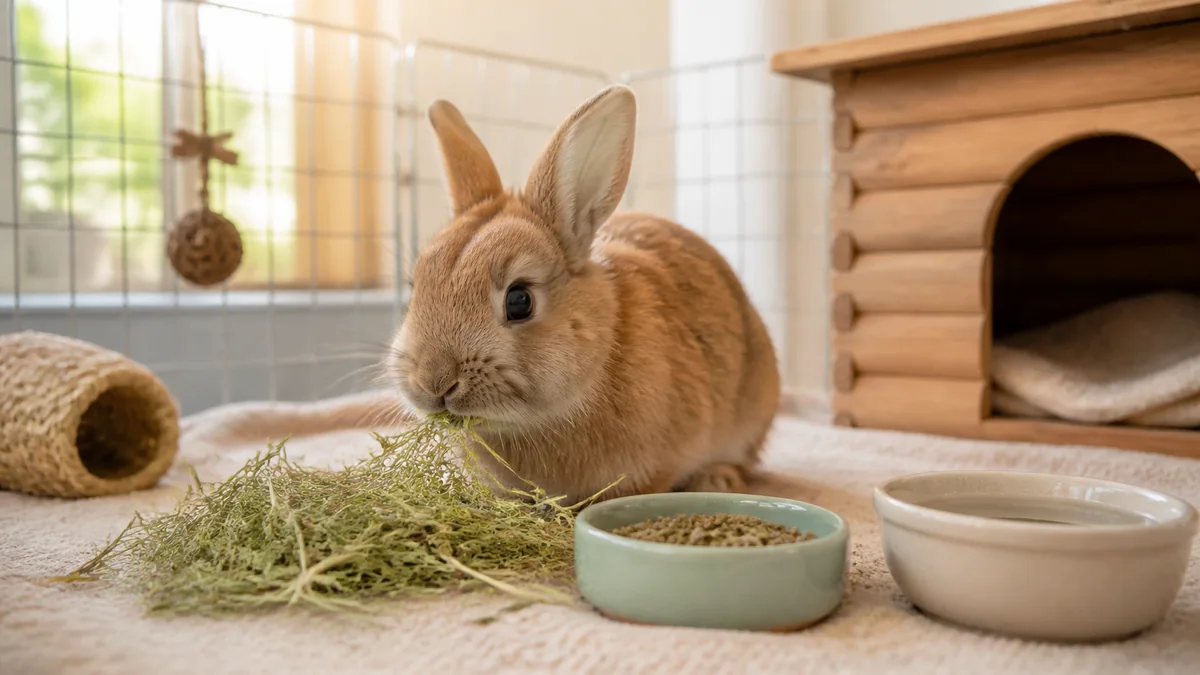
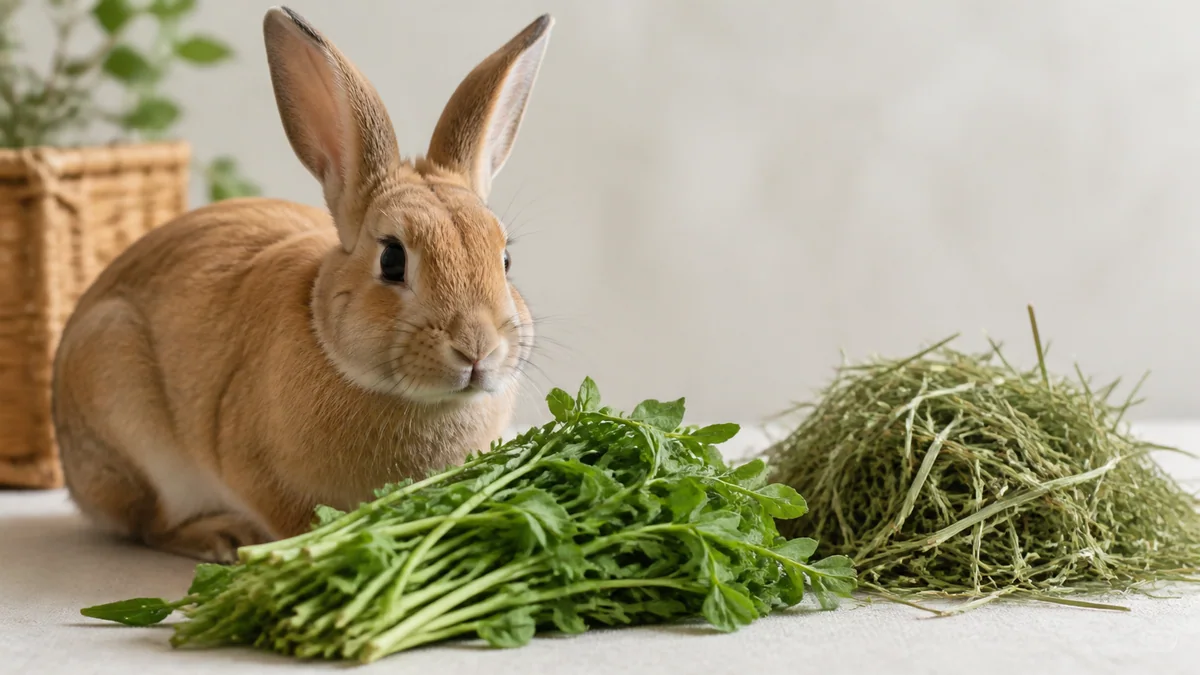
Alfalfa suits growing rabbits and pregnant or nursing does, but adults should move to grass hay near 1 year old. Calcium, pellets and urinary signs explained.
All our articles about rabbit feeding — page 2.
Alfalfa suits growing rabbits and pregnant or nursing does, but adults should move to grass hay near 1 year old. Calcium, pellets and urinary signs explained.
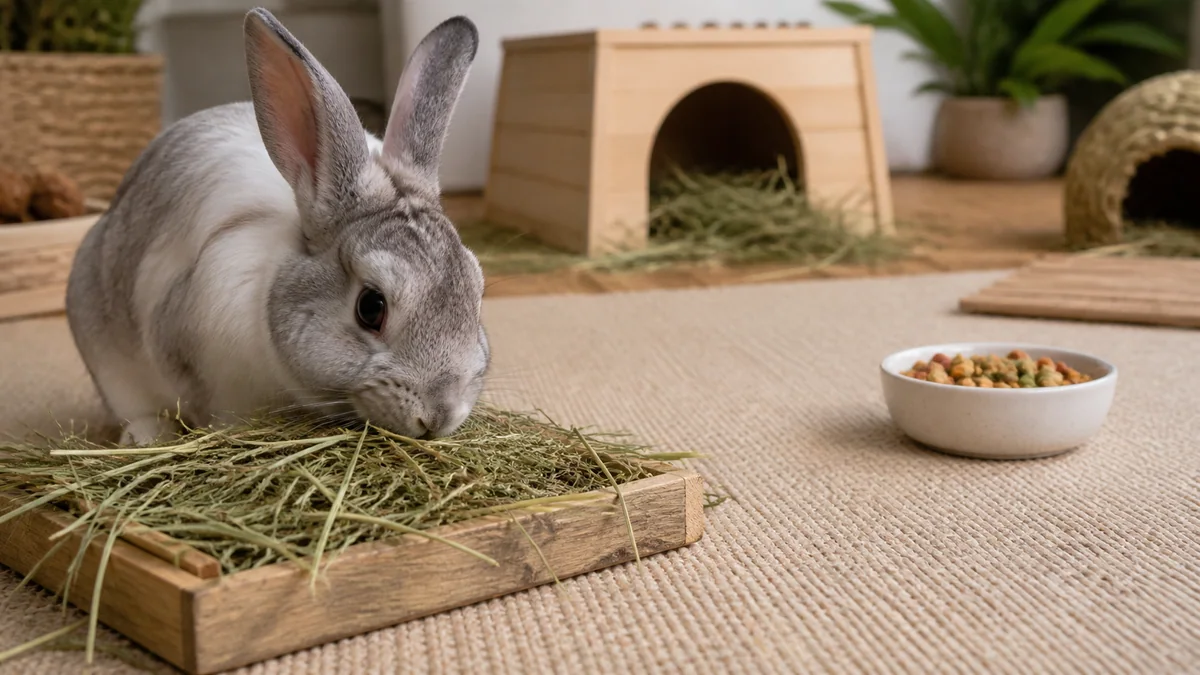
Muesli, grain mixes, and colorful cereals sold for rabbits cause selective eating, gut fermentation, obesity, and dental problems. What to feed instead.
Changing a rabbit's food too quickly can trigger dangerous digestive problems. Here's how to transition hay, pellets or fresh food safely over 3–4 weeks.
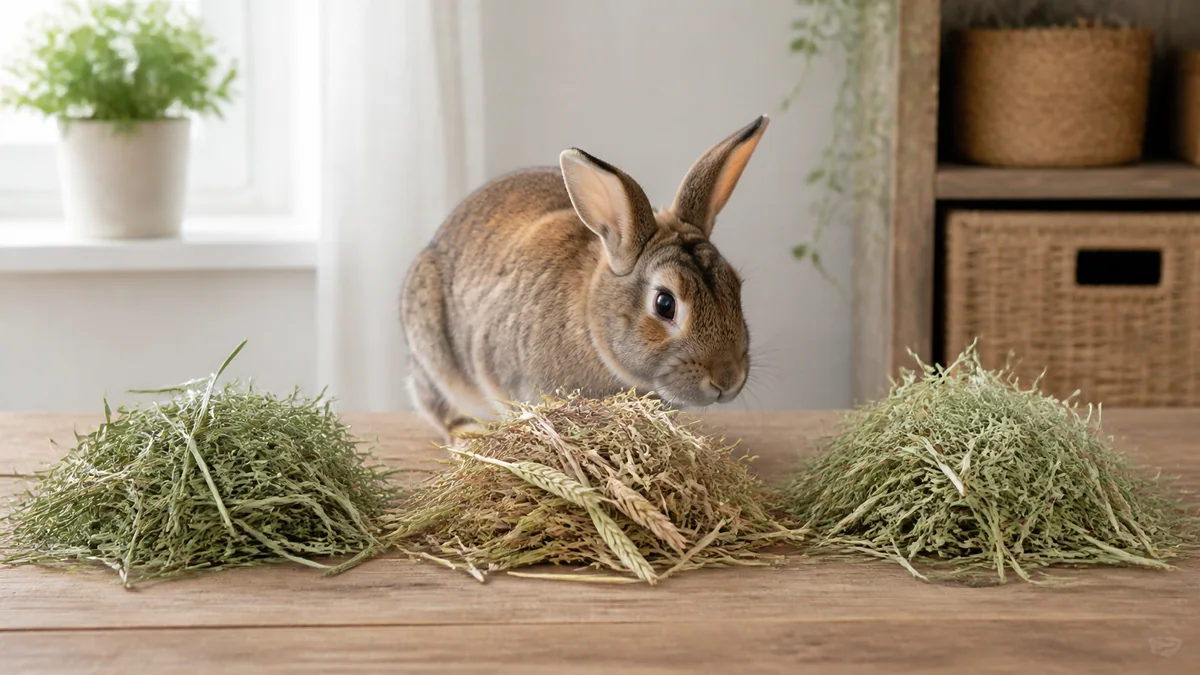
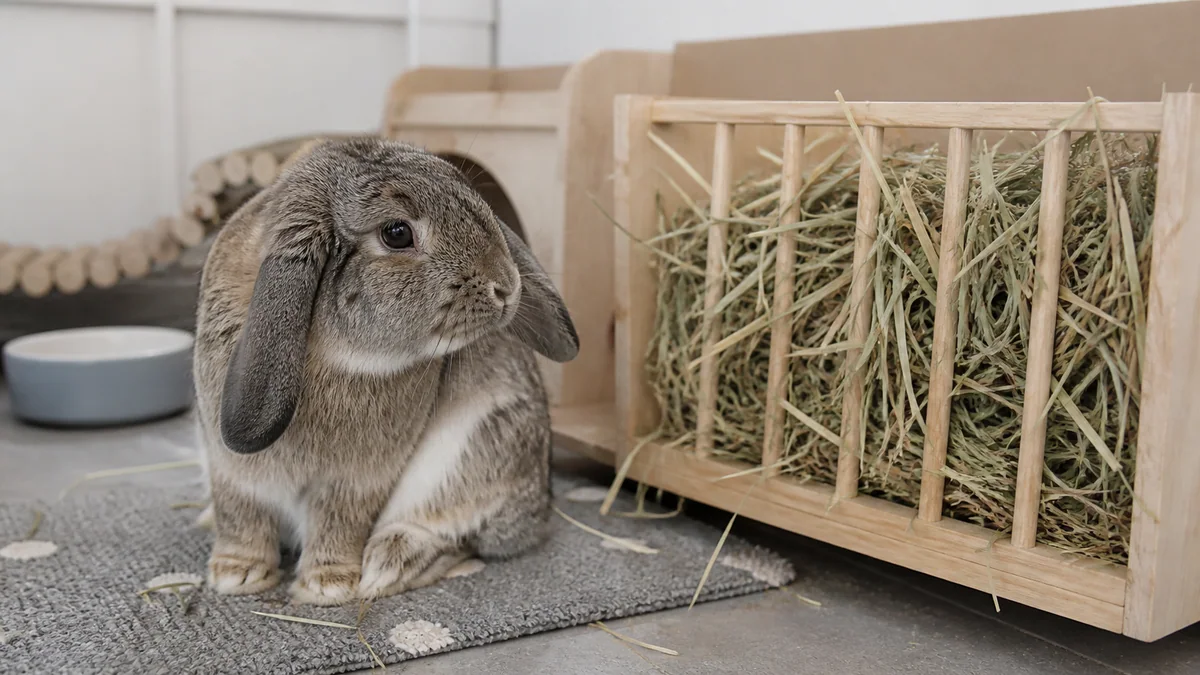
Not all hay is equal. Compare Timothy, meadow, orchard grass, oat hay and alfalfa by nutrition, texture and life stage to find the best hay for your rabbit.
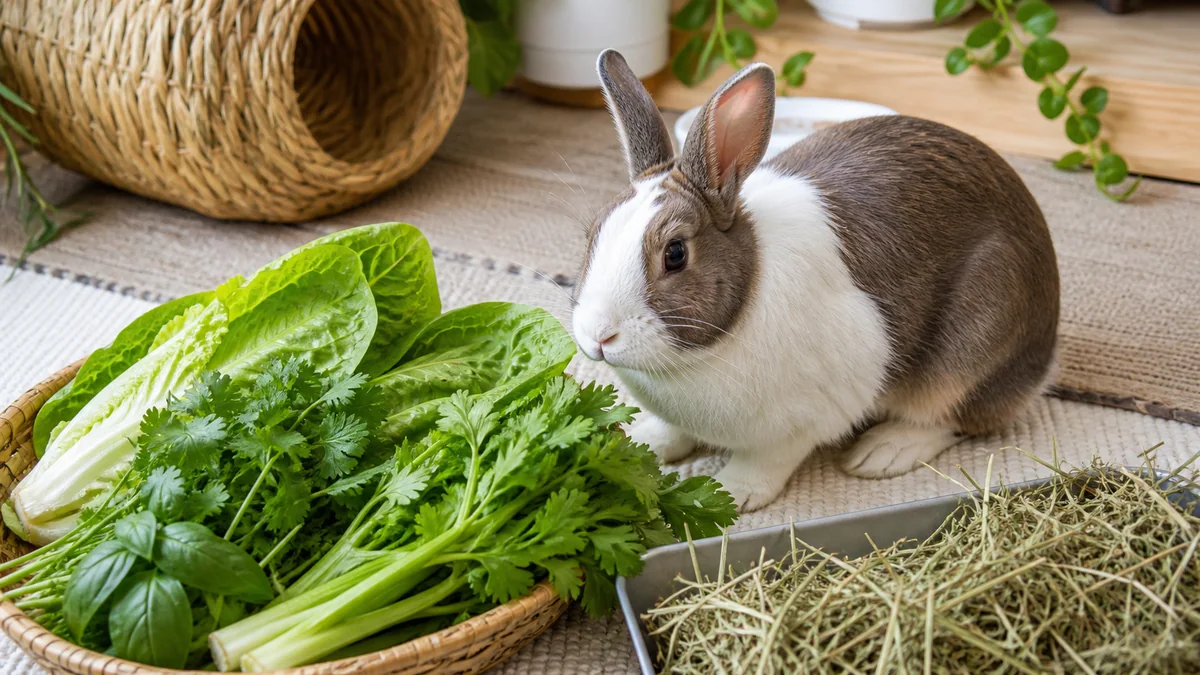
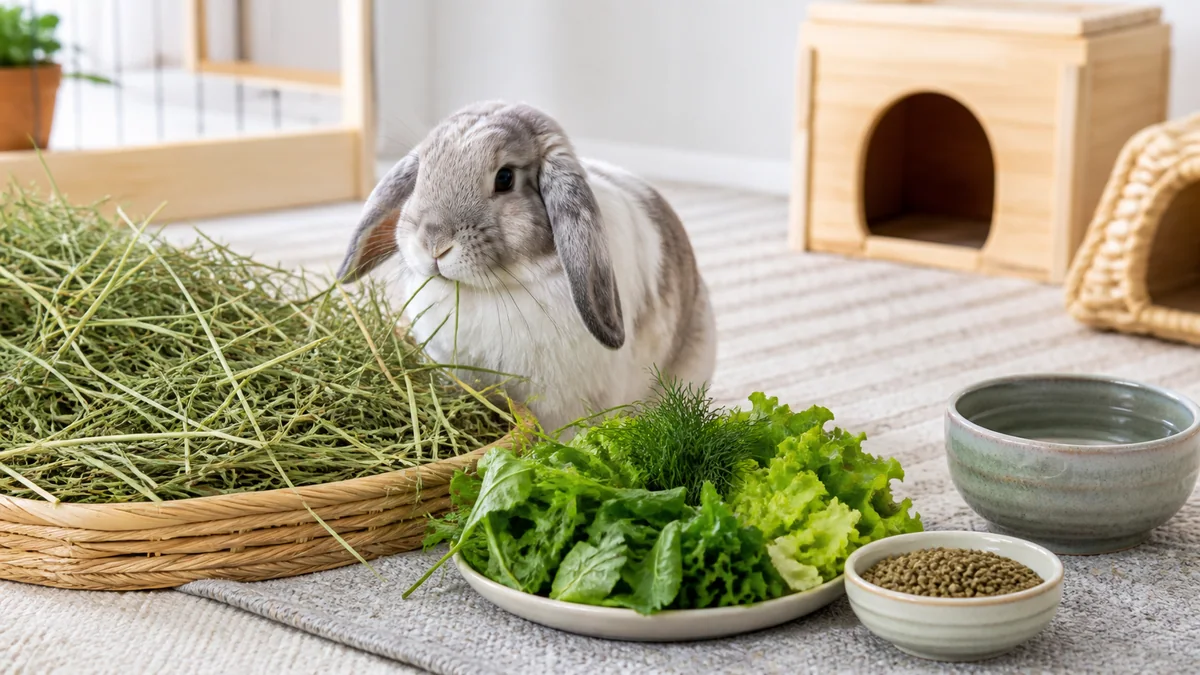
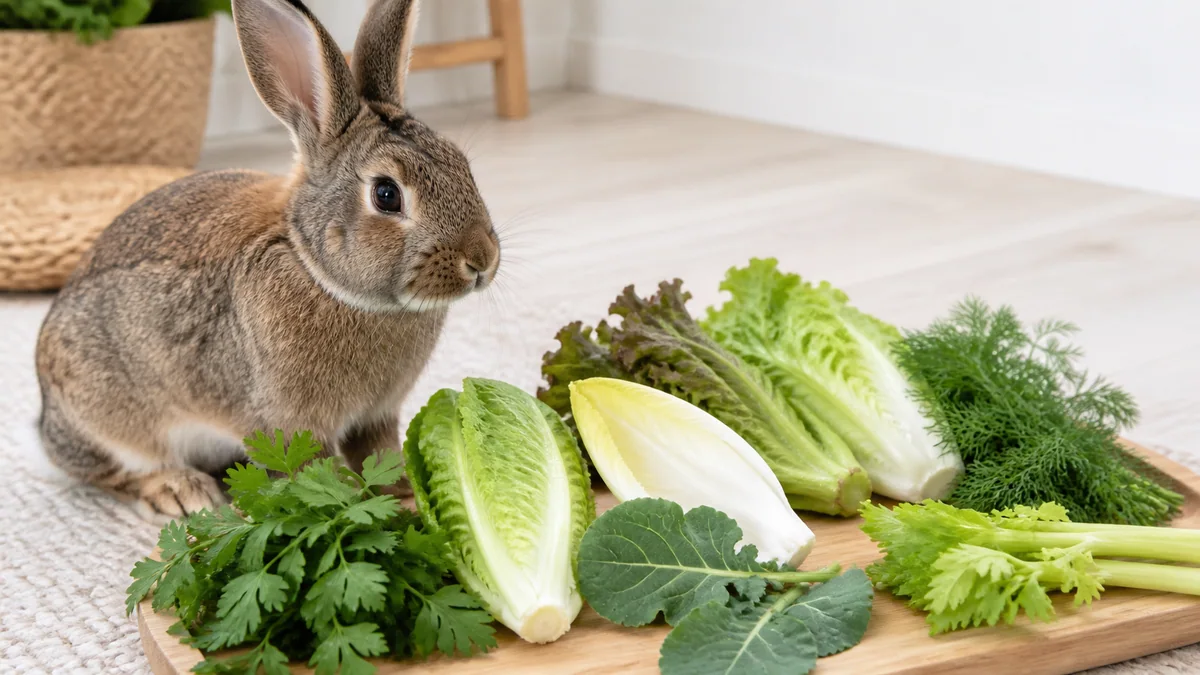
The best leafy greens for rabbits daily, how much to offer, which to limit and which to avoid — a practical guide to your rabbit's fresh food rotation.
A 2-month-old rabbit needs unlimited hay, fresh water and a plain growth pellet. Keep the diet it already eats, then change one food at a time with a vet.
A rabbit that stops eating hay risks GI stasis within hours. Learn the most common causes, practical fixes, and when to call the vet immediately.
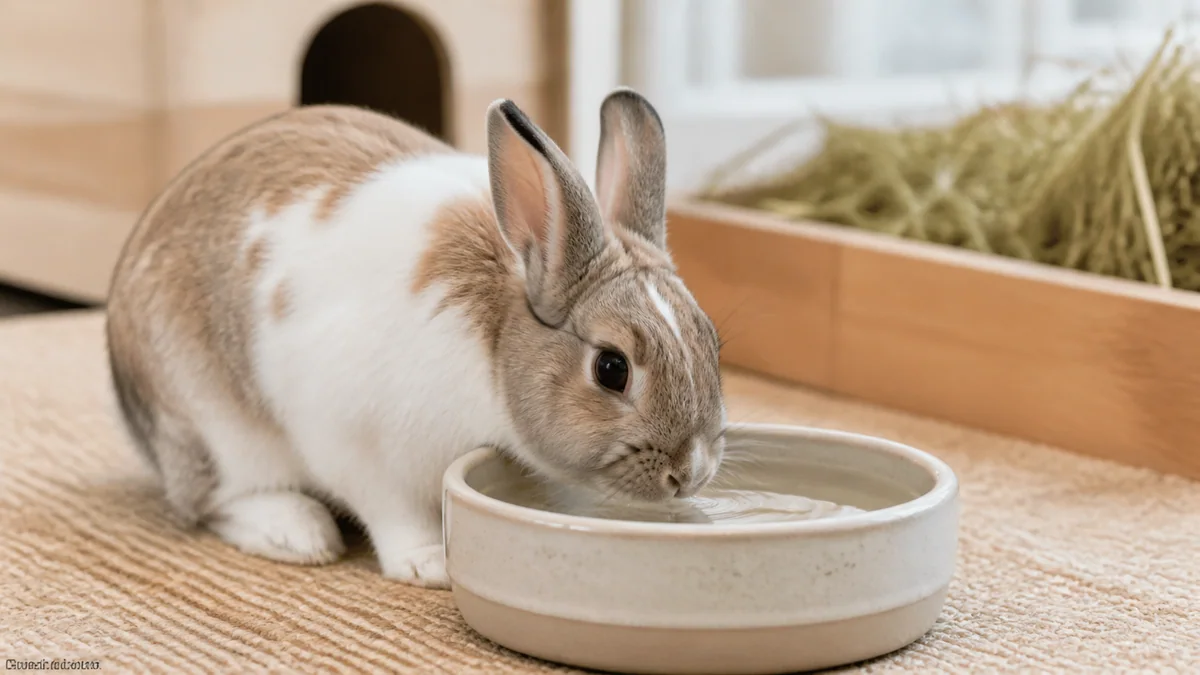
How much water does a rabbit drink with different diets? Veterinary reference ranges by weight, the effect of greens, dehydration signs and when to call a vet.
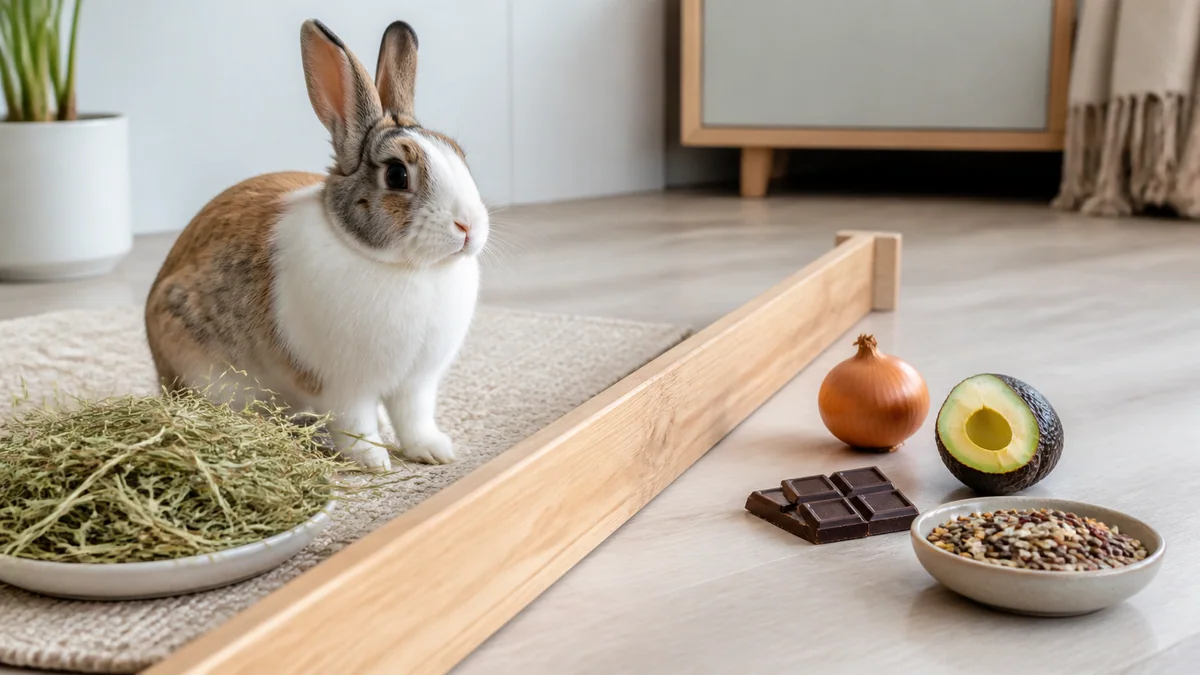
Which foods are toxic or unsuitable for rabbits, how serious each risk really is, and what to do after an accidental mouthful, based on veterinary sources.
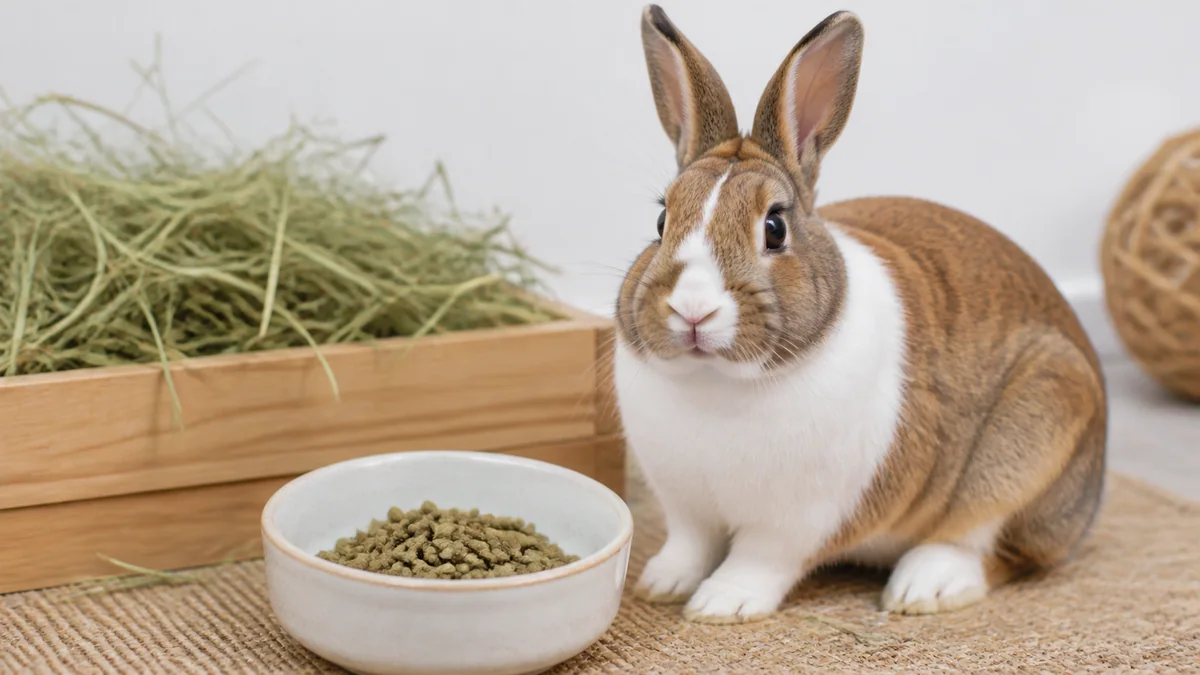
How many pellets a rabbit needs each day by age and weight, the overfeeding mistakes that are easy to make, and how to keep hay at the centre of the diet.
Hay, vegetables, pellets, water: everything a dwarf rabbit needs to eat every day, with exact proportions and the most common mistakes to avoid.
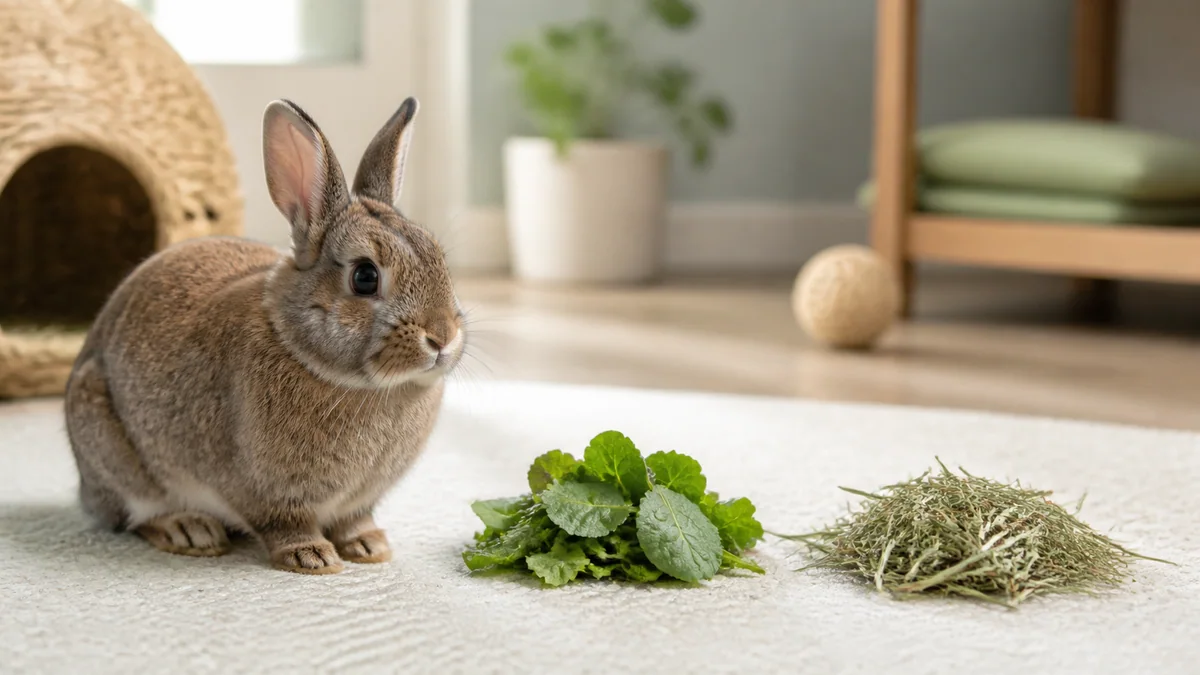
List of recommended vegetables for rabbits, with daily quantities, vegetables to avoid, and tips for safely introducing new foods without digestive upset.