Is alfalfa good for rabbits?
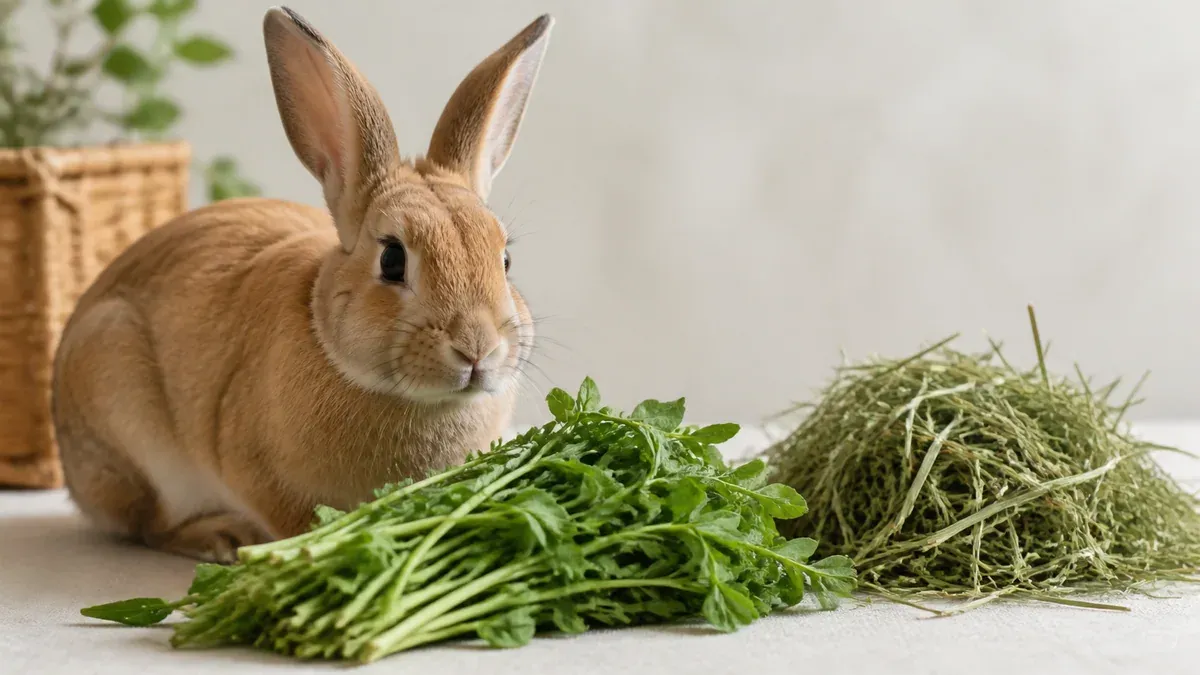
Yes for growing rabbits and pregnant or nursing does, but no as the main hay for a healthy adult rabbit. Alfalfa (lucerne) is high in calcium: the MSD Vet Manual advises moving young rabbits onto a grass hay such as timothy as they approach 1 year old, because too much calcium over time can contribute to urinary stones.
Alfalfa vs grass hay: what’s different
Alfalfa is a legume forage, not a grass like timothy or meadow hay. It is markedly higher in calcium, and rabbits find it very palatable. The MSD Vet Manual sums up the adult rule: unlimited timothy or another lower-calcium grass hay, making up about 85–90% of the diet, plus a smaller amount of pellets.
At what age should rabbits stop eating alfalfa?
The MSD Vet Manual says young growing rabbits can be fed alfalfa hay and alfalfa-based pellets, then gradually switched to timothy-based foods as they approach 1 year old. The sources consulted give no more precise age: your vet may adjust the timing according to your rabbit’s growth, weight and health.
A common mistake is cutting alfalfa the day a kit comes home, while it is still growing fast. The opposite mistake is just as common: staying on the same bag of “junior” or “small animal” pellets indefinitely because the rabbit likes it. For the first weeks, see what to feed a 2-month-old baby rabbit.
Other situations where alfalfa fits
Pregnant and nursing does
The MSD Vet Manual rules alfalfa out for adults except during pregnancy or nursing, when needs change. Ask your exotics vet how to include it and when to remove it after the kits are weaned.
Very underweight or convalescing adults
A vet may suggest a temporary alfalfa boost for a rabbit that has lost weight after illness or surgery. That is a time-limited medical decision, not a routine feeding practice.
Why alfalfa is a problem for healthy adults
Excess calcium, one factor among several
According to the MSD Vet Manual, too much calcium over time can contribute to kidney damage and to stones in the bladder or kidneys. The same manual stresses that dietary calcium is only one cause of urinary sludge and stones, alongside heredity, infection, dehydration and metabolic disease. VCA adds obesity and E. cuniculi infection.
The practical upshot: removing alfalfa helps, but is not always enough. An overweight rabbit that moves little or drinks little remains at risk even on perfect hay. The MSD Vet Manual also notes that moving adults from alfalfa-heavy diets to grass hay can help reduce recurrence in rabbits already affected.
Grass hay left untouched
Offered next to timothy, alfalfa is often eaten first while the grass hay stays in the rack. Yet unlimited grass hay should make up most of an adult’s diet: see how much hay a rabbit needs each day.
Alfalfa pellets: the source people forget
Many owners take away alfalfa hay but keep pellets made from it. The MSD Vet Manual explicitly covers both: neither alfalfa hay nor alfalfa-based pellets for an adult that is not pregnant or nursing. Read the ingredient list: for an adult, timothy or meadow hay should come first, not alfalfa. The same manual recommends pellets with 15–20% crude fiber. For amounts, see our pellet portion guide.
How to switch from alfalfa to adult hay
Make the change gradually, mixing a growing share of grass hay into the alfalfa and replacing pellets the same way. The sources consulted give no set timetable: move in small steps and go back a step if droppings become smaller, softer or scarcer. Reduced appetite or no droppings warrants a call to the vet.
If your rabbit snubs timothy, try a more aromatic meadow hay or a grass mix. The step-by-step method is in our rabbit diet transition guide, and our hay comparison helps you pick the replacement.
Urinary signs: watch or act now?
Dark or strong-smelling urine, sandy deposits or urine dribbling onto the legs warrant assessment by a rabbit-experienced vet as soon as possible. Straining, crying out or a suspected blockage require emergency care. VCA gives no safe waiting period in hours or days: do not wait for a routine appointment.
See a rabbit-experienced vet as soon as possible (VCA):
- darker urine with a very strong smell;
- urine with sandy-looking material in it;
- urine dribbling onto the back legs, leaving matted or stained fur.
See a vet urgently:
- the rabbit strains or cries out when trying to urinate: in males, tiny stones can block the urethra (VCA);
- blood in the urine, a sign that often raises suspicion of stones (MSD Vet Manual).
Red or orange urine is not always blood: natural pigments can colour it. To tell the difference, read our article on red urine in rabbits.
Your next step
If your rabbit is nearing 1 year old or already eats an adult diet, check its pellet label and hay type today, then plan the switch. To place this choice within the full diet (hay, greens, pellets, water), go back to our complete rabbit feeding guide.
Sources
These sources set no safe occasional amount of alfalfa for adults, no numerical transition timetable and no target calcium level for pellets. This article has not been reviewed by a vet.
- MSD Veterinary Manual — Diet for Rabbits: alfalfa, calcium and the move to timothy as rabbits approach 1 year
- MSD Veterinary Manual — Kidney and Urinary Tract Disorders of Rabbits: causes of urinary sludge and stones
- VCA Animal Hospitals — Bladder Sludge and Bladder Stones in Rabbits and Guinea Pigs: signs and urinary blockage
Frequently asked questions
Is the odd handful of alfalfa a problem for an adult rabbit?
The MSD Vet Manual describes calcium excess "over time": the risk comes from alfalfa fed continuously, as the base hay or through pellets. The sources consulted set no safe occasional amount, so if you want to offer some to an adult, ask your vet for a limit.
My 8-month-old rabbit is still on alfalfa pellets. Should I switch right away?
There is no rush. The MSD Vet Manual places the move to timothy-based foods as the rabbit approaches 1 year old, so now is the time to plan a gradual transition rather than an abrupt change that could upset digestion.
Should I also limit high-calcium vegetables?
Yes. VCA lists calcium-rich vegetables among the causes of bladder sludge: kale, spinach, turnip greens and collard greens should not be fed free choice or daily. In small quantities they are fine.