First-Year Cost of Owning a Rabbit
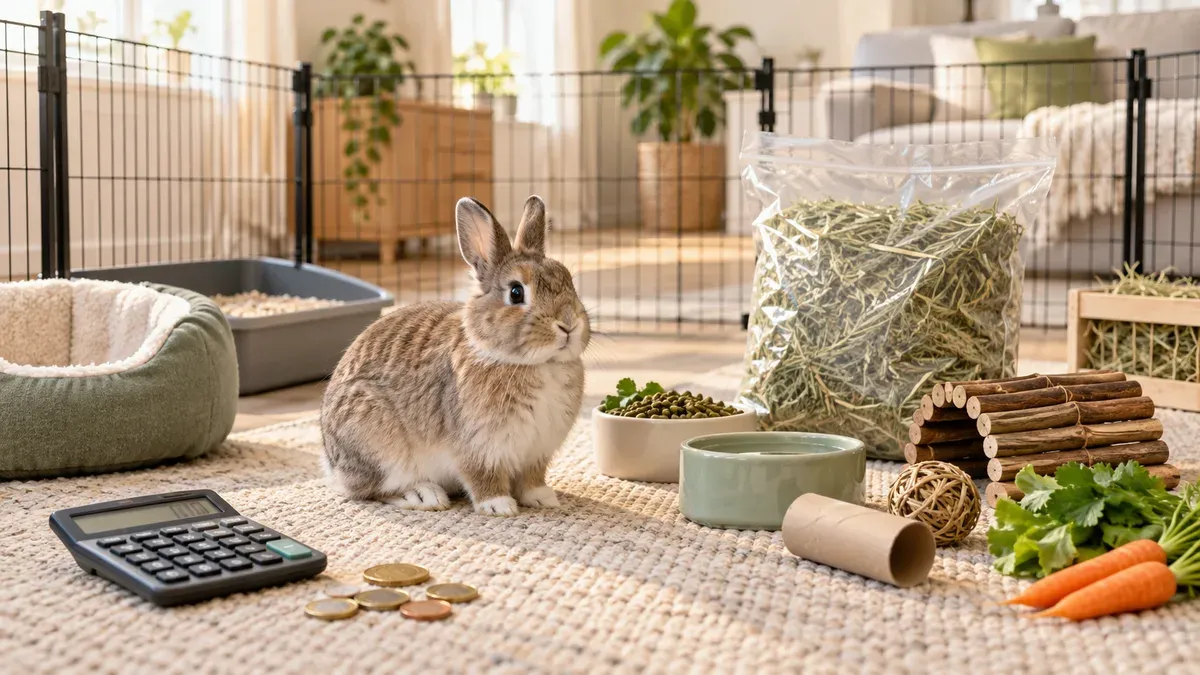
The first year with a rabbit costs £850 to £1,700, all in: acquisition, setup, neutering, vaccination and running costs. That is markedly more than the years that follow, which settle around £650 to £1,000.
But the total is not what causes trouble. What catches households out is that roughly half of that sum lands in the first three months, exactly when the setup has just been paid for. So this page is mostly about placing the spending on a calendar, not about re-listing figures detailed elsewhere.
The first-year total
| Item | Range | When |
|---|---|---|
| Acquiring the animal | £0 – £120 | Day 0 |
| Setup and equipment | £130 – £310 | before Day 0 |
| Neutering or spaying | £80 – £200 | months 1 to 6 |
| Myxomatosis + RHD vaccination | £45 – £80 | months 1 to 2 |
| Routine consultations | £40 – £130 | spread |
| Dental check | £30 – £55 | around month 12 |
| Running costs excluding vet | £540 – £780 | every month |
| Twelve-month total | £865 – £1,675 |
These figures aggregate numbers already published elsewhere on the site: equipment is detailed in what accessories are truly essential, veterinary procedures in rabbit vet costs: what to budget, and monthly running costs in how much a rabbit costs per month. What this page adds is the calendar, not the list.
The real spending calendar
This is the part almost nobody anticipates correctly.
Before arrival (day −7 to day 0): £130 to £310 The pen, tray, hay rack, bowls and the first bags of hay and bedding. It is the most visible item, and often the only one prospective owners have budgeted for. What to buy in advance and what can wait is set out in what to prepare before bringing a rabbit home.
Day one: £0 to £120 The price of the animal, or the rescue’s adoption fee.
Months 1 to 3: £300 to £540 This is the peak, and it comes as a surprise. It stacks the first consultation, the vaccination, usually the neutering, and three months of running costs. A household that emptied its cash into the setup reaches this point with no margin left.
Months 4 to 12: £435 to £705 The steady state settles in: hay, bedding, pellets, greens and one vet check.
Cumulatively, the first three months alone come to roughly £430 to £970 — about half the year.
What moves you from one end of the range to the other
The gap between £850 and £1,700 is not about the standard of care. It comes down to four variables:
- How you acquire the rabbit. A rescue rabbit frequently arrives neutered, vaccinated and identified: that is £125 to £280 of work already done. The full comparison is in should you adopt or buy a rabbit, and what an adoption fee actually covers is in adopting a rabbit from a rescue.
- How you buy hay and bedding. In bulk, these two lines cost two to three times less than in small pet-shop bags. Across twelve months it is the most profitable lever you have.
- The size of the animal. A large rabbit gets through more hay and more bedding — one of the concrete lines compared in small or large rabbit.
- New or second-hand equipment. The pen is the only item where buying used makes a real difference, provided you check bar spacing and stability.
What does not move the range: pellet brand, toys and comfort accessories. Across a year these are marginal amounts.
The emergency reserve is not part of this budget
This is the most important distinction on the page. The £850–£1,700 above is planned spending. Alongside it you need £300 to £500 available immediately that is not meant to be spent at all: it covers an emergency if one arrives.
Conflating the two is the classic error. A household that “budgeted £1,200 for the first year” and spent it has nothing left on the day of a gut stasis. The two ways of building that reserve — dedicated savings or insurance — are compared in is pet insurance worth it for a rabbit.
How to smooth the first year without cutting care
In order of effect:
- Buy hay and bedding in bulk from month one. The upfront outlay pays for itself quickly.
- Adopt an animal already neutered and vaccinated, which moves the peak outside your budget entirely. What that changes at the point of adoption is covered in adopting an already-neutered rabbit.
- Stagger non-essential equipment across the first few months rather than buying everything before arrival.
- Book the neutering at the first consultation, so you place it where it suits you rather than having it land on you.
What does not work: cutting back on hay, deferring vaccination or delaying neutering. All three savings are paid back later, and with interest.
And the following years?
Without the setup or the neutering, an ordinary year settles around £650 to £1,000, mostly hay, bedding and one or two vet visits. That figure climbs again towards the end of life: from 5 or 6 years old the frequency of check-ups doubles, and the senior rabbit warning signs mean more frequent consultations.
Across a full life of 8 to 12 years, the total financial commitment therefore runs into thousands. That is the order of magnitude to hold in mind before saying yes — not the animal’s sticker price.
Where to go next
The next step is turning this budget into a concrete schedule: what to prepare before bringing a rabbit home gives the day −7 to day 0 plan, and first days with a new rabbit takes over once it arrives. If you are still weighing one animal against two, should you adopt one or two rabbits puts numbers on what genuinely doubles. The rest of our guidance sits in the rabbit adoption section and the rabbit species profile.
Frequently asked questions
Can you push neutering into the second year to ease the first?
You can, but it rarely pays. In a female, delaying means exposure to a tumour risk that climbs with age; in an unneutered male living with a female, it means a real risk of a litter. If cash flow is the limiting factor, it is better to delay the adoption by a few months than to delay the surgery.
Does adopting two rabbits double the first-year cost?
No, it raises it by roughly 50 to 80%. Vet fees and food genuinely double, but the pen, the hay rack and much of the equipment stay single purchases. The line-by-line breakdown is in our page on choosing between one and two rabbits.
Does a rescue rabbit cost less in the first year?
Often yes, despite the adoption fee. Rescues generally rehome animals already neutered, vaccinated and identified: that represents £125–£280 of work you do not have to fund. A free or cheap young rabbit that is unneutered and unvaccinated costs more across twelve months.
Should you buy everything before the rabbit arrives?
No, and this is a common mistake. The pen, tray, hay rack, bowls and hay need to be there on day one. But the choice of toys, bedding type and sometimes the brush is better left a few weeks: by then you will know what the animal actually uses, which avoids wasted purchases.