Rabbit Vet Costs: What to Budget
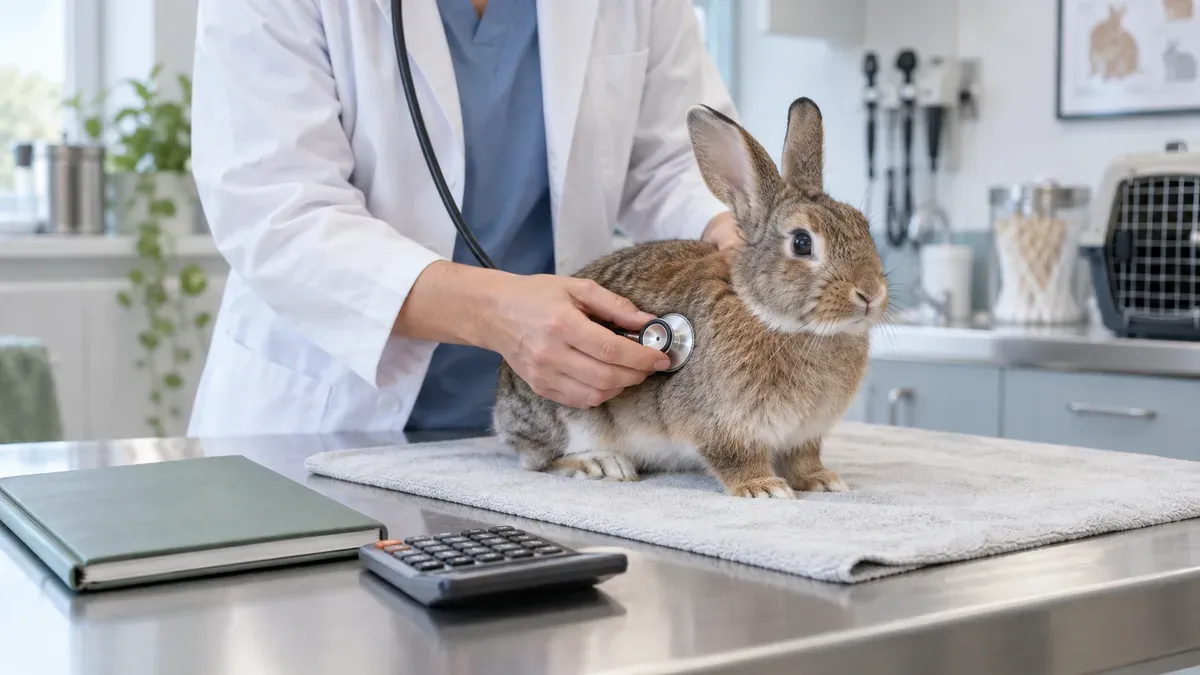
Plan for two budgets, not one. On one side, predictable costs — annual vaccination, health check, neutering — which come to roughly £10 to £20 a month once spread across the year, excluding neutering. On the other, the unpredictable, which does not spread: a digestive or dental emergency commonly reaches £100 to £300, and more if it requires hospitalisation.
It is the second budget that causes trouble, because it arrives all at once. Aim for a reserve of at least £300 to £500, available immediately.
The ranges on this page are orders of magnitude for building a budget, based on the UK market. Veterinary fees are set freely and vary considerably by region and practice: only an estimate from your own vet is binding.
Predictable costs: what you plan for
| Procedure | Order of magnitude | Frequency |
|---|---|---|
| Myxomatosis + RHD vaccination | £45–£80 | Once a year |
| Routine consultation | £40–£65 | 1–2 times a year |
| Dental check | £30–£55 | Once a year, recommended |
| Spaying a female | £80–£200 | Once in a lifetime |
| Castrating a male | £80–£200 | Once in a lifetime |
None of these are comfort extras. Vaccination protects against two largely fatal diseases with no reliable cure (should you vaccinate your rabbit). Spaying a female addresses a high tumour risk that bears directly on how long the animal lives.
The dental check deserves a note of its own: it cannot be done at home. The molars are not visible without equipment, and they are the ones that cause problems — not the incisors you can see.
Unpredictable costs: what you provision for
| Situation | Order of magnitude |
|---|---|
| Emergency consultation with treatment | £100–£300 |
| Imaging or laboratory work | added to the consultation |
| Hospitalisation with fluids and nursing | several hundred pounds |
| Dental work or surgery under anaesthetic | major procedure, estimate essential |
| Treating an abscess, frequently recurrent | a repeated cost over time |
These situations are not rare. The most common rabbit emergencies are gut stasis, dental problems and respiratory infection — three recurring presentations, the first of which can escalate in under 24 hours (gut stasis in rabbits).
Two features of the species weigh on the bill, and are better known in advance:
- Treatment tends to be repeated, not one-off. Dental disease is managed through successive burrs; abscesses frequently recur. The cost is counted in years, not in a single procedure.
- The window is short. An unusual reduction in appetite or droppings requires a prompt call; complete food refusal is an emergency. You cannot wait for the end of the month, which is why the reserve must be available rather than theoretical.
What exotic status changes in practice
Rabbits count as exotic pets, and that has three practical consequences.
Not every vet handles them with the same ease. Many general practitioners see rabbits, but anaesthesia, dentistry and imaging on a 1.5 kg animal call for particular equipment and routine. Identifying a competent practice before you need one is part of preparing: that is the subject of when to see an exotics vet for your rabbit.
Fees are often higher on technical procedures, given the scarcity of the skill and the equipment. The gap is wider on surgery than on a plain consultation.
Out-of-hours access is harder, particularly at night and at weekends. Find the emergency service in your area that accepts exotics now, and save the number — that piece of information is worth more than any saving on a line of your budget.
The first year costs more than the ones that follow
It combines the recurring items with neutering, which happens once. For a young rabbit, add a post-adoption check and sometimes antiparasitic treatment.
One point that is often badly anticipated: a free or cheap rabbit is not a cheap rabbit. An unneutered, unvaccinated animal concentrates its costs into the first few months, exactly when the setup budget is already committed. This is one reason a rabbit that arrives from a rescue already neutered and vaccinated frequently works out cheaper than a young rabbit bought elsewhere (should you adopt or buy a rabbit).
How to reduce the bill without cutting care
In order of real effect:
- Unlimited hay. This is the most powerful economic lever: it governs digestion and tooth wear, which are the two most frequent sources of spending. The reference quantity is in how much hay a rabbit needs.
- Do not defer neutering. Uterine disease costs far more, and later.
- Consult early rather than late. Stasis caught at 12 hours is often treated in consultation; the same case at 48 hours may need hospitalisation.
- Track weight at home, every fortnight. It is free, and it is the best early detector you have (how to weigh a rabbit at home).
- Always ask for an estimate on planned procedures.
What does not work: delaying a consultation for budget reasons. In rabbits it is almost always more expensive in the end, and sometimes beyond recovery.
Reserve or insurance?
Both answer the same risk by different means. A reserve covers everything without exclusions but is empty at the start; insurance covers immediately but excludes dental work under many policies — precisely the most frequent problem in this species. The choice turns on what cash you can reach within 48 hours, and the criteria for screening a policy are set out in is pet insurance worth it for a rabbit.
When to seek help immediately
These situations are not a budget decision:
- stopped eating or passing droppings, or a marked reduction in both;
- hunched posture, unresponsiveness, refusal to move;
- open-mouth breathing, or clearly rapid breathing at rest;
- maggots, wounds or heavy soiling around the rear end;
- a suddenly tilted head, or loss of balance.
The full triage list is in rabbit emergency warning signs.
Where to go next
The next step is deciding how you fund the unexpected: the reserve-versus-insurance comparison is handled in is pet insurance worth it for a rabbit. To place these costs in the wider budget, how much a rabbit costs per month breaks down day-to-day spending line by line. And if your rabbit is approaching five, the rhythm of check-ups changes: the warning signs are in senior rabbit health. The rest of our guidance sits in the rabbit adoption section and the rabbit species profile.
Frequently asked questions
Why does an exotics vet cost more than a general practice?
Because the skill is rarer and the equipment differs. An exotics practitioner has kit suited to small bodyweights — anaesthesia, imaging, dental instruments — plus additional training. Consultations often run longer, since a proper dental examination means inspecting the molars, which a quick look cannot do. The premium shows up mainly on technical procedures, much less on a straightforward consultation.
Can you ask for an estimate before a procedure?
Yes, and you should for anything planned: neutering, dental burring, surgery. Ask for a written estimate stating what is included — anaesthesia, pain relief, hospitalisation, post-operative check. In an emergency the approach differs: ask instead for an order of magnitude and what can be decided in two stages.
Are veterinary fees regulated?
No. Vets set their own fees, which is why prices vary considerably between practices and regions. The ranges on this page are orders of magnitude to help you build a budget, not reference prices. Only an estimate from your own practice is binding.
Should you see a vet even when the rabbit seems well?
Yes, at least once a year, and twice from around 5 to 6 years old. The visit is mainly for the dental examination and weight tracking, two things that are hard to assess at home. In a species that masks its symptoms, the annual check is the main early-detection tool you have.