How to clean a rabbit litter box: frequency, method and safe products
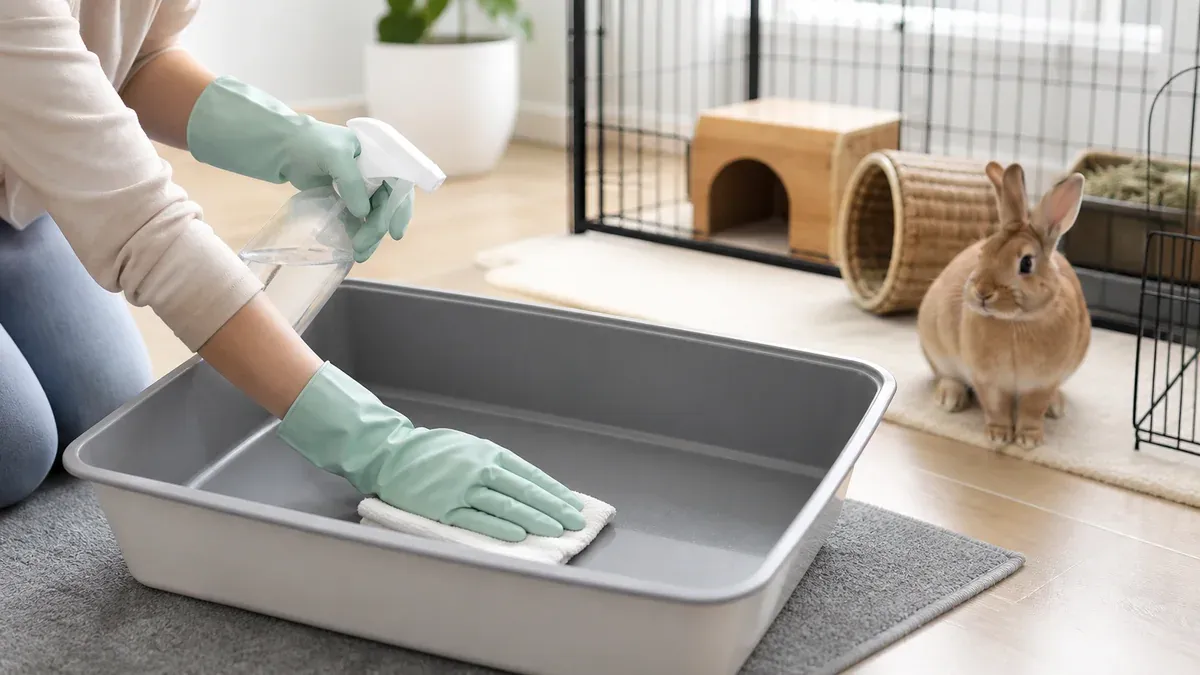
Keeping your rabbit’s litter box clean is not just about avoiding unpleasant smells — it directly affects your rabbit’s health. A poorly managed litter box encourages urinary infections, sore hocks, chronic stress, and respiratory issues from ammonia build-up. Here is how to do it properly.
Two levels of cleaning
There are two types of maintenance to alternate:
1. Spot cleaning (daily or every 2 days)
This is surface maintenance: remove hard droppings and wet patches of substrate, then top up with fresh material. This is not a full clean — you do not empty the entire tray.
Time required: 3–5 minutes
Equipment:
- Small litter scoop
- Biodegradable bag for waste
- Replacement substrate (same type as existing)
Tip: if your rabbit uses a specific corner of the tray (rabbits are clean animals that always return to the same spot), focus removal on that area.
2. Full clean (once a week)
This is a complete reset: empty the entire tray, wash it, disinfect it, rinse and dry thoroughly, then reload with entirely fresh substrate.
Time required: 15–20 minutes
Full cleaning procedure: step by step
- Move the rabbit to a safe area while you clean (exercise pen, a closed room)
- Empty the entire tray into a rubbish bag
- Remove calcium deposits from dried urine using diluted white vinegar (1:1 with water); leave for 5–10 minutes, then scrub with a firm sponge or non-metallic brush
- Wash with warm water and a small amount of unscented washing-up liquid or natural soap
- Rinse thoroughly — no product residue should remain
- Dry completely — a damp tray encourages bacterial growth under the fresh substrate
- Reload with the correct depth of fresh substrate (see below)
- Return the tray to its usual position — do not change the litter box location, as this can disrupt your rabbit’s toileting habits
Recommended substrate depth
The substrate layer must be deep enough to absorb urine without leaving the bottom of the tray wet:
| Substrate type | Recommended depth |
|---|---|
| Wood pellets or shavings | 3–5 cm (1.5–2 in) |
| Hemp or flax bedding | 3–4 cm |
| Recycled paper bedding | 4–6 cm (very absorbent) |
| Straw alone (not recommended) | 5–8 cm (absorbs less) |
For guidance on choosing the most suitable substrate, see our guide on the best bedding for rabbits.
Safe vs unsafe cleaning products
Safe for rabbits
| Product | Use | Precaution |
|---|---|---|
| Diluted white vinegar (1:1) | Descaling, deodorising | Rinse thoroughly |
| Warm water + natural soap | Regular cleaning | Rinse completely |
| Warm water alone | Maintenance cleaning | Effective if frequent |
| Rabbit-safe disinfectants | Deep disinfection | Follow dosage, rinse |
Absolutely to avoid
| Product | Reason |
|---|---|
| Bleach / diluted bleach | Chlorine irritates rabbit respiratory system |
| Dettol, TCP, and phenolic products | Highly toxic to rabbits even in traces |
| Ammonia-based cleaners | Worsens urinary stress |
| Scented disinfectant sprays | Respiratory irritants |
| Essential oils | Toxic to rabbits even at low doses |
Managing odours day to day
A properly maintained litter box should not smell strongly. If persistent odours remain despite regular cleaning:
- Increase spot-cleaning frequency (daily instead of every 2 days)
- Check substrate quality: some substrates (compressed wood pellets, hemp bedding) are significantly more absorbent than others
- Check tray size: a tray that is too small for your rabbit’s size becomes saturated faster
- Check your rabbit’s health: unusually strong-smelling urine can indicate a urinary infection or dehydration — see a vet if the change is sudden
For a full guide to all the levers available, see how to reduce rabbit litter odour.
Maintaining the area around the tray
Cleaning the tray alone is not enough — the surrounding area also needs regular attention.
- Floor around the tray: substrate granules, dust, and small droppings inevitably scatter. Vacuuming or mopping once a week is sufficient.
- Living space: if your rabbit roams freely in a room, resting areas deserve a weekly clean. For the overall space setup, see our guide on keeping a rabbit in an apartment.
Litter training and maintenance
A litter-trained rabbit is much easier to maintain. If your rabbit is not yet using its tray reliably, do not reduce cleaning frequency — on the contrary, keeping the litter clean and the tray scented with a small amount of droppings actually encourages the rabbit to use it. For litter training guidance, see our article on how to litter-train a rabbit.
For full information on the domestic rabbit’s care needs, visit the rabbit species page.
Frequently asked questions
How often should you clean a rabbit's litter box?
The main tray should be spot-cleaned (droppings and wet patches removed, fresh substrate added) every 1–2 days. A full clean with disinfection should be done once a week. Neutered rabbits tend to produce fewer odours and may tolerate a 2-day spot-clean cycle if the substrate stays dry.
Can you use white vinegar to clean a rabbit's litter box?
Yes — diluted white vinegar (1 part vinegar to 1 part water) is an excellent, rabbit-safe way to break down urine calcium deposits and neutralise odours. Rinse thoroughly after use and allow to dry completely before adding fresh substrate.
Which cleaning products are dangerous for rabbits?
Bleach, common household disinfectants (Dettol, products containing phenols or essential oils), ammonia-based cleaners, and scented sprays are all toxic to rabbits. Use only diluted white vinegar, warm water, or rabbit-safe disinfectants validated by your vet.
My rabbit eats soft droppings from the litter box — is this normal?
Yes, this is completely normal and essential behaviour. Caecotropes (small, soft, clustered droppings produced at night or early morning) are re-ingested directly by the rabbit to complete its nutrition. Do not remove these before the rabbit has had a chance to eat them. Hard, round droppings can be removed continuously.